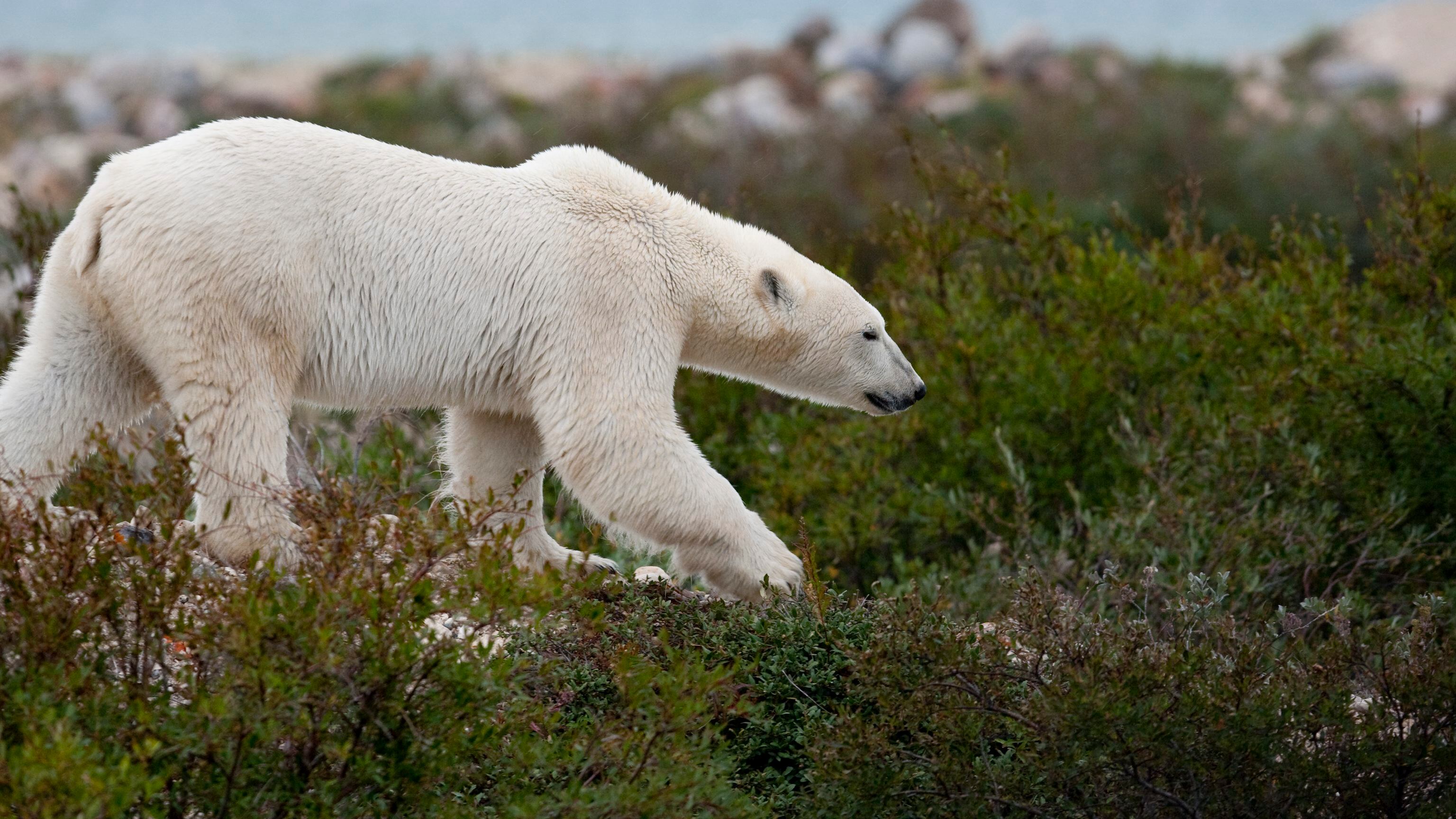
Some Manitoba researchers are studying the impact that ongoing wildfires could have on polar bears and their denning habitats.
Stephen Peterson, the Director of Conservation and Research at Winnipeg’s Assiniboine Park Conservancy, has been focusing his research on Wapusk National Park, near Churchill in northern Manitoba.
“We’ve been working on looking at where polar bear dens are and where they are at high risk of wildfires,” he said.
Churchill is considered the polar bear capital of the world, and the Wapusk National Park is one of the largest known polar bear maternity denning areas. It’s along the western shores of the Hudson Bay, an area where these animals spend most of their time in the winter.
Sea ice is a natural habitat for polar bears. It’s where they hunt and mate.
When the ice on the Hudson Bay breaks up, the bears come ashore. Female bears, including those that are pregnant, head inland to the denning areas.
Due to climate change, however, the amount of time for polar bears to live on the ice is declining. According to Parks Canada, the number of days when sea ice is available has decreased by 25 days since the 1980s.
Along with dwindling sea ice, wildfires could also potentially impact polar bear habitat.
Peterson warns a warming climate and a drying subarctic landscape are now increasing the fire risk up north, which can reduce the peat and the trees that give structure to the denning habitats. This is placing polar bears in ever-increasing danger.
“If we start eroding and picking away at that denning habitat that is so important for producing new cubs and keeping those populations sustainable, then polar bears are getting another whammy that will make them less likely to be in Manitoba in the long-term,” he said.
According to Manitoba’s fire map, there is one small active fire in Wapusk National Park, and two other fires in the region.
Peterson hopes to build a map that highlights the areas with high-risk fire danger in the north, to help inform wildfire fighting efforts in the future.
“The work that we have been doing is can we figure out where the line is, where we might want to mobilize firefighters in order to manage a fire, so it doesn’t destroy critical polar bear denning habitats.”
‘The future of polar bears is not great’: U of M researcher
University of Manitoba professor Meaghan Jones has studied the impact climate change is having on polar bears.
In her ongoing study, ‘Climate Change, age acceleration, and the erosion of fitness in polar bears,’ she and her team are looking at biological aging, which means researching whether these polar bears are aging faster than expected because of the impacts of climate change.
Examining tissue samples from polar bears between the early-mid 1980s to 2023, she discovered that for every degree of climate warming, these polar bears along the western shores of the Hudson Bay are aging by one year.
She says the climate has warmed three degrees over the last four decades.
“As we are losing ice in the Arctic due to climate change, bears are spending more time swimming, which is five times more energetically intensive than walking. They are using energy faster. They are having to work a lot harder to find mates and food,” she said.
“The oldest bears live to be about 30 years, so aging up to three years over the course of their lifespan, that’s a 10 per cent change in the rate of aging over that time,” she said.
The study has primarily focused on polar bears on the western side of the Hudson Bay, but now that’s being expanded to all polar bears throughout the Canadian Arctic region.
Jones is also looking into whether polar bears can adapt to this new climate as the planet continues to warm.
“Climate change is happening at a pace that is unprecedented for our world,” she said.
“We’ve actually seen very limited evidence for these populations to be able to adapt to the rapid change that we see. We are concerned about the population declines over time.”
Jones says the Arctic is expected to continue to warm at this rate for at least another 100 years, even as scientists and researchers, like herself, are mitigating changes right now.
“We are really concerned about this species in the future,” she said.

