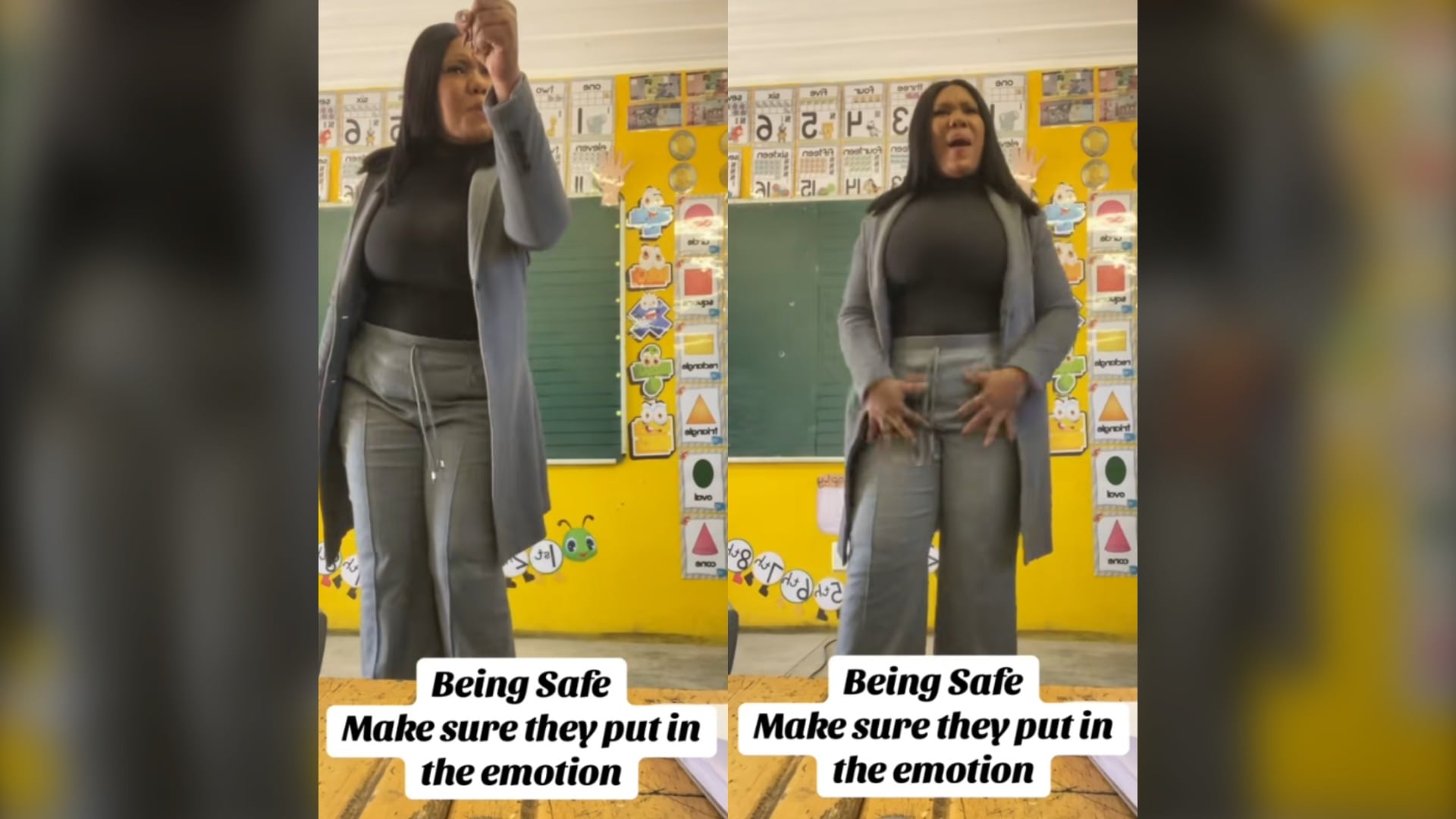
A music video recently posted to TikTok has caught the attention of more than 110 million viewers and garnered 13 million likes, all while sparking a conversation about preventing child abuse.
Gelda Waterboer, a Grade 1 teacher from Otjiwarongo, Namibia, became an overnight sensation with her powerful rendition of a song about body safety, recorded while she was teaching a class.
In the video, Waterboer is heard loudly singing a song she calls “These Are My Private Parts” to her students, who can be heard singing along.
Tyler Black, a child and adolescent psychiatrist at the University of British Columbia, says it’s great to see a teacher putting their whole energy into teaching children the rules of body safety. He says the importance of the subject matter shines through in Waterboer’s enthusiasm.
“I always tell teachers and parents that kids can always tell when you’re being genuine,” Black told CTVNews.ca Friday. “And I have no doubt that she was being very genuine.”
He says children should be taught about safe and unsafe touching from a very young age, and what he appreciates most about the song is that it encourages children to to tell a trusted adult right away, if they’re feeling unsafe.
People who try to touch children inappropriately bank on them never sharing that information with their parents or teachers, Black added.
Carrie Rawling, the provincial co-ordinator for Early Childhood Educators of B.C., has been working with educators across the province to better communicate with young children about safety and sexual abuse. She says the fact that the video is “catchy,” and has garnered the attention of so many is amazing.
“I like that this information is getting out there,” Rawling told CTVNews.ca Monday. “I love that it’s done through song, because things like songs and stories and play, they make these topics fun and memorable and really empowering for children. That’s how they learn best.”
Children need to learn that this teaching applies to their whole body, Rawling said. Interactive training and learning are the best ways for children to grasp the content.
“They learn through songs. You think about all the things that we teach children, the little nursery rhymes and things like that,” she said. “That is how they learn best.”
Children need to be taught through repetition, because research has shown that is how they retain the information they need, she says.
Rawling added that the best way to teach children to differentiate between safe and unsafe touch is in a positive manner, without causing unnecessary pressure on them.
“I just think it’s important that learning happens in a really safe, supportive environment, so that children feel empowered and not scared,” she said. “She’s making the song fun and not scary.”
Waterboer’s energy, enthusiasm and empowerment also likely helps the content of the song stick with the children, she added.
“I’m sure her hope is that they are going to use that same energy to say ‘no’ or ‘stop,’ or tell their mom or their teacher those kinds of things,” Rawling said.
According to the Ontario-based College of Early Childhood Educators (CECE), the majority of adult survivors of child sexual abuse reported that they did not disclose the abuse to anyone when they were children, and 93, per cent of child maltreatment cases are never brought forward to police or child welfare.
Children who have been sexually abused often disclose it in a series of hints to test adults’ reactions, the college says. When they are ready, they may be more likely to tell the adults if they think their hints were handled well.
To Black, Waterboer’s video offers a chance to reach those children who may not have had these conversations with their parent or guardian.
“Relying on personal and private conversations might make sense in an individual child’s life if they have parents that are responsible and on top of all the things they should be doing,” he said.
“I think about the one or two kids in that class whose parents never talked to them about that, and now those kids are going to be protected.”

