A new method of treating some health conditions through traditional Chinese medicine, a practice similar to acupuncture, has been gaining significant social media traction in recent days.
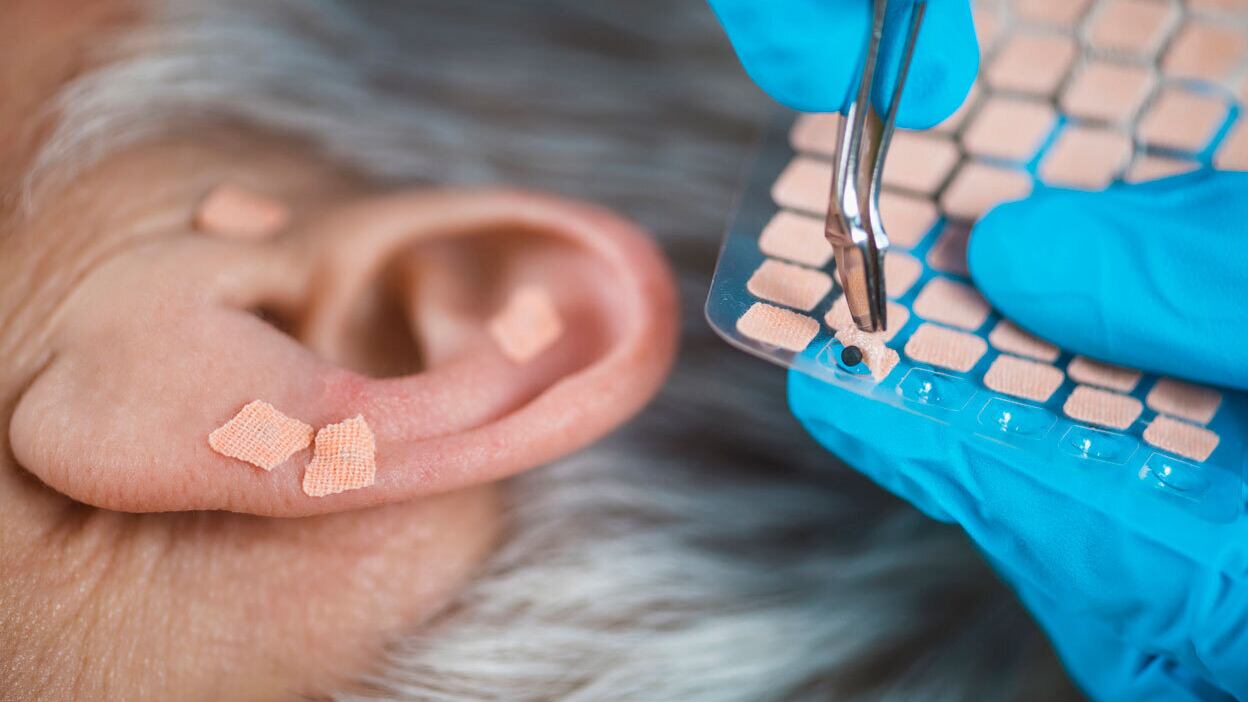
“Ear seeding” is a type of holistic auriculotherapy - a treatment that uses “ear seeds” to stimulate pressure points in the ear for ailments. Social media users claim the technique has multiple benefits, like dealing with chronic pain, insomnia, depression, anxiety, stress and more.
Acupuncture, a key component of traditional Chinese medicine on which this newer practice is built, is the practice of inserting very thin needles through the skin at strategic points to commonly help treat pain and manage stress, according to the Mayo Clinic.
It is a method for balancing the flow of energy or life force — also known as “chi” or “qi” — through pathways of the body. By inserting the needles in certain points along these pathways, the energy is believed to be brought into balance.
Acupuncture is believed to stimulate nerves, muscles and tissue and act as a natural painkiller in many western practices, Mayo Clinic’s website said.
Ear seeding has the same effect, but small, round seeds are used instead of needles.
French neurologist Paul Nogier invented and promoted auriculotherapy in the 1950s, using the ear as a medium to boost the body’s healing abilities and balance the nervous system, according to a study published in the National Library of Medicine.
Dr. David Greenberg, a general practitioner from Toronto told CTVNews.ca on Tuesday, that “ear seeding” is known to help people who are dealing with addiction and sleep issues.
“The thing about the needles is that they’ve got to be placed by somebody who knows what they’re doing, and if they don’t go in exactly the right spot, they’re not going to be as helpful,” Greenberg explained.
He added that due to the ease with which the “ear seeds” can be taped to the ear, the virality of this technique does not surprise him.
Greenberg believes acupuncture therapy can have a positive effect on some conditions if the provider is well-trained and well-versed in the technique.
“If people have had success with it, I wouldn’t argue with them. As a Western trained physician, I don’t prescribe it. I don’t understand it. I don’t know enough about it to recommend it,” he said.
“But when somebody comes to me and says, ‘I’ve been going acupuncture, and I feel it’s working great for me,’ I am certainly not going to talk them out of it.”
However, Greenberg emphasized on having a conversation with a medical professional if issues like addiction and stress persist.
He said, there are options like medication which are safe, effective, non-addictive and have minimal side effects.
How does ‘ear seeding’ work?
“(When) certain tiny spots around the ear lobe and external ear are needled, pressed or seeded, it corresponds to different parts of the body,” Sarah Kreitzer, R. Ac registered acupuncturist and owner of Acupuncture Center Toronto, told CTVNews.ca on Monday. “And when these very precise points are stimulated, they can have a healing effect.”
Headaches, backaches and all kinds of chronic pain, along with mental stressors, are often treated by either using auricular acupuncture or disinfected ear seeds, Kreitzer explained.
“We can formulate a point prescription that could consist of a combination of points, which when needled or pressed or ear seeded, reduce the effects of a headache or migraine,” she said.
Ear seeds used at Kreitzer’s clinic look like tiny, black beads and are adhered with surgical tape. They are applied only after the area is disinfected.
“We advise our patients to leave them in no longer than two to three days, in order to prevent infection,” she said, adding that someone else should remove them, as they’re easy to miss in the nooks and crannies of the ear.
According to Kreitzer, giving the skin a chance to breathe between ear seeding sessions is important for the tissue to stay healthy.

