Eric Ham is based in Washington, D.C. and is a political analyst for CTV News. He’s a bestselling author and former congressional staffer in the U.S. Congress and writes for CTVNews.ca.
The expectations were high for the second bilateral meeting between Prime Minister Mark Carney and President Donald Trump, with Canadians seeking relief from punishing tariffs as the White House continues to wage its quixotic trade war against the world.
The love fest hit new highs as both men offered glowing compliments and bromides amid their blossoming bromance. Still, through the veil of laughter and love, deep intractable challenges that many are hoping for resolution still went unresolved.
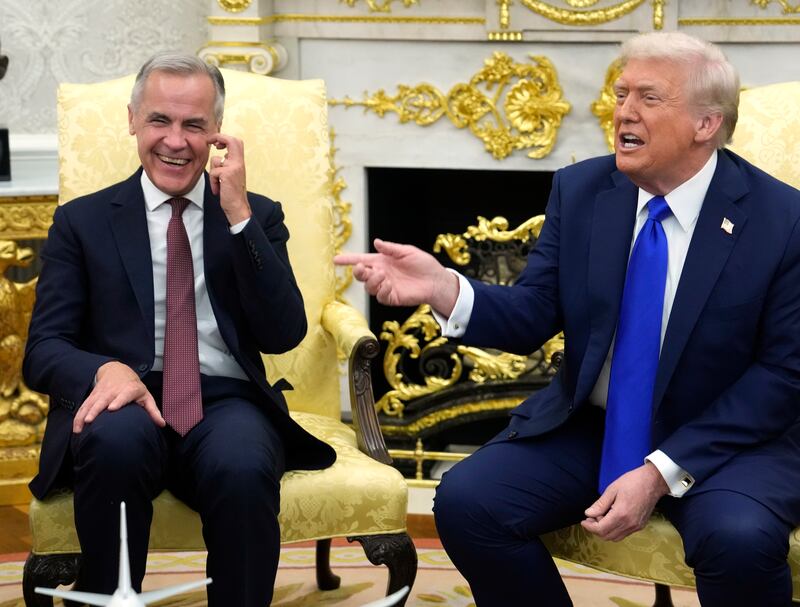
Though the personal interaction between Prime Minister Carney and President Trump appears deep, both detractors and supporters alike are pressing for results from the prime minister.
Here’s a look at some of the intractable challenges facing both nations with no answers in sight, amid the second face-to-face that many were hoping would find closure:
G7 minus 1
The pressure is definitely on the prime minister as businesses are seeking relief from tariffs. President Trump has steadfastly refused to back down from the 50 per cent tariffs on aluminum, copper, and steel.
Since then, the White House has also targeted pharmaceuticals, lumber and medium and heavy-duty trucks which could also place additional burdens on Canada’s economy and manufacturing sector. Carney is walking a fine line as he scours for openings to Trump’s wall of resistance.
After nine months in office, the Trump Administration has secured or committed to new trade agreements with all G7 nations except Canada. Even as nearly 80 per cent of goods traded between the two nations are protected under CUSMA, behind the warm smiles, Donald Trump is unwilling to give an inch as trade negotiations drag on with no end in sight.
Border problems

Recent congressional testimony by FBI Director Kash Patel makes clear that illegal border crossings from Canada into the U.S. are growing increasingly worrisome.
Canadian border officials have prioritized thwarting terrorists’ efforts to enter through the north, but as the number of crossings still vastly outpace those from the U.S. southern border, President Trump will continue to resist efforts to make nice with Ottawa, despite his endless affinity for the prime minister.
Fentanyl and terrorism are two of the primary drivers for this White House and as long as the president continues to think a porous border makes America less safe, Trump will never seek to reward Canada with a trade deal or a thawing of geopolitical tensions.
The smiles will grow wider and the laughter will boom louder but the intransigence will remain unmovable and unshakeable.
Annexing Canada
Perhaps no greater issue fuelling the untold distance between the two once-great allies is more vexing than statehood. Once again, during their meeting in the Oval Office, President Trump used the moment to make clear, albeit much more subtly, his still growing desire to make Canada a state of the United States.

Bringing the Great White North under American sovereignty is an ever-growing desire for this White House. It is what is behind all the enmity and angst now characterizing Ottawa-Washington relations and true to form, President Trump is raising the stakes.
His “economic force” mantra, the president hopes, will eventually push Carney and the country to agree to such a politically untenable agreement. Already, Ottawa has eliminated a controversial digital service tax and moved up its timeline to meet NATO defence-spending commitments among other overtures to smooth and ease tensions.
Nevertheless, the White House continues coming back to the idea of a “merger of Canada and the United States.”

