Editor’s note: This story is a collaboration between CTV News and the Investigative Journalism Foundation (IJF)
WANGANUI, NEW ZEALAND - On a nondescript street in Wanganui, New Zealand – a city on the North Island’s west coast – sits a massive Hells Angels clubhouse.
Surrounded by residential homes, the criminal group’s property is enclosed by high walls, a gate, and has security cameras monitoring the entrance.
While a W5 crew was filming the property from the street, an angry man came charging out of the gate, down the driveway and confronted correspondent Avery Haines on the street. The W5 crew was clearly not welcome.
“What are you up to?” asked the man.
“How’re you doing?” responded Haines.
“Not really well. F**k off.”
“Can I just explain to you…”
“No, you can’t. F**k off. Leave right now.”
Haines was attempting to explain that W5 was there as part of an ongoing investigation into the methamphetamine crisis ravaging New Zealand.
Wastewater testing suggests that meth consumption in New Zealand almost doubled from 2023 to 2024. In 2023, New Zealand seized 824 kilograms of meth from Canada, more meth than from anywhere else in the world.
The Hells Angels clubhouse had been raided in July by New Zealand Police, resulting in several charges relating to methamphetamine importation and supply. Nineteen people were arrested in total, including the president, vice-president, and sergeant at arms.
“We’re journalists from Canada and we’re doing a story on the meth crisis,” explained Haines.
“F**k off. F*****g piece of s**t. F**k off.”
“Why am I a piece of s**t for that?” asked Haines.
“F**k off,” the man once again responded. “Enough f*****g media coverage. F**k off, every single one of you.”
Mob life
The Hells Angels aren’t the only criminal gang with a strong presence on New Zealand’s streets.
About a dozen other criminal motorcycle clubs are entrenched in meth distribution across New Zealand. In fact, the country has one of the highest per capita gang membership in the world.
W5 was recently granted rare access to high ranking members of two of the most feared gangs, the Rebels and the Mongrel Mob. The latter set up a small Canadian chapter in Montreal in 2018.
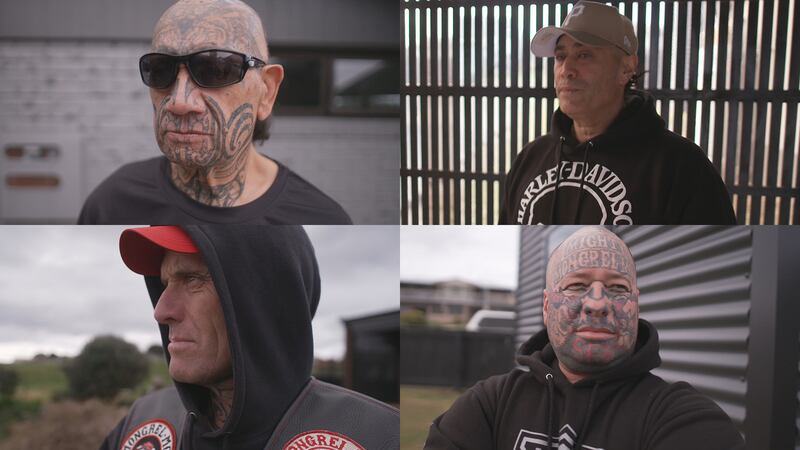
Baldy, a Mongrel Mob member, said he was born into gang life. “For us – for Mongrel Mob – it’s intergenerational… It’s normal to us. My father’s a mobster, all my uncles are mobsters, brothers are mobsters. Sisters married gang members.”
Baldy has been in and out of jail for years because of gang activity. “Heinous crimes I suppose…guns, drugs, violence, rape. Everything like that,“ said Baldy.
James Duffy, a longtime national president of the Rebels, described how gangs will create addicts out of members in their own communities. “Give it to them for free or just sell it cheap until you create the market. And then once they’re hooked, they just keep coming back,” explained Duffy.
Sandy Tamati, a long-serving Mongrel Mob national president, is on parole for kidnapping and sexually assaulting a teenager over a drug debt.
“I’ve been locked up most of my life,” said Tamati.
But all three men say they are now living a life free of crime and have one person in particular to thank: a Mongrel Mob member himself, Karl Goldsbury.
Goldsbury, a former meth addict and life-long criminal, helps teach prominent gang members a new lifestyle in order to reintegrate them back into society. His work has been so successful that judges regularly release members on parole and into his care to live on his property - alongside his grandson, daughter and wife.
“I’ll just get them here, I’ll set them up on a daily routine, I take them to all of their courses. I help them with their speech, with communicating, with trusting people,” explained Goldsbury.
He says he provides the men with around-the-clock support on the phone, assists them with their parole hearings and helps them with their education.
Goldsbury himself has completed his master’s degree in change and organizational resilience.
Goldsbury has arranged for the men to visit other gang members in prison to open up about a life free from addiction and crime.
“To date I’ve probably helped get out over 10…Not one of them have re-offended, not one of them have gone back to jail,” said Goldsbury.
Meth capital of New Zealand
According to wastewater testing, the Northland region of New Zealand has the highest per capita weekly meth consumption rate in the country.
In the region’s town of Kaikohe, registered nurse Rhonda Zielinski runs the Whakaoranga Whanau Recovery Hub where she and her team help people struggling with addiction.
The hub offers shelter, food, language and cultural classes, along with evening fitness programs, such as kickboxing.
Similar to Goldsbury, Zielinski welcomes gang members released from jail to live on her property.
“I don’t see gangs,” said Zielinski. “I just see beautiful Māori people that need to change their life or they’re going to spend their whole life in jail.”
One of the men she recently brought into her home is Harley Hauraki, a patched member of the Black Power gang.
Hauraki, who had only been out of jail a week, told W5 he started using meth at a very young age. “It’s been a massive, massive impact. I started when I was nine.”
Hauraki said he used the drug as an escape from a tough life; “Poverty, violence, yeah. Gangs.”
Zielinski works daily to curb the demand for meth in her community. But she would like to know why it’s getting out of Canada so easily to begin with.
“What’s being done about it from a Canadian perspective to stop it getting out of the country? she asks. “It’s killing our families. It’s wrecking our communities.”
Meth disguised as beer
Meth from Canada is responsible for at least one death in New Zealand.
In 2023, 21-year-old Aiden Sagala died after accidentally drinking liquid methamphetamine that had been concealed in shipments of “Honey Bear House Beer” from Toronto.
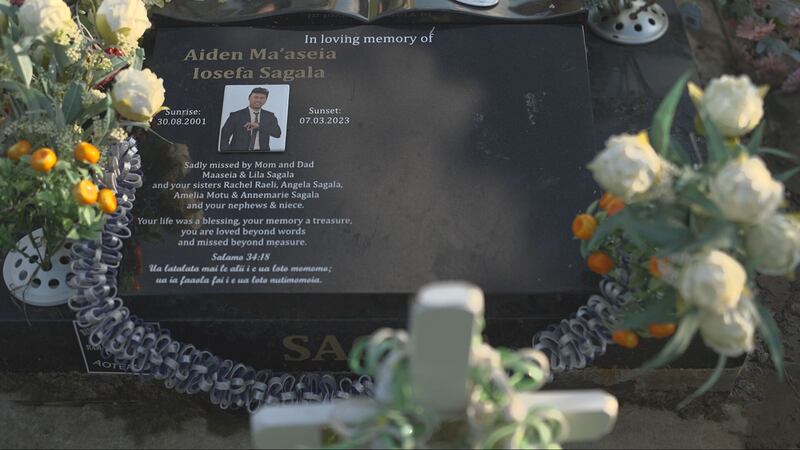
His boss was handing out cases of the beer at work and had given Sagala a couple.
What Sagala didn’t know was that Honey Bear beer is not a real brand and that his boss was involved in a drug trafficking network and had been helping crystallize and prepare the liquid meth for sale.
In getting rid of the excess beer, Sagala’s boss mistakenly gave him a case that still contained cans of methamphetamine. Sagala happened to drink from one of those very cans one day after work.
Riders against meth
Sagala had been living with his sister, Angela, and brother-in-law Billy, when he died.
When Bryan Haddon heard the news of Sagala’s death it angered him that an innocent young man was killed by meth.
“He wasn’t in the gangs, he wasn’t into the drugs, he was a Christian boy. He had a loving family. … He goes, finishes work, has a drink, or has a mouthful with his brother-in-law. … It wasn’t his choice that he died the way that he did,” said Haddon.
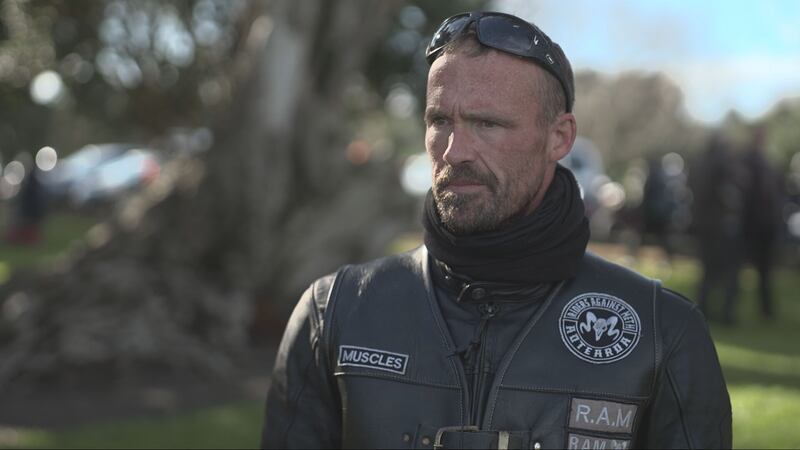
Haddon was part of a non-outlaw motorcycle club at the time, Riders Against Meth (RAM). RAM is made up of former addicts.
In response, Haddon and the club launched the RAM Ride in Sagala’s honour. A 230 kilometre trek from Rotorua to Auckland to raise awareness about the dangers of meth.
The ride ends with a moment of silence at Sagala’s gravesite.
Not an active member of RAM at the moment, Haddon says he will still ride in honour of Sagala for the rest of his life.
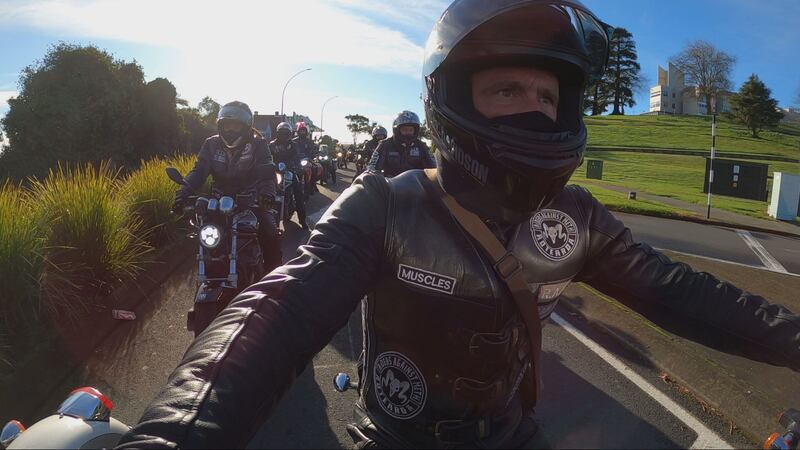
“We need to do this every year to make not only New Zealand aware, but the rest of the world know what’s going on with this drug that’s killing people, and innocent people at that,” said Haddon.
“Seeing that was so heartwarming,” said Sagala’s brother-in-law, Billy. “That feeling was like, man, this is for you, Aiden…it made us cry.”

