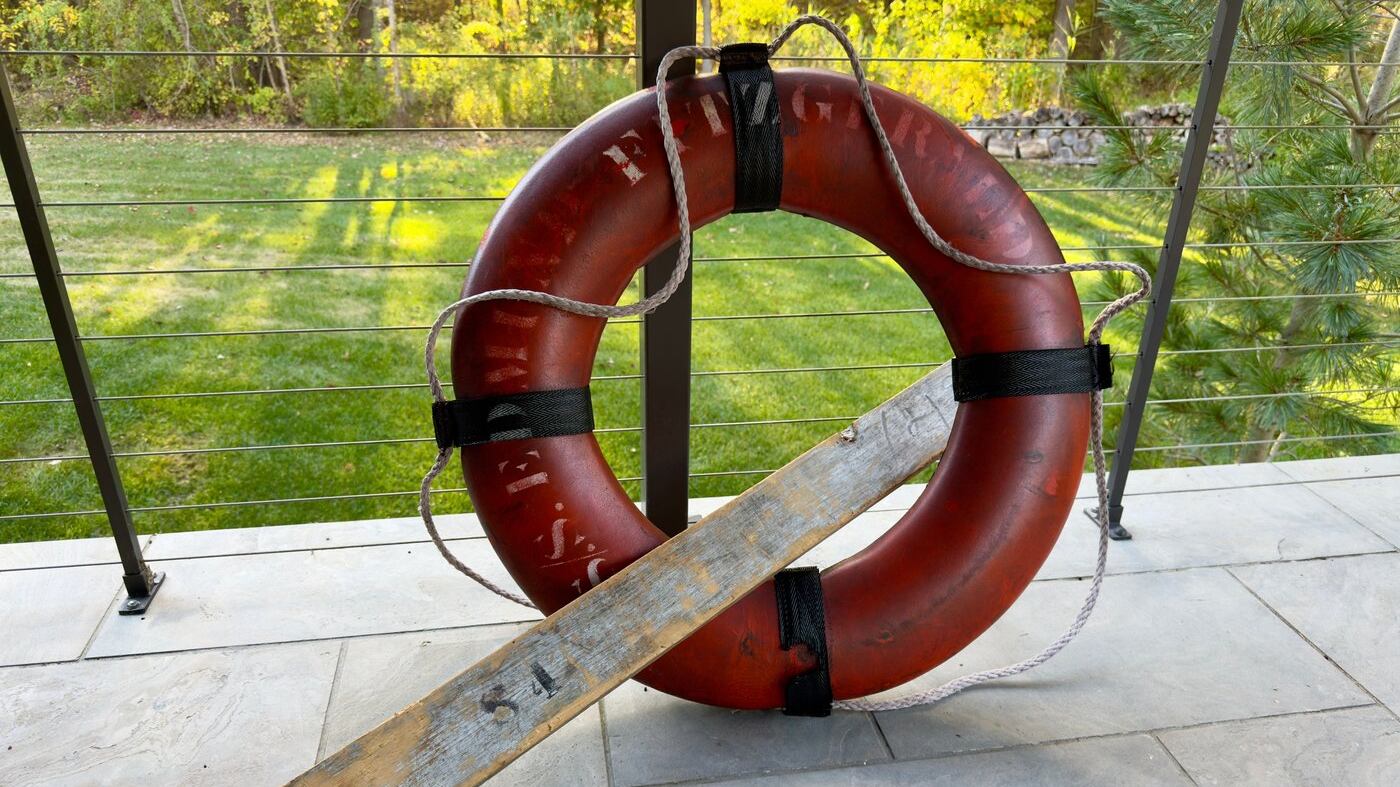
DETROIT — A life ring and a piece of a lifeboat from the Edmund Fitzgerald were sold at auction Friday for US$150,000, a month after the 50th anniversary of the famous ship’s sinking in Lake Superior with 29 men aboard.
The relics were discovered by a carpenter in 1975 along the shore in Michigan’s Upper Peninsula. There were no survivors when the ore carrier perished in a tremendous storm and plunged 535 feet (163 metres) to the lake bottom.
“I’m dumbfounded,” longtime owner Larry Orr, 77, said. “I never believed in a million years it would go for that much money. Shocked.”
Orr was curious about the shipwreck and found the life ring and a wood piece from a lifeboat while taking a break from his job, eight days after the “Fitz,” as it was known, went down.

The Anderson, about 16 to 24 kilometres behind, kept watch on the Fitzgerald during the storm. The Fitzgerald never called for help, and the ship’s lifeboats were found badly damaged, indicating it sank very quickly.
Canadian music legend Gordon Lightfoot turned the tragedy into a hit song in 1976 called, 'Wreck of the Edmund Fitzgerald.'
The sale was handled by DuMouchelles, a Detroit auction house and art gallery that sits a block away from Mariners’ Church, where a bell solemnly tolls on each anniversary of the sinking. The name of the buyer was not disclosed.
Canadian singer-songwriter Gordon Lightfoot memorialized the ship in 1976 with an iconic ballad, “The Wreck of the Edmund Fitzgerald.”

For decades, Orr, who lives in Yulee, Florida, had allowed a Michigan museum to display the artifacts. He said he decided to sell them because he needed money.
Orr recently had agreed to give them to the state of Michigan as part of a US$600,000 settlement in a completely unrelated misconduct lawsuit against state police. But the state agreed to return them after The Associated Press wrote about the strange deal. The amount of Orr’s settlement didn’t change.
Ed White, The Associated Press

