A pro-UAE Yemeni official told AFP on Sunday that southern forces, including Emirati-backed separatists, would not agree to unite under the command of a Saudi-led coalition as announced the day before by the head of the country’s ruling council.
The leader of the Presidential Leadership Council, which helms Yemen’s internationally recognized government, had said that all forces in the south would operate under a committee directed by the Saudi-led coalition after it rolled back a land grab by the separatists last month.
The announcement was the latest move by Riyadh and its allies to consolidate power in the Yemeni government, but Faraj Al-Bahsani, himself a member of the eight-seat leadership council as well as vice president of the separatist Southern Transitional Council (STC), poured cold water on the idea.
“It will be difficult to unify forces, as announced by Rashad al-Alimi, under one banner led by the coalition,” Bahsani told AFP in an interview in Dubai.
“The southern forces, whether affiliated with the Southern Transitional Council, the forces in Hadramawt, or any other force, will not accept this.”
His remarks come after the STC’s brief capture of two Yemeni provinces exposed rifts between major regional powers the UAE and Saudi Arabia, which back rival sides of Yemen’s divided government.
Saudi ‘pressure’
Bahsani lives in the United Arab Emirates, where he has been getting medical treatment, and is considered to be backed by that country’s rulers.
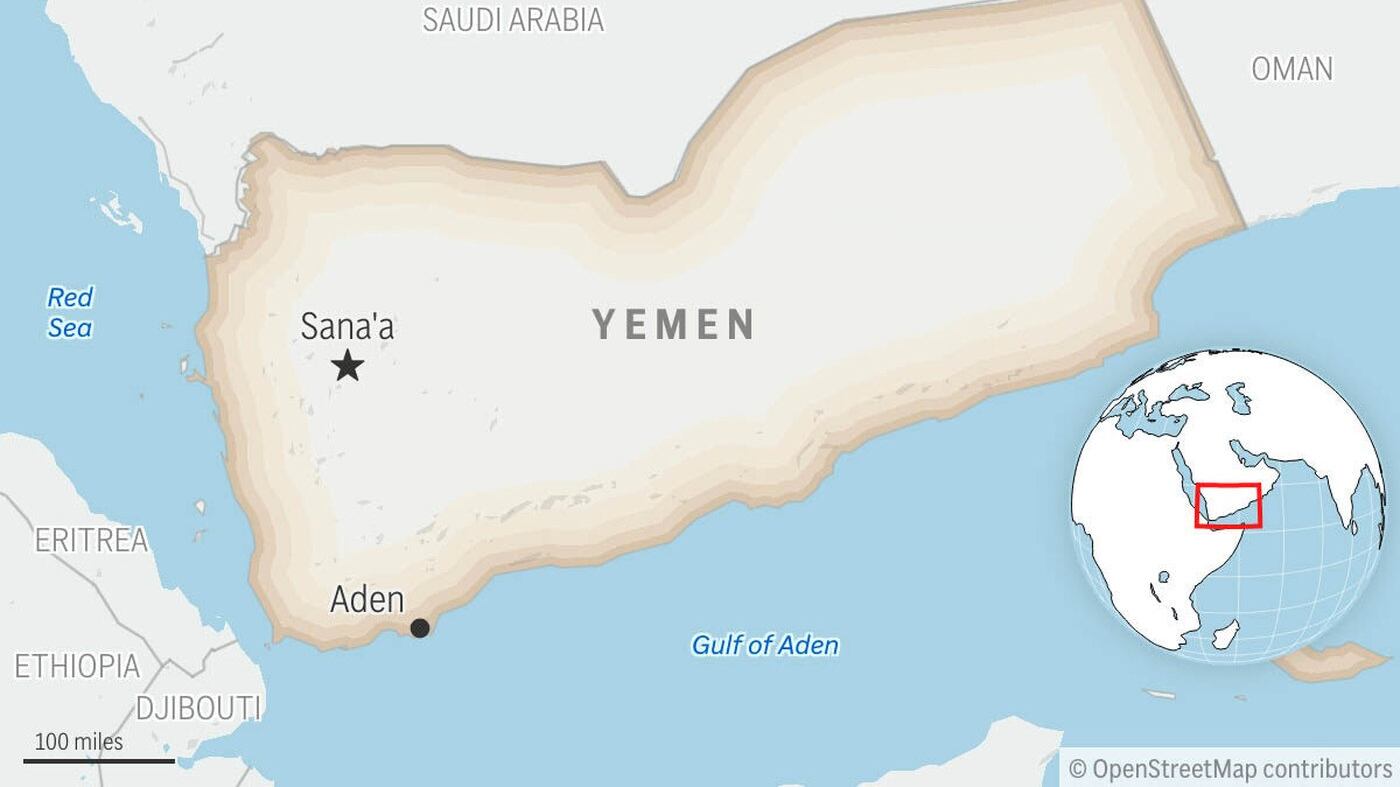
He was governor of oil-rich Hadramawt province, Yemen’s largest and one of the two provinces bordering Saudi Arabia that the separatists seized before the coalition recaptured them using Saudi air power and Yemeni allies on the ground.
The Yemeni government on Saturday implied that the UAE was preventing Bahsani from departing to Riyadh for talks, allegations that Bahsani denied.
Saudi Arabia has said it will host talks for Yemen’s southern groups at the request of the government it backs in a bid to resolve their differences.
But a high-level separatist delegation that recently travelled to Riyadh for discussions is allegedly being detained there, according to the STC, which says it has lost contact with its representatives.
The date of the conference is yet to be determined but Bahsani called for it to take place outside the kingdom.
“If there is an atmosphere conducive for a real dialogue in Saudi Arabia, I will participate when I recover. But if the matter is not serious, there is no need to participate,” he said.
“I call on Saudi Arabia to give southerners an opportunity to meet outside Saudi Arabia, away from the pressures that will be exerted on the participants if it is held in Riyadh.”
Returning to Aden
On Friday, the separatist delegation that went to Riyadh announced the STC’s dissolution, a decision UAE-based STC officials dismissed as having been made under duress.
STC leader Aidarous Al-Zubaidi failed to board the delegation’s flight to Riyadh, with the Saudi-led coalition accusing him of fleeing to Abu Dhabi, while his group maintains he is still in the southern Yemeni city of Aden.
Bahsani warned that unilaterally announcing the STC’s dissolution could have far-reaching consequences.
“The Southern Transitional Council united the south... Declaring its dissolution from Riyadh undermines all these efforts and creates a vacuum that will be filled by extremist forces,” he said.
Yemen’s internationally recognised government is a patchwork of groups held together by their opposition to the Iran-backed Houthis, who ousted them from the capital Sanaa in 2014 and now rule much of the country’s north.
In the south, the separatists still retain some popular support.
On Saturday thousands rallied in Aden in support of the separatists and their leader Zubaidi, despite pro-Saudi officials prohibiting the gatherings.
Some of the protesters could be heard chanting slogans against Saudi Arabia’s de facto ruler Mohammed bin Salman and Presidential Leadership Council head Alimi, who is currently in Riyadh.
“Escalating popular anger makes it difficult –- if not impossible –- for some of the current leaders to return to Aden,” Bahsani said.

