


Prime Minister Mark Carney told reporters “relations are good” with the United States amid ramped-up attention and threats from U.S. President Donald Trump.
Canada’s free trade agreement with the U.S. and Mexico is up for a formal review in July. U.S. President Donald Trump’s 100 per cent tariff threats should be seen in the context of those negotiations, Carney said earlier this week.
Meanwhile, Foreign Affairs Minister Anita Anand is talking Arctic sovereignty in Ottawa.
This week:
- Carney likely to visit India in early March
- Trump says China is ‘taking over’ Canada
- PM Carney stands by Davos speech
Here were the key events that happened on Jan. 28, 2026:
Bessent warns Carney against picking a fight before CUSMA talks
U.S. Treasury Secretary Scott Bessent on Wednesday warned Carney that his recent public comments against U.S. trade policy could backfire going into the formal review of the Canada-U.S.-Mexico Trade Agreement, the trade deal that protects Canada from the heaviest impacts of U.S. President Donald Trump’s tariffs.
“I would not pick a fight going into (CUSMA) to score some cheap political points -- either you’re working for your own political career or you’re working for the Canadian people,” Bessent said during a CNBC interview.
“I’ve seen what happens when a technocrat tries to pivot and become a politician.” Bessent added, in a reference to Carney’s background as a central banker. “It never really works out well.”
The Associated Press
Gov. Gen. to visit Norway, Denmark, Greenland
Gov. Gen. Mary Simon is headed to Norway to take part in the Arctic Frontiers Conference in Tromsø from Feb. 2 to 4, a news release said. Simon will then visit Denmark and Greenland from Feb. 4 to 7, to attend the opening of the Canadian consulate in Nuuk.
“The Arctic is stronger when nations work together. Canada’s long-standing approach is grounded in close, constructive engagement, supporting stability, respect for sovereignty and the well-being of northern communities,” Simon said. “My upcoming visits to Norway, Denmark and Greenland reflect our commitment to building on already strong relationships with our Arctic partners.”
Lynn Chaya, CTVNews.ca journalist
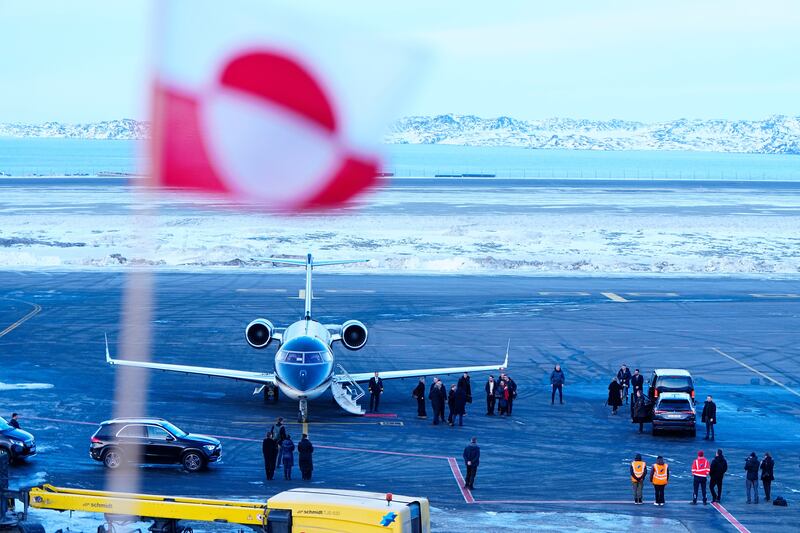
Greenland-U.S. talks begin
Talks between the United States, Greenland and Denmark began on Wednesday, the Danish foreign ministry said, as the three parties seek to resolve a diplomatic crisis over President Donald Trump’s threats against the Arctic territory.
The diplomatic talks come after months of tensions between Denmark and the United States, both founding NATO members.
Reuters
Carney: ‘We’ll be ready’
Speaking briefly to reporters on his way into a cabinet meeting this morning, Carney said “We have good conversations -- good back and forth” with the Americans.
“There’s a lot of work to be done for the review of CUSMA,” he said, adding internal reviews are starting in Mexico, are in progress in the U.S., and are finished in Canada. When it’s time to sit down at the negotiating table, “we’ll be ready,” he said.
Trump may already be laying the groundwork for those negotiations, Carney suggested earlier this week, by threatening Canada with new tariffs, insulting the prime minister with his “governor” monicker and suggesting Canada is “destroying itself” by strengthening trade ties with China.
On Monday, Carney called the president a “strong negotiator.”
Luca Caruso-Moro, CTVNews.ca journalist
Anand on Arctic security
Foreign Affairs Minister Anand delivered a keynote speech at the Nordic-Canadian Arctic Symposium in Ottawa.
She said Canada is bolstering its defence capacity in the Arctic with a fleet of early-warning aircraft, an array of tactical helicopters, and is establishing a satellite ground station to improve secure Arctic communication.
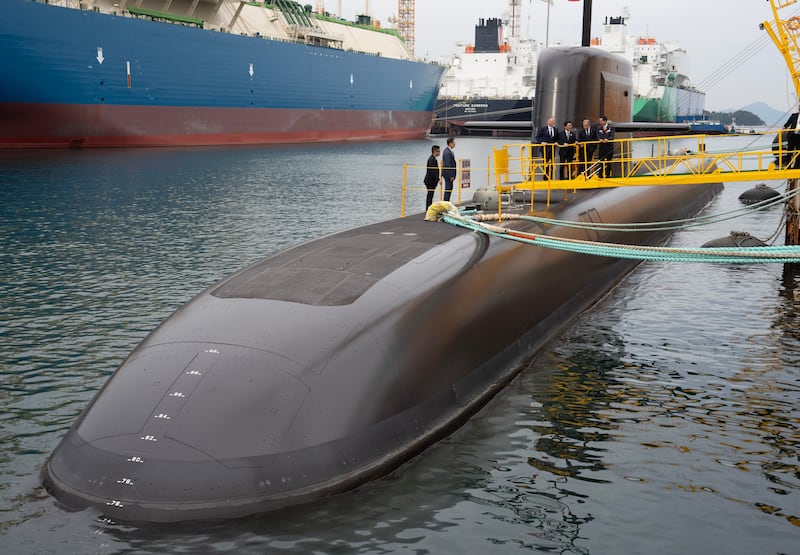
She also referenced Canada’s potential procurement of up to 12 submarines. On Sunday, South Korean sub defence company Hanwha Ocean signed a binding Memorandum of Understanding (MOU) with Algoma Steel valued at approximately $345 million. It takes about six years to build one submarine.
“The bottom line is that our Arctic presence is increasing. But make no mistake. Sovereignty is not simply about assets,” said Anand.
Anand says Canada’s Arctic presence will increase as the country builds up its fleet of ships, subs and aircraft capable of operating in the tundra – including six “purpose built” Arctic and offshore patrol vessels.
Luca Caruso-Moro, CTVNews.ca journalist
Inuit want larger role in Arctic defence
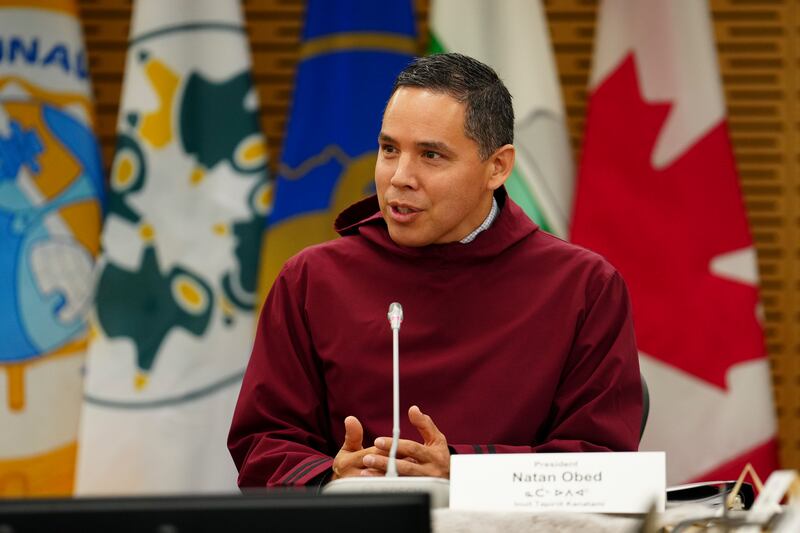
The leader of the national organization representing Inuit says the federal government must bring them to the table when it makes its plans to surge defence spending in the Arctic.
While Foreign Affairs Minister Anita Anand says Ottawa’s growing focus on defending the Arctic will boost living standards in the region, Inuit Tapiriit Kanatami head Natan Obed says Canada still isn’t treating the Inuit as equal partners.
Obed says the defence infrastructure constructed in the North early in the Cold War was “built based on agreements that the Canadian government made with the U.S.” and “radically changed” Inuit lives by allowing the “Canadian government to coerce Inuit off of our lands into settled communities.”
The Canadian Press.
Where should money for the Arctic go?
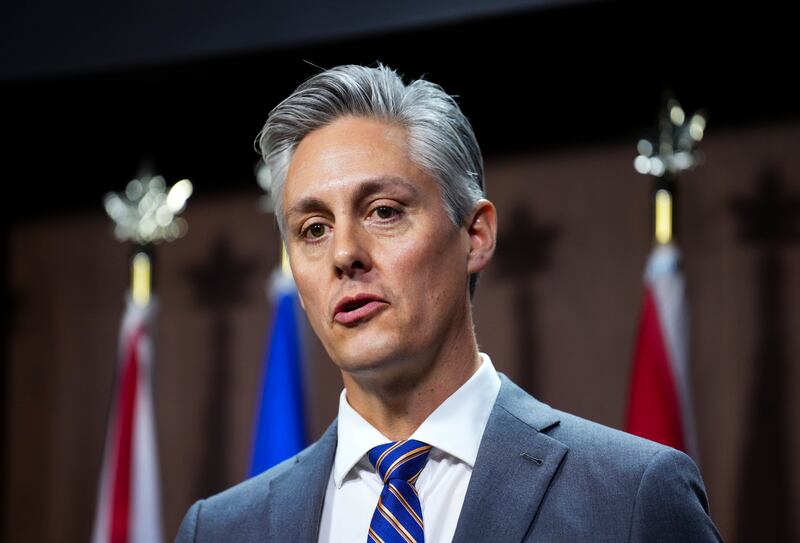
N.W.T. Premier R.J. Simpson says federal money meant for Arctic projects and programs should go to the territories.
Simpson made the remarks today while taking questions on the sidelines of the premiers’ meeting in Ottawa.
The latest federal budget promised a $1 billion Arctic Infrastructure Fund to invest in “major infrastructure projects in the North.”
While the fund’s terms are still in the works, Simpson said the message being delivered by northern premiers in Ottawa this week is that money earmarked for “the North” should go to the territories.
Manitoba Premier Wab Kinew posted on social media last week a proposal to build a new port in Churchill, Man., billing it as a project to assert Arctic sovereignty.
While Simpson said there are northern parts of provinces that could “rightly” be called the Arctic, he stressed the need for federal support in the territories.
The Canadian Press
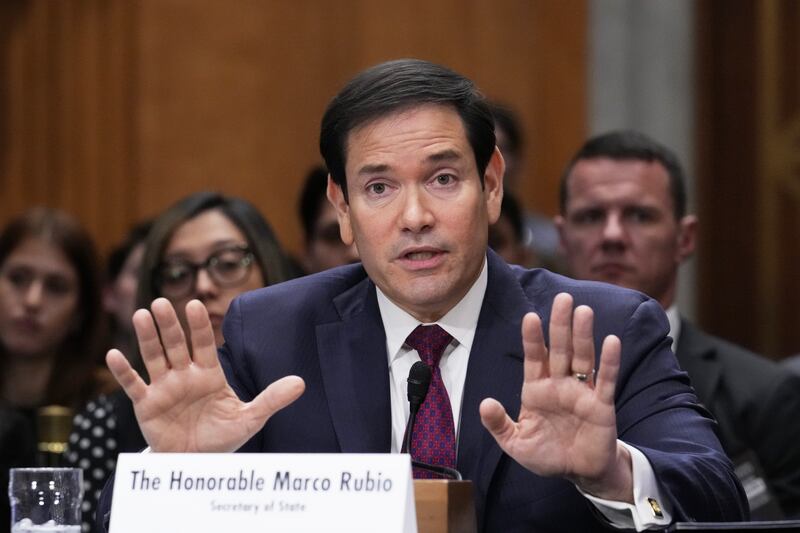
Rubio: Without U.S., there is no NATO
U.S. Secretary of State Marco Rubio faced a line of questions from the U.S. Senate Foreign Relations committee on NATO cohesion.
New Hampshire Senator Jeanne Shaheen asked Rubio to speak about Trumps Greenland rhetoric, which she said undermines NATO.
“When we antagonize our allies and partners, and when we send Canada to do a trade deal with China instead of coming to New Hampshire, or the United States, it weakens our ability to confront our adversaries,” she said.
“Yeah, but our allies have to be two things – they need to be willing to step up but they also have to be capable of stepping up,” Rubio responded.
The secretary repeatedly pushed back on Shaheen, saying the United States’ European allies have favoured social spending over military might because of the American security umbrella.
“Without the U.S. there is no NATO,” he also said, later adding technical meeting are underway today between the U.S. officials and their counterparts in Greenland and Denmark.
Luca Caruso-Moro, CTVNews.ca journalist
Macklem on Trump’s treatment of Fed chair
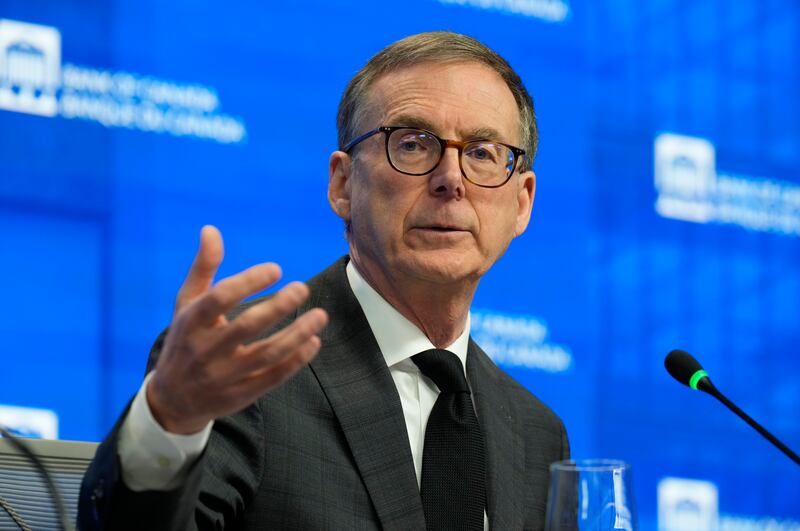
The threat to the independence of the U.S. Federal Reserve is boosting economic uncertainty around the world, Bank of Canada Governor Tiff Macklem said on Wednesday in his strongest comments to date on the outlook for the Fed.
U.S. President Donald Trump has repeatedly criticized Fed Chairman Jerome Powell, demanding he cut interest rates. He is seeking to remove Fed governor Lisa Cook while the Department of Justice has threatened Powell with a criminal indictment.
Macklem made his remarks to reporters after keeping rates on hold amid what he called unusually high levels of uncertainty.
“I think the threat to the independence of the central bank in the United States is one thing that has sort of been contributing to this sense of uncertainty,” he said.
“The Federal Reserve is the biggest, most important central bank in the world, and we all need it to work well. A loss of independence of the Fed would affect us all,” he added, saying Canada would be particularly affected given its close economic links to the United States.
Reuters
Domestic travel surges amid U.S. boycott
As Canadians make fewer trips to the U.S., domestic travel is on the rise.
Data provided to CTVNews.ca by Environics Analytics shows that travel within the country by Canadian residents was up nine per cent in the third quarter of 2025 compared to a year ago, an increase of 6.9 million trips. According to Environics, Canada’s domestic travel boom is being led by multicultural suburban families. Environics Analytics is a Toronto-based marketing and analytical services company owned by Bell Canada.
“Canadians are exploring Canada more, and if you look at the numbers, it’s pretty much across the board,” Environics Analytics chief client officer Rupen Seoni told CTVNews.ca.
In terms of percentages, the largest increases in the third quarter of 2025 were seen in Prince Edward Island (13.1 per cent), Ontario (12 per cent), New Brunswick (11.4 per cent) and Saskatchewan (11.3 per cent). When it comes to visitor numbers, the biggest jumps were noted in Ontario (3.6 million), Quebec (1.6 million) and Alberta (697,000).
Daniel Otis, CTVNews.ca journalist. Read the full story here.
3 months later, still no court decision
When the U.S. Supreme Court granted an unusually quick hearing over President Donald Trump’s tariffs, a similarly rapid resolution seemed possible.
After all, Trump’s lawyers told the court that speed was of the essence on an issue central to the Republican president’s economic agenda. They pointed to a statement from U.S. Treasury Secretary Scott Bessent warning that the “longer a final ruling is delayed, the greater the risk of economic disruption.”
But nearly three months have elapsed since arguments in the closely watched case, and the court isn’t scheduled to meet in public for more than three weeks.
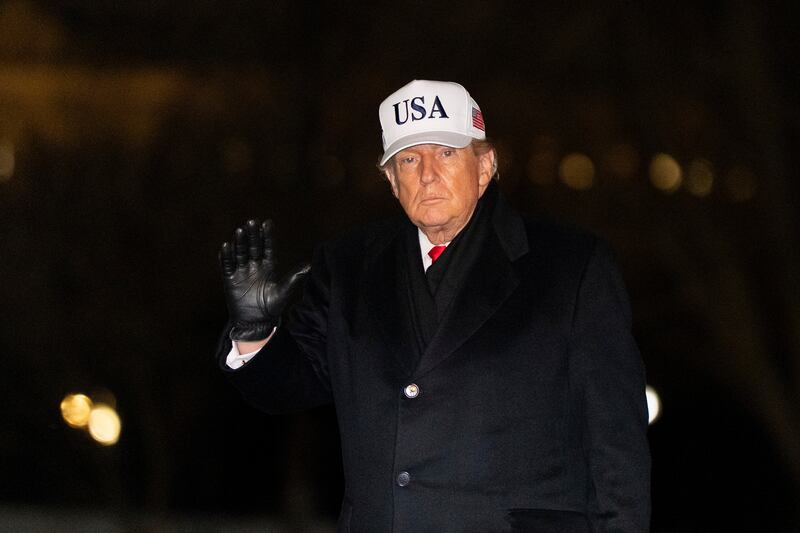
No one knows for sure what’s going on among the nine justices, several of whom expressed skepticism about the tariffs’ legality at arguments in November. But the timeline for deciding the case now looks more or less typical and could reflect the normal back-and-forth that occurs not just in the biggest cases but in almost all the disputes the justices hear.
The Associated Press. Read the full story here.

