The U.S. Department of Justice has released thousands of documents related to disgraced financier Jeffrey Epstein, but experts say it’s “slow walking” a process the U.S. Congress explicitly ordered it to complete weeks ago.
“The Department of Justice’s official story is that they’re in the process of redacting the files to protect the identity of victims,” said Rob Goodman, an associate professor of politics and public administration at Toronto Metropolitan University, in an interview with CTV Your Morning Tuesday. “But that’s not really a position that the victims themselves accept.”
Goodman said the delay is more likely political than procedural.
“Part of the reason the Department of Justice is taking so long ... is that they feel like they work for the (U.S.) President (Donald Trump),” he said. “Pam Bondi, the (U.S.) Attorney General … is essentially the president’s personal attorney, and I think she and the other folks at Department of Justice see it as part of their obligation to protect the president and the party from whatever might be in those files.”
As of January 2026, the U.S. Justice Department has released roughly 12,000 documents from what it says is more than two million documents. They include photographs of Epstein with high-profile figures such as Trump, former U.S. president Bill Clinton and Andrew Mountbatten Windsor, formally known as prince Andrew.
That represents less than one per cent of the total material, and the documents released so far have been heavily redacted and limited in substantive new revelations.

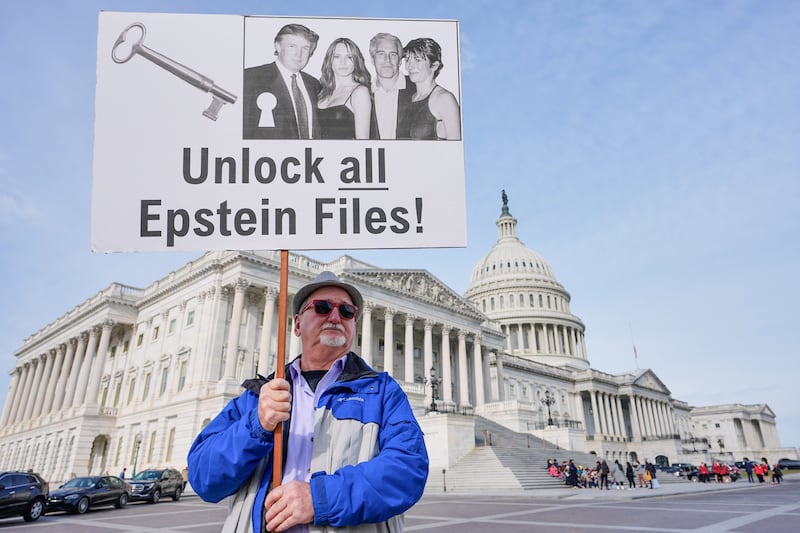
In November 2025, Congress passed the Epstein Files Transparency Act with overwhelming bipartisan support, and Trump signed it into law.
The legislation required the Justice Department to publicly release all unclassified investigative files related to Epstein and his associates within 30 days, setting a deadline of Dec. 19, 2025.
“One thing that’s actually telling is that this initial law was passed over the president’s objections,” Goodman said. “Originally it required some defections from the Republican Party to even get to this point, so that suggests that there is some political pressure behind the release of these files.”
The legislation also required the department to provide an unredacted list of public officials and politically exposed persons named in the files.
That list has not been released.
Goodman said Congress technically has the tools to try to compel compliance, but the deeper problem lies with enforcement.
“Given the fact that the DOJ lawyers have actually been accused of gaslighting federal judges in open court, it doesn’t seem likely that the DOJ is going to be very eager to comply.”
He said the consequences of the delay are more likely to be political than legal.
“I’m really wary of the idea that something like Trump’s demand to annex Greenland, or Trump’s use of federal troops … in a terror campaign in Minneapolis are somehow distractions from the underlying truth of the Epstein files,” Goodman said. “What we’re seeing right now is a political system that’s in in deep, deep crisis.”

