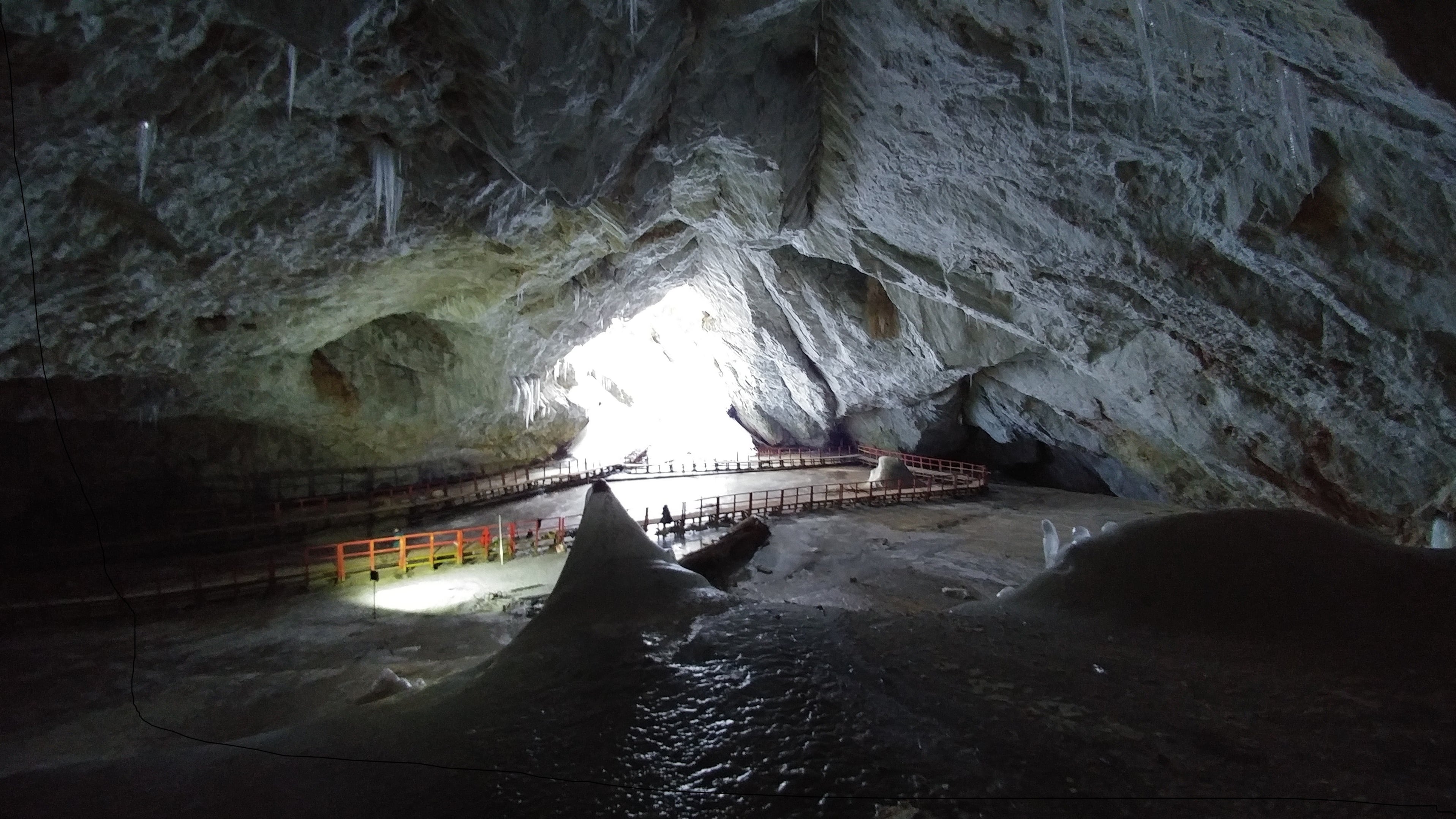
Researchers say a strain of bacteria, encased in an underground ice cave for at least 5,000 years, has been found to be resistant to modern antibiotics despite never encountering them. Scientists say the discovery brings both risks and benefits.
“This was a very interesting finding, and it opens a lot of other questions and research directions in the future,” Carmen Chifiriuc, professor of microbiology at the University of Bucharest, told CTVNews.ca in an interview on Monday.
The findings, published on Tuesday in the scientific journal Frontiers in Microbiology, represented the first genome analysis of the particular bacterial strain Chifiriuc and a team of scientists found, “as well as the first characterization of ancient resistomes within this largely unexplored environment,” the researchers said.
Samples were taken from a layer of ice thousands of years old in the Scarisoara Ice Cave in Romania. It was there that the researchers found the Psychrobacter SC65A.3 bacterial strain, which showed resistance to multiple widely used modern antibiotics.
Risks of antibiotic resistance
Chifiriuc said that for decades, medical scientists studying bacterial resistance to antibiotics have focused on how modern medicine has put pressure on certain bacteria to adapt and mutate in order to survive.
“But it isn’t like this,” she said. “Antimicrobial resistance is a natural phenomenon. It has occurred as part of the ability of these bacteria to adapt and to gain competitive advantages in their natural ecosystems.”
Bacteria’s ability to resist against compounds and chemicals that can kill it is a phenomenon as old as bacteria itself, Chifiriuc explained, but with the heavy use of modern antibiotics in recent decades, bacteria have become increasingly able to survive the harshest of environments.
“What has really happened is that after the discovery of antibiotics, we have used them heavily, and under the selective pressure of the huge amounts of antibiotics released in the environment, these bacteria have exploited their natural mechanisms,” she said.
“They’ve polished them in order to be more and more competitive and assure them this survival capacity in the presence of high concentrations of antibiotics.”
Within its icy environment, the bacteria examined by the researchers was found to have developed genes resistant to 10 classes of antibiotics used to treat things like tuberculosis, colitis, and urinary tract infections.
The danger of this discovery, researchers said, is the potential for these newly discovered microbes to spread their antibiotic-resistant genes to other harmful bacteria, which could add to an already pressing global challenge.
Potential benefits
But the discovery also presents an opportunity to help address the issue, the researchers say. While bacteria can evolve to become resistant to certain antibiotics, they can also produce their own antimicrobial compounds to defend against competing bacteria.
Chifiriuc said the research team has already tested the antimicrobial properties of Psychrobacter SC65A.3 on other bacteria known to be the most resistant to antibiotics, “with very good results.”
“We will perform this biochemical analysis of the nature of these compounds, and we hope ... to find a really new compound, different from the other classes of antibiotics that could gain us some time in our race against antimicrobial resistance,” she said.
The discovery of a new antimicrobial substance that harmful bacteria aren’t resistant to would allow doctors to more effectively treat patients with certain dangerous infections, Chifiriuc said.
But even when new discoveries are made, Chifiriuc noted, medical scientists must remain focused and vigilant in the fight against harmful bacteria, because there’s a reason they have survived for more than 3.5 billion years.
“One of the biggest Romanian microbiologists used to say that the bacteria will have the last word. Half of the biomass of this planet is made of microorganisms, and they are very generous, so they are adapting very easily, but they don’t keep it for them,” she said.
“They don’t protect their discoveries with patents or publications; they are sharing generously these mechanisms to other bacteria so that can help them to be one step ahead of us all the time.”

