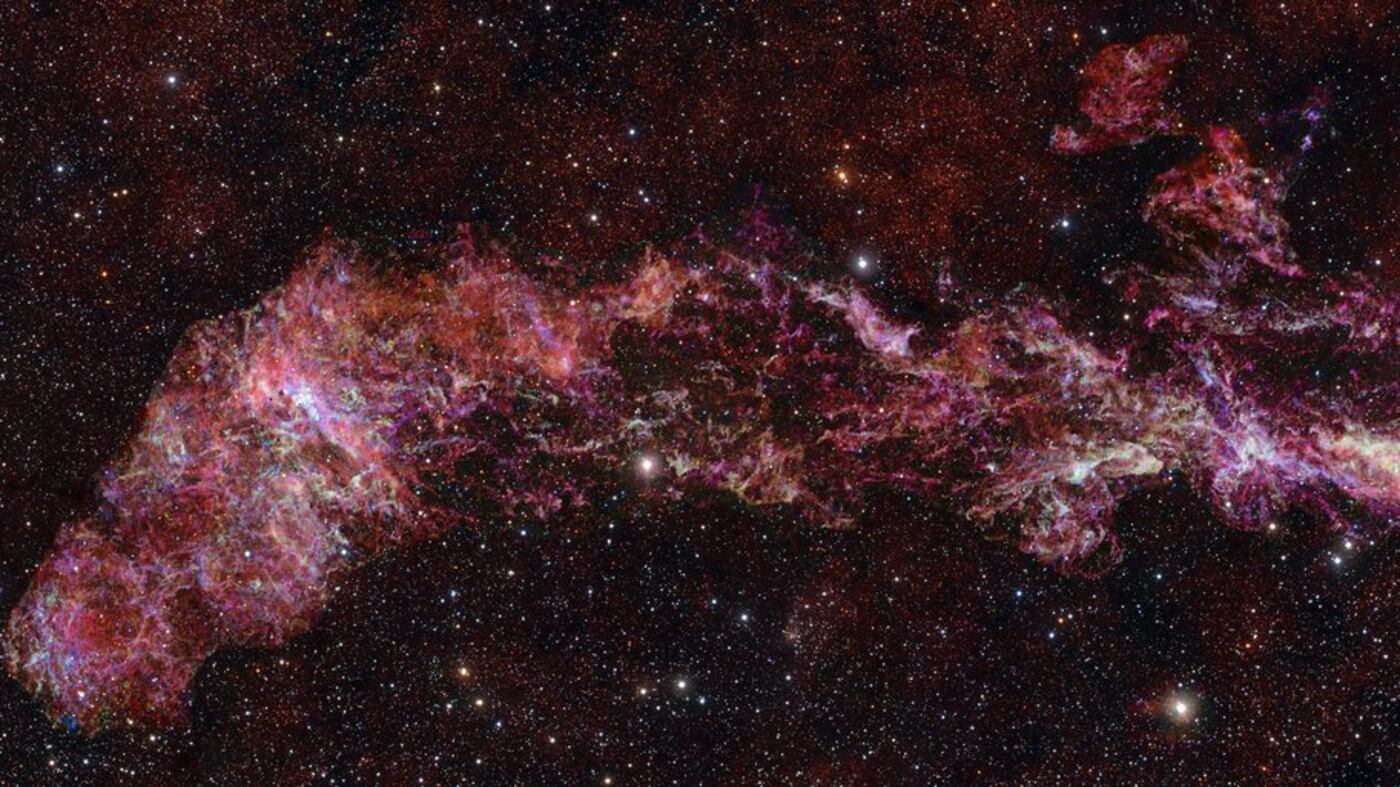
CAPE CANAVERAL, Fla. — A telescope in Chile has revealed in unprecedented detail the swirling splendor of star-forming gases at the heart of our Milky Way galaxy.
The picture released Wednesday by the European Southern Observatory zeros in on a region of cold cosmic gases more than 650 light-years across. A light-year is nearly 6 trillion miles (9.7 trillion kilometres).
The clouds of gas and dust surround the supermassive black hole at the galactic dead center.
It’s the largest image ever taken by the ALMA antenna network in the Atacama Desert, one of the driest places on Earth.
By studying how stars are born in this so-called Central Molecular Zone, astronomers can better understand how galaxies evolved, said survey leader Steve Longmore of Liverpool John Moores University.
“It’s a place of extremes, invisible to our eyes, but now revealed in extraordinary detail,” the European Southern Observatory’s Ashley Barnes, who is part of the research team, said in a statement.
___
Marcia Dunn, The Associated Press

