


Getting rid of Iran’s supreme leader, Ayatollah Ali Khamenei, is significant, but does not guarantee a regime change, one expert says.
Former Canadian ambassador to Jordan, Iraq, Afghanistan and the UAE Arif Lalani told CTV News Channel on Sunday that it takes “much more than aerial bombardment” to bring about a regime change.
“The West’s record in this century of intervening for regime change, the success rate is almost zero,” Lalani said. “Libya, Afghanistan, some would argue Iraq, and until now, even Venezuela, you actually haven’t had regime change. “
According to Lalani, there are many “pieces” in play that could end up creating a scenario where Iran sees extreme instability without a regime change, or where the existing regime takes deeper roots, “digging in and continuing.”
“This country (Iran), unlike Libya and the others, has a tremendous ability to retaliate, as we’ve been seeing overnight,” he added.
When asked about incoming power shifts following the death of Khamenei, Lalani said law, order and security forces will have to make a decision in the coming weeks about whether they want to protect the regime or protect the nation, by siding with its people and trying to build a “new country.”
“It’s too early to tell,” he said, adding that the Iran’s supreme leader who was assassinated on Saturday was assumed to be “on the way out” because of his age and failing health.
“We need to look at whether regime leaders take over. So far, there is a co-ordinated response from the Iranian leadership that remains,” Lalani said.
“In the meantime, there are huge economic costs piling up in the in the region, which matter not just to the Gulf Arab states but to everyone who does business with them, including Canada.”
Lalani added that he thinks Iran’s retaliatory attacks on United States’ military bases and other targets in the Gulf Arab states will continue in the coming days, saying that although the attacks are claimed to target foreign bases, there has been a lot of “collateral damage” in civilian areas in the United Arab Emirates and other countries.
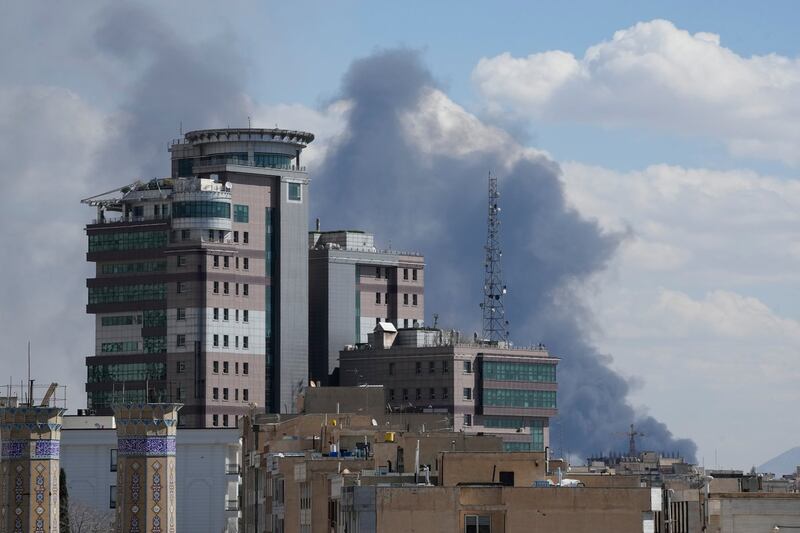
“They’re continuing today, and it comes down a little bit to a race,” he explained. “Iran, the Emiratis, the Israelis and others have air defences. They’re not limitless, and Iranian missiles are not limitless.”
Lalani says the world will witness what he calls a “game of numbers,” where Iran will keep launching missiles and there will come a point when either Iran or the countries in the Gulf are going to run out.
“This is not over by any means,” he said.
If the situation ends with a change in leadership, it could go one of two ways, Lalani says. It could end up looking like what’s happening in Venezuela after the capture of its president, Nicolas Maduro, where other members of the existing regime are taking over.
“In which case, this could be seen as quite a counterproductive unilateral move by the U.S. and the Israelis,” he said.
Alternatively, reform-minded leaders could come into power, according to Lalani, which would open the door to more stability over the medium term.
“If there is a legitimate regime in Iran, it can help stabilize the region by getting along with Saudi Arabia, which it definitely has been in the past few years, and also making peace with Israel,” he said.
“There is a positive scenario, but what it requires – and what I’m not seeing yet – is a plan beyond the airstrikes from the U.S. And if they don’t have something more than airstrikes, then this is really going to be more of a gamble than a plan.”

