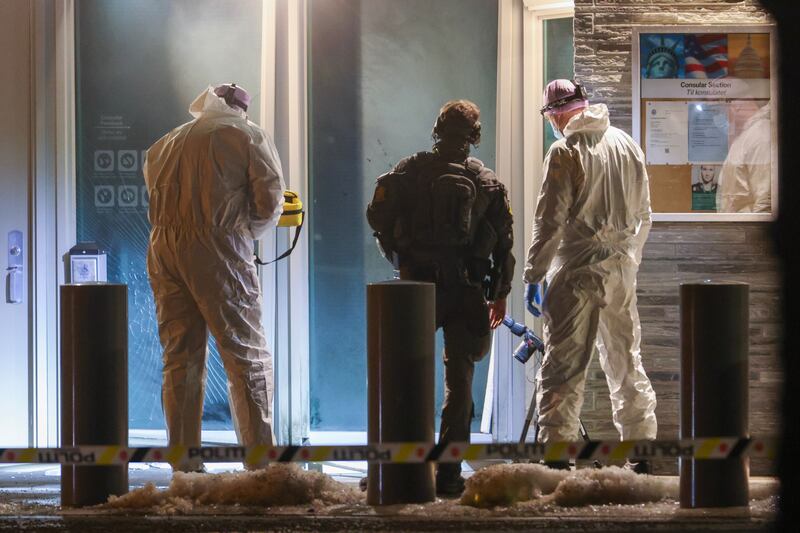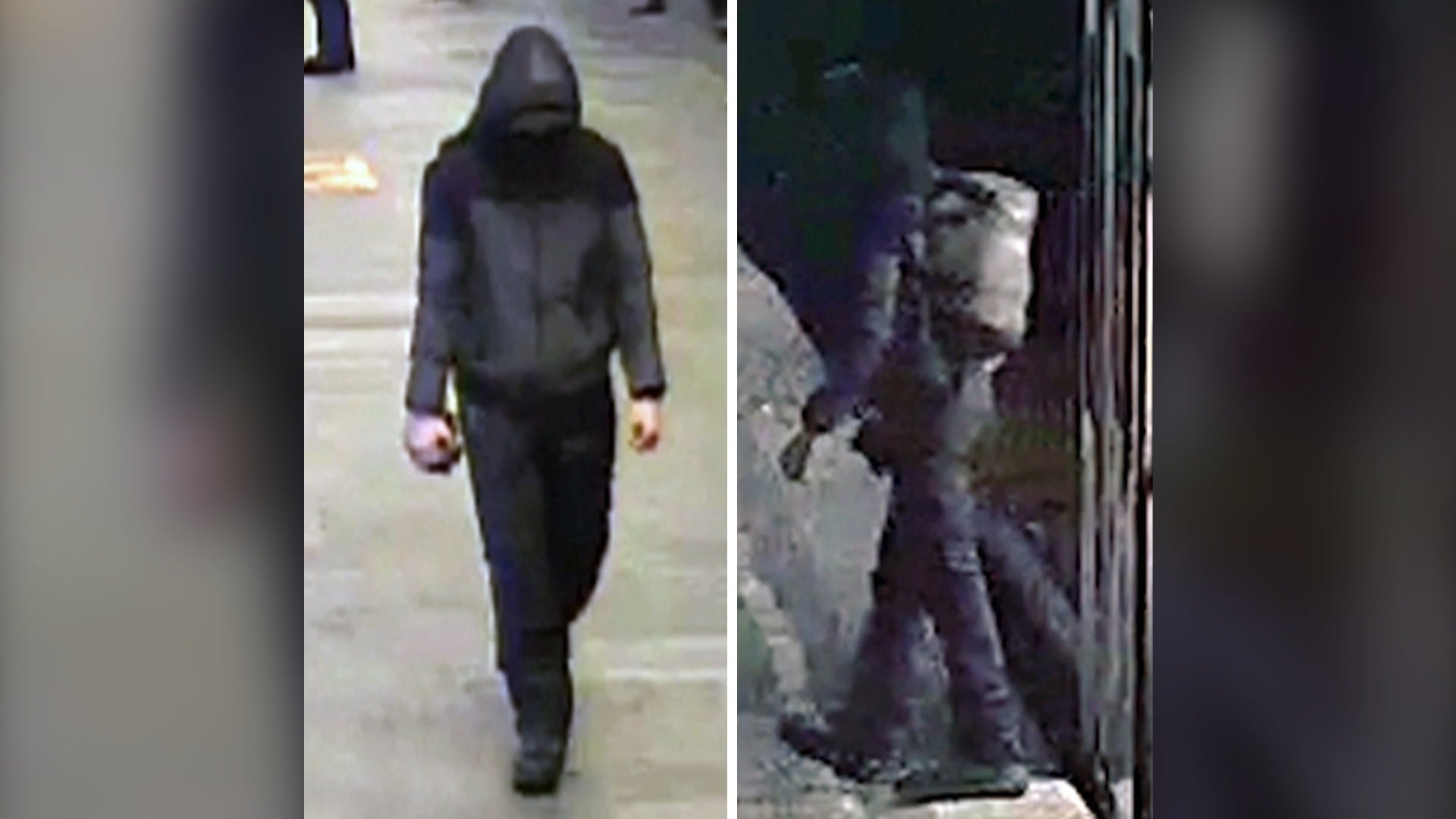
Norwegian police on Monday published two photographs of a suspect they believe was behind an explosion at the U.S. Embassy in Oslo at the weekend that caused no injuries and minor damage.
The suspect, whose face was not visible in the grainy images from surveillance camera footage, was dressed in dark clothing with a hood over his head and wearing a backpack.
The suspect is believed “to have placed an improvised explosive device (IED) next to the entrance” of the embassy, police said in a statement.
“The individual has still not been identified, and we have no specific suspects. No one has been arrested so far. Work to identify the perpetrator is ongoing at full capacity,” the statement said.
The blast took place around 1 a.m. (0000 GMT) Sunday at the entrance to the embassy’s consular section.
Police have said the explosion may have been an act of terror, but said they were also investigating other possible causes.
Investigators are also examining a possible link to the war in the Middle East.
Police said they were “aware of a video that was published on Google Maps around the time of the incident”, which has since been taken down.
The video, uploaded by an unknown actor to the Google Maps page for the U.S. Embassy, appears to show Iran’s late supreme leader Ayatollah Ali Khamenei.
“The police are conducting several inquiries related to the video, but we do not wish to comment on any further details at this time,” the statement said.
U.S. embassies have been placed on high alert in the Middle East over American military operations in Iran. Several have faced attacks as Tehran hits back at industrial and diplomatic targets.