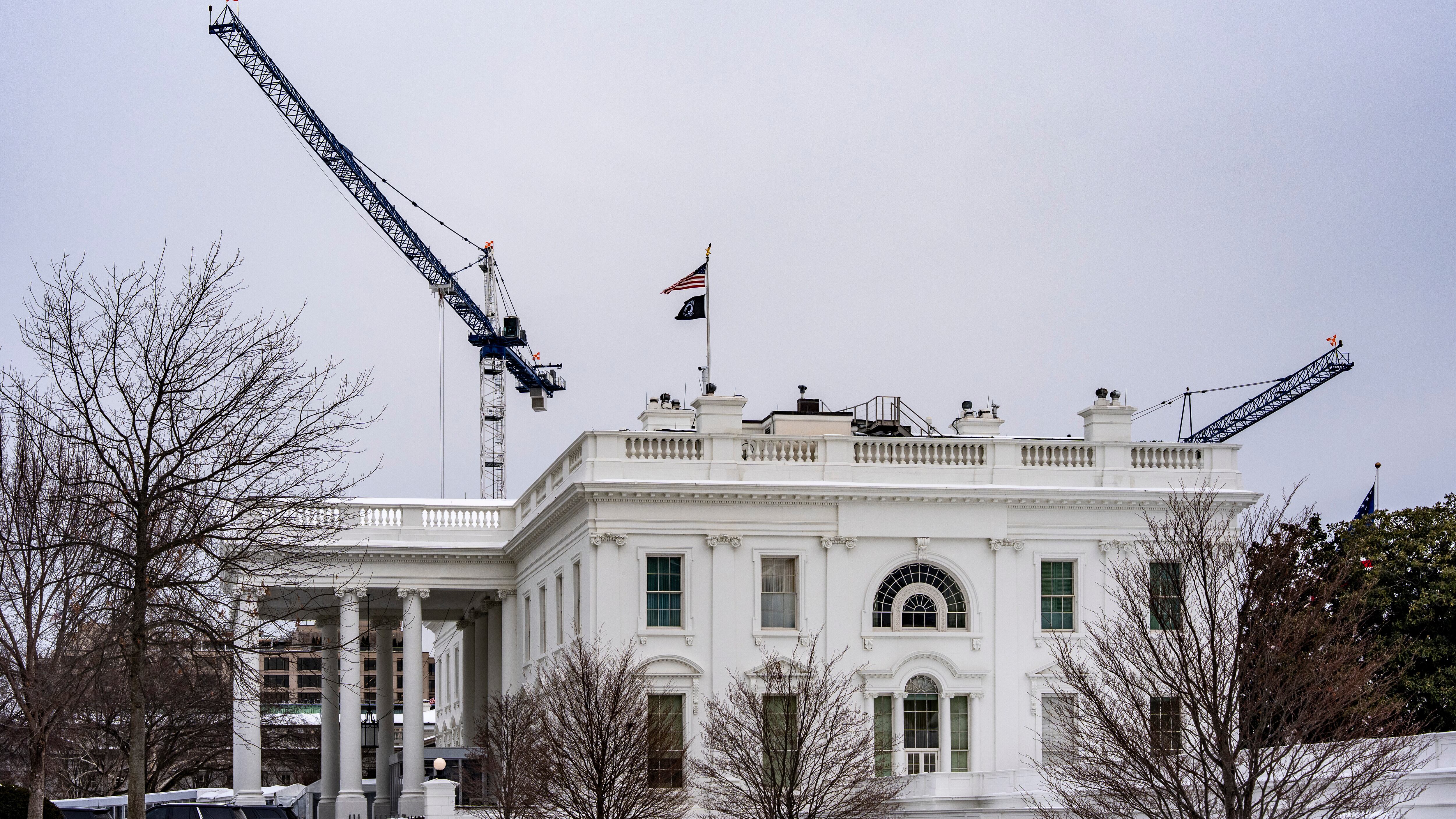
WASHINGTON -- A federal judge in Washington is set to hear new arguments on Tuesday over the fate of U.S. President Donald Trump’s planned US$400-million White House ballroom, as preservationists seek an order to halt construction on the site of the demolished East Wing.
U.S. District Judge Richard Leon at a 3:30 p.m. ET hearing will consider a request for a preliminary injunction by the National Trust for Historic Preservation, which claims the Republican president launched the massive project without required approvals or authorization by Congress.
The National Trust sued Trump and several federal agencies in December, after the president in October began tearing down the 120-year-old East Wing to build what he has vowed will be the “finest” ballroom in the country.
The 8,361-square-metre ballroom project is part of the president’s broad effort to reshape Washington, including plans to build a 76-metre arch and revamp the Kennedy Center, a cultural landmark and performance centre.
A panel of the U.S. Commission of Fine Arts in February voted 6-0 to approve Trump’s ballroom proposal. Trump appointed all of the commissioners in January.
Leon rejected an earlier bid by the National Trust to halt construction of the ballroom last month, ruling that he could not issue an injunction based on the group’s arguments that the project violated provisions of the U.S. Constitution and ran afoul of administrative law restrictions.
In its renewed injunction request, the National Trust argued the project is beyond the scope of Trump’s authority because neither the president nor the National Park Service has authority to demolish the East Wing and replace it with a large event space without explicit approval from Congress.
“Historical practise further demonstrates that when Congress wants to authorize the erection of privately funded structures on D.C. federal parkland, it knows precisely how to do it,” the National Trust said in a court filing.
The U.S. Department of Justice (DOJ) in a March 12 filing urged the court to again deny an injunction, saying the National Trust failed to reach the high bar of showing Trump exceeded his authority.
The ballroom project, the DOJ told the court, will provide the White House grounds “with modernized infrastructure, improved security, and other benefits, relieving pressure on the historic Executive Mansion in order to best preserve it for future generations.”
The government also disputed that Congress must approve each individual structure built in Washington’s federal parks.
Reporting by Mike Scarcella; Editing by David Bario and Nia Williams

