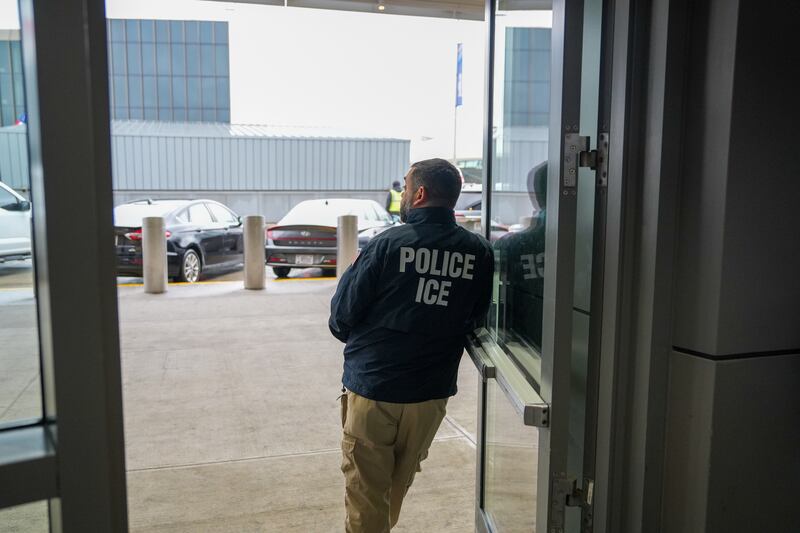
A partial U.S. government shutdown that has disrupted air travel has led to U.S. President Donald Trump ordering the deployment of U.S. Immigration and Customs Enforcement (ICE) officers at some U.S. airports.
Routine U.S. Department of Homeland Security (DHS) funding was halted in mid-February ahead of the busy spring travel season, causing airport workers to go without pay.
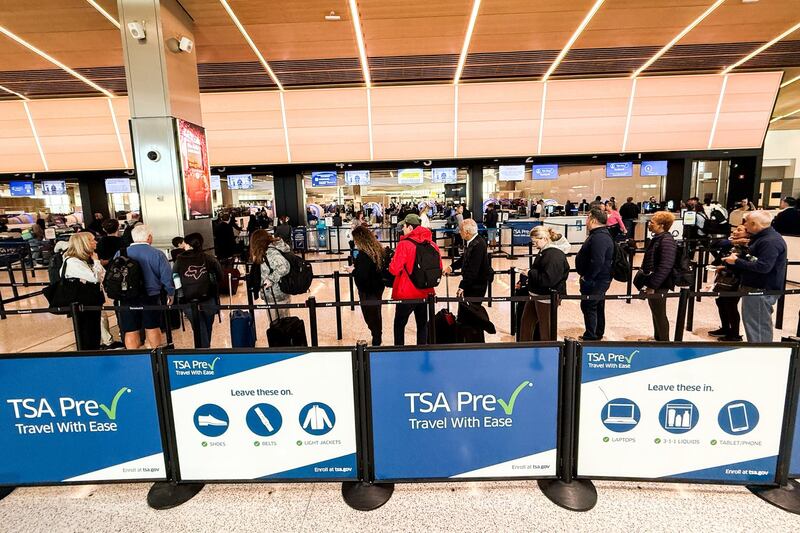
The Trump administration said it would supplement U.S. Transportation Security Administration (TSA) staffing at certain airports, but provided few details about exactly what they would be doing.
After weeks of missed paychecks, many TSA agents have called in sick — or even quit their jobs — as financial strains pile up. The staffing shortages have forced some airports to close checkpoints at times, with wait times swinging dramatically for travellers.
Nearly 11 per cent of TSA workers who were scheduled to report for duty Monday — more than 3,200 — missed work, and at least 458 have quit altogether since the shutdown began, according to the DHS.
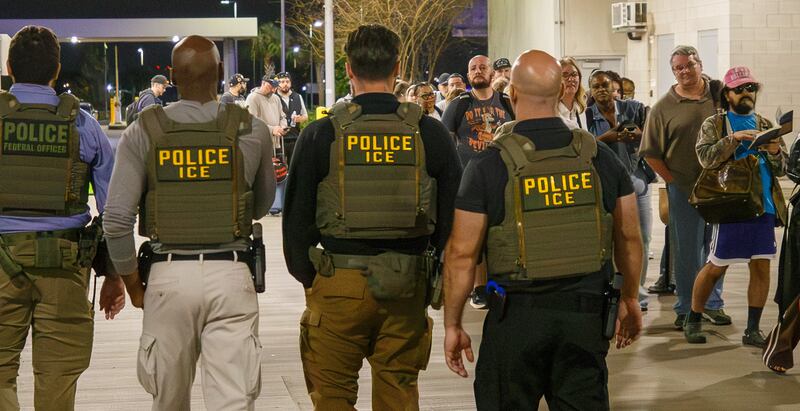
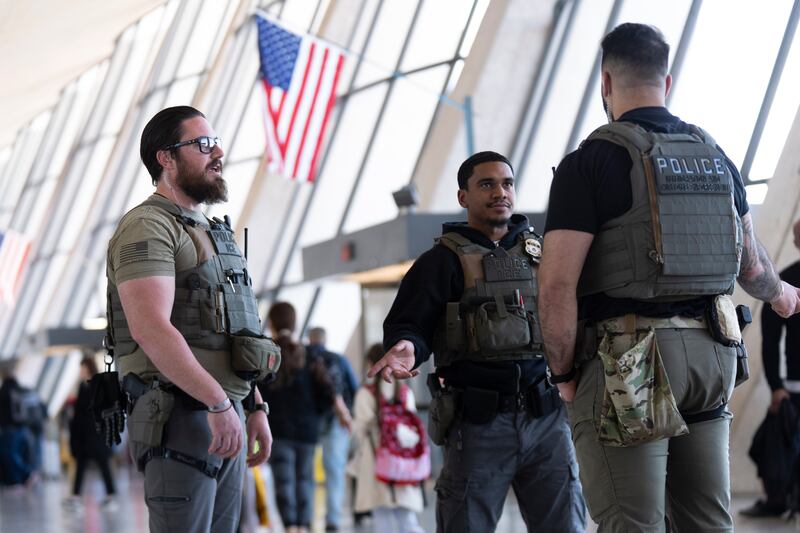
A visible increase in ICE officers at airports is sparking concerns among travellers — including Canadians - about what it means for cross-border travel.
But according to immigration lawyer Ksenia Tchern McCallum, the shift is more about logistics than a fundamental policy change — though it is still creating anxiety.
ICE presence at airports not new
McCallum says ICE has always had a presence at airports, primarily to handle deportations and removals.
McCallum adds that what’s different is how visible and involved ICE agents have become in day-to-day airport operations, like document checks, crowd control and line management.
“That’s what is getting everybody tripped out, (including) Canadians who have gone to the U.S. for a few months or maybe past the time they said they were going to be, but still within lawful limits,” she explained.
McCallum stresses that TSA and ICE aren’t replacements for U.S. Customs and Border Protection (CBP), which still handles immigration decisions — an important distinction she said travellers should note.
For Canadian citizens, travel to the U.S. remains visa-free for short-term visits of up to six months. A valid Canadian passport is required. For Canadian permanent residents, temporary workers and students, these groups require visas.
According to the Canadian government’s website: “You must declare your intended duration of stay upon entry into the United States.”
“Just because we’re visa exempt doesn’t mean that we’re guaranteed entry. Having a visa is just seeking permission to enter the U.S. At the end of the day, it comes down to the (CBP) officer,” McCallum said.
Canadian travellers are expected to comply with U.S. laws and answer questions truthfully if asked, McCallum says.
“If they do ask you additional questions, you are obligated to respond truthfully and they can see all of that information anyway,” she said.
Frequent travellers under the microscope
One group McCallum says is facing increased scrutiny is frequent travellers, particularly those travelling for business, who may be questioned more heavily.
“If you’re travelling so frequently, are you actually here doing what you’re saying you’re doing?” McCallum said is the main question officials want answered.
For those coming to the U.S. for work, McCallum says how travellers describe their trip can trigger additional scrutiny.
“Are you coming to do work? Did someone hire you to do something? Is your Canadian employer sending you to meet with clients or to go to meetings? They just need that clarification,” McCallum said.
McCallum says avoid indirect language and “be very to the point (in) regards to the purpose of travel.”
McCallum points out that for travellers — including snowbirds — who are coming back at the end of March or early April and may be worried, she reminds them to present documents requested.
Document requests may include employment verification letters, which should outline the terms of employment like work timeline and reason for your travel such as a conference, team meeting or team-building event — all of which should be included in the letter.
McCallum adds that it should also state that source of compensation is from a Canadian entity.
Freelancers face ‘tricky territory’
“If you are self-employed and you’re doing freelance work, that’s where you can get into some tricky territory,” McCallum said.
Without a clear employer-employee structure, freelancers often face added scrutiny at the border, particularly when their work involves clients or projects in the U.S.
“If you’re a photographer going down to shoot for a U.S. client — that’s work, and that’s not allowed,” McCallum explained, unless work visas are obtained.
A common one is the Trade NAFTA, or TN, visa, which allows Canadian citizens to work in the U.S. temporarily in specific professional fields under the Canada-United States-Mexico Agreement, or CUSMA.
At the same time, remote work adds another layer of complexity. Many travellers assume they can simply bring their laptop and continue working while visiting the U.S., especially if their clients are based in Canada.
“You’re technically not even supposed to be doing remote work from the U.S. They don’t believe in digital nomads,” she explained.
Checklist for travellers
McCallum says travellers should prepare their itinerary, including their flights and hotel details.
“Have some sort of evidence of funds to support your stay,” McCallum advised, listing bank statements, pay stubs, employment letter, lease agreement or a company memo.
McCallum emphasizes that preparation is key.
“The good thing is we have pre-clearance here in Canada. We have our own Canadian authority (and) transportation security that will not be replaced by ICE. They don’t replace CBP,” she added.
“Keep an eye out on what’s going on in the world of the U.S. DHS,” McCallum said.
“That will tell you what the temperature is like.”
With files from The Associated Press

