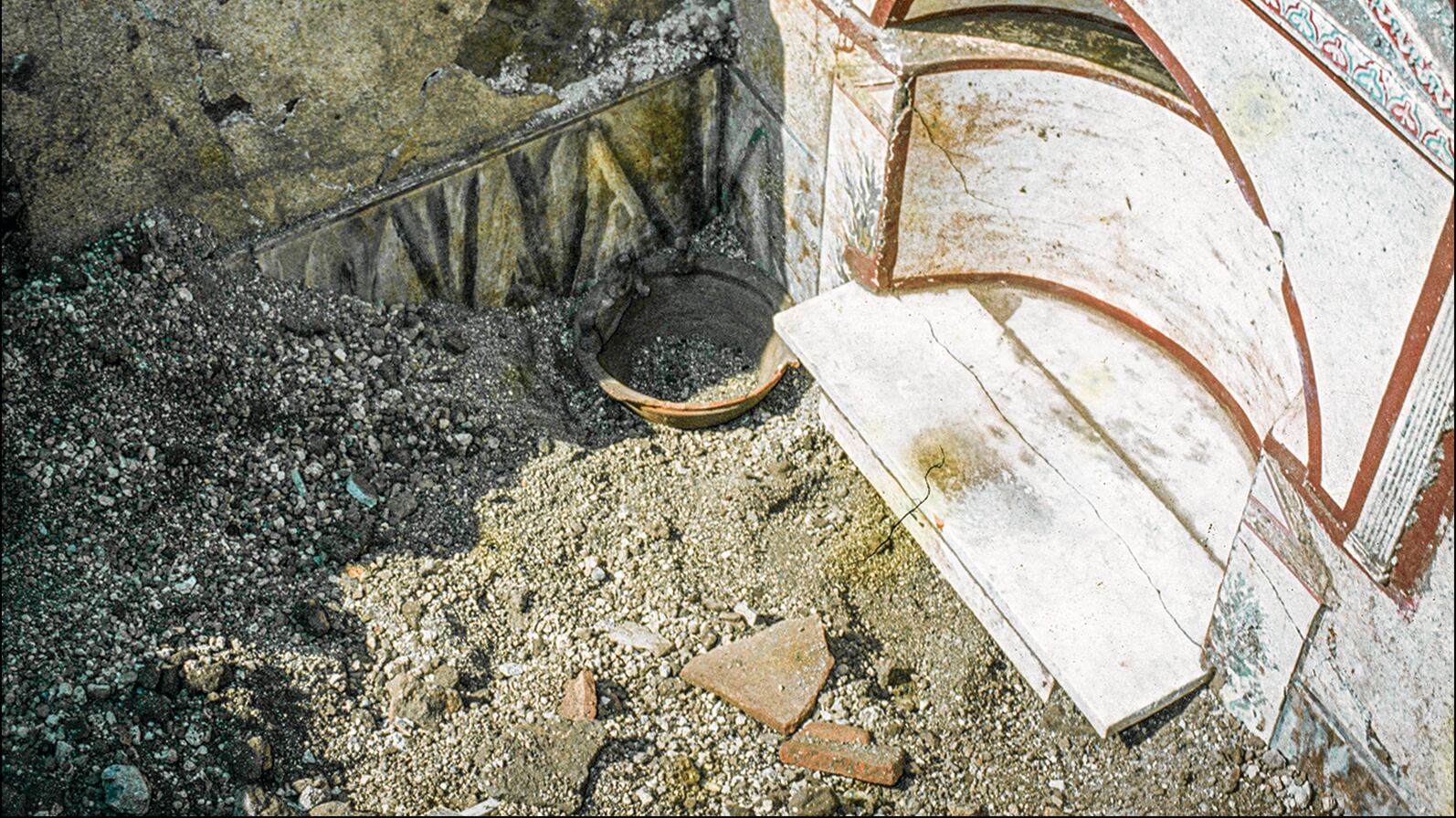
A scientific discovery is rising from the ashes, so to speak, to uncover new details on Roman society.
Researchers have found new insights into how the Romans lived, and how far-reaching their trade networks were, by studying ash.
By analyzing ash from incense burners at Pompeii, archeologists have learned of domestic rituals Roman households practised.
“Ancient literary sources and visual representations show that the Romans burnt aromatic substances, such as frankincense, as well as various plants and herbs on their altars as offerings to the gods,” Johannes Eber, lead author of the research, from the University of Zurich said in a release from the peer-reviewed journal Antiquity. “At several Pompeian altars, ashes and burnt residues have been preserved, though they have only rarely been subjected to detailed analysis.”
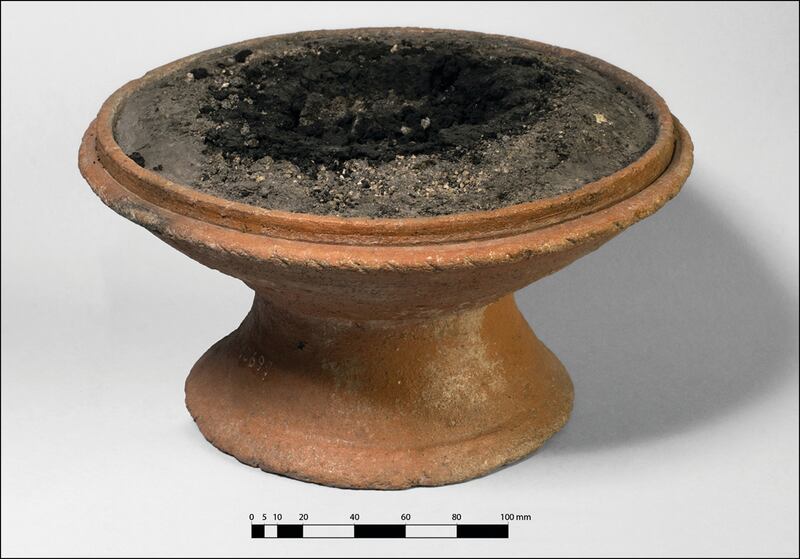
Burning incense is believed to be a common practice amongst Roman households, as a way to sacrifice smoke to the gods. But since most of the residue didn’t survive, researchers have had to depend on texts and images to learn about the ways domestic Romans worshipped.
According to the study, organic residues from a pair of incense burners, known as censers, were examined by researchers using microscopy and spectrometry. The substances included ash pseudomorphs, biominerals that materialize in woody plants, and phytoliths, which are microscopic particles of silica that form inside plants.
Co-author Philipp W. Stockhammer, who initiated the study, from LMU Munich said in the release that the combination of “advanced chemical and microscopic analytical methods makes the religious daily life of the people of Pompeii tangible.”
Researchers found that Romans also offered up grape products, likely wine, along with “aromatic resins” such as frankincense. While the pairing of the two substances is mentioned in Roman script in the context of religious and funerary rites, these practices were never confirmed archeologically, the researchers say.
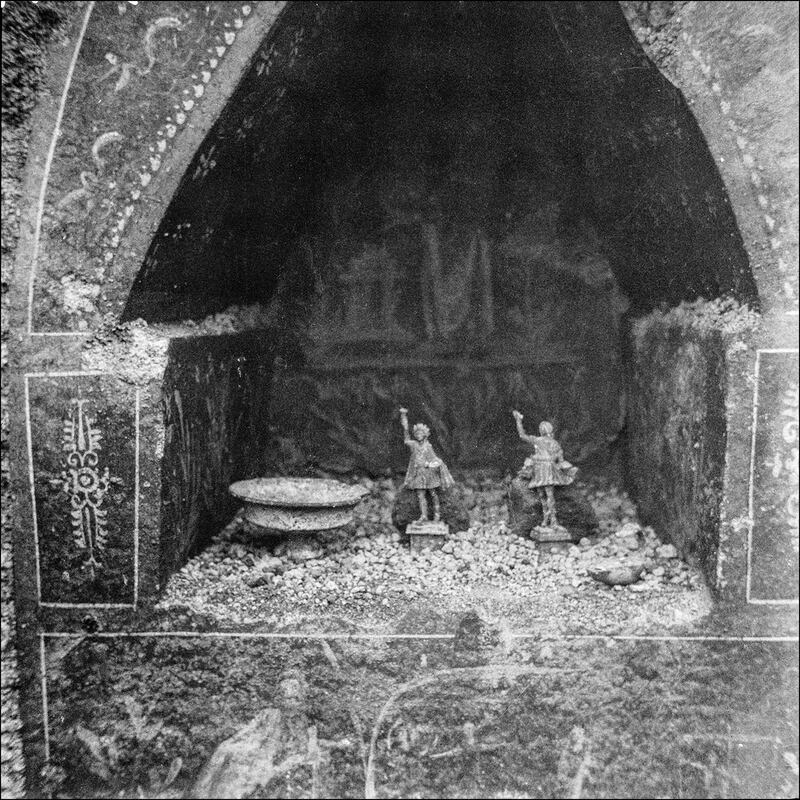
The findings also reveal how vastly Romans’ travelled to retrieve such exotic substances. Researchers believe that the frankincense was probably acquired from either India, or sub-Saharan Africa, rather than southern Arabia, where the fragrant, hardened gum resin was mostly sourced by Romans. These findings indicate that “Romans went to great lengths to facilitate their everyday household worship,” and far past the boundaries of the Roman Empire.
“We’ve long known from ancient writers that the Romans burnt frankincense in their sacrifices,” Eber said. “Now, archaeology confirms it: an incense burner with preserved ashes and traces of fragrant resins from a domestic shrine near Pompeii provides tangible proof – and a striking reminder of just how globalized the ancient world truly was.”

