
Afua Hagan is a contributor to CTVNews.ca, focusing on the Royal Family. Based in London and Accra, Hagan is a regular commentator on the royals across a variety of international outlets, and is a leading voice on diversity in Britain.
In the years since the death of Queen Elizabeth II, a curious shift has taken place. The late monarch, once defined by distance, duty and near-superhuman restraint, is now being rediscovered – not as a figurehead or an institution, but simply as a woman.
Hugo Vickers’ new tome Queen Elizabeth II: A Personal History steps into focus at this moment offering a biography that achieves something subtle yet powerful. It dispels the idea of the Queen being distant and instead presents her as someone far more nuanced and human.
This book doesn’t present the Queen as just a symbol. It shows her as a woman, a daughter, a sister, an aunt, a wife, a mother, and a grandmother who had her own story outside of the Crown.
Using what publishers call “never-before-seen sources” and insights gathered from “six decades of close observation,” the book aims to paint a rich and detailed picture of the monarch.
Vickers met the Queen 40 times in 55 years, and those meetings varied from brief encounters to opportunities for deeper and lengthier conversations. It depicts her as “elegant, self-contained, and enigmatic,” but also reveals how her life was shaped by the constant demands of her family and royal responsibilities.
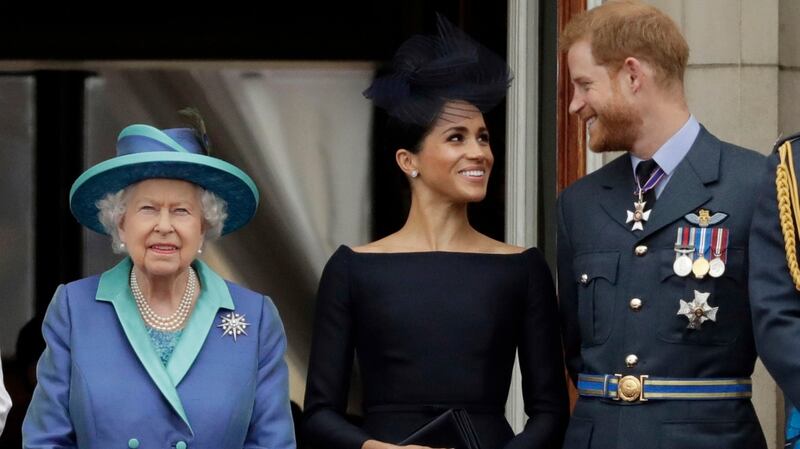
The most compelling stories focus on the Queen’s later years and her bond with her grandson, Prince Harry, particularly around the period in which he met his now-wife, the Duchess of Sussex, and stepped back as a working royal. Vickers writes that “whenever Prince Harry called his grandmother, she asked her lady-in-waiting to stay with her.”
Vickers goes on to say that the Queen didn’t say much during these conversations, with one palace source saying: “There were lots of one word answers, ‘yes’ and ‘no.’”
The Queen is said to have taken these measures to protect herself, with the lady-in-waiting acting as “moral support and protection” by recording what Harry actually said. That one comment speaks volumes. It is not just the story itself that feels significant. It’s what it uncovers.
A Queen known for her discretion perhaps wanting a witness nearby. A grandmother maybe guarding her own heart. Or a ruler ensuring private talks were still documented for history.
‘Distress the Sussexes caused the Queen’
Vickers also makes a bold claim writing, “the distress the Sussexes caused the Queen in her later years cannot be overestimated.”
The Queen, for much of her life, showed remarkable strength by handling crisis without cracking. From the painful abdication that shaped her early years to the chaos of the 1990s, including her “annus horribilis,” she managed to endure it all.
But Vickers brings up something new here. He points to a different kind of pain, not the public chaos, but a deeper personal wound.
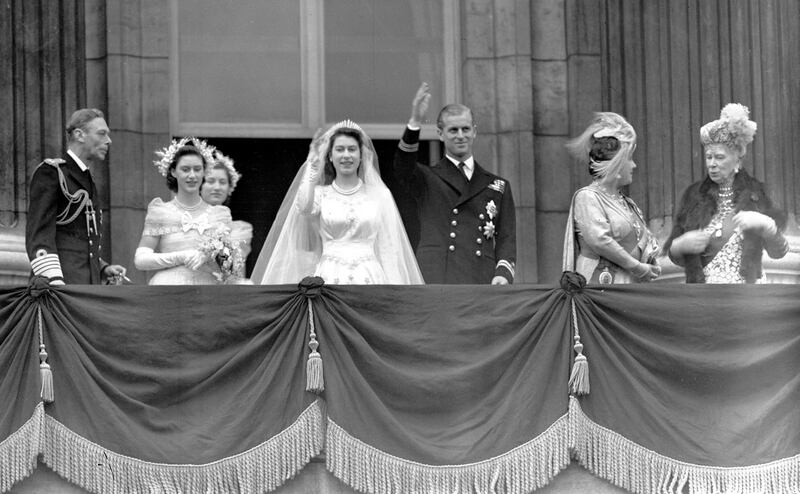
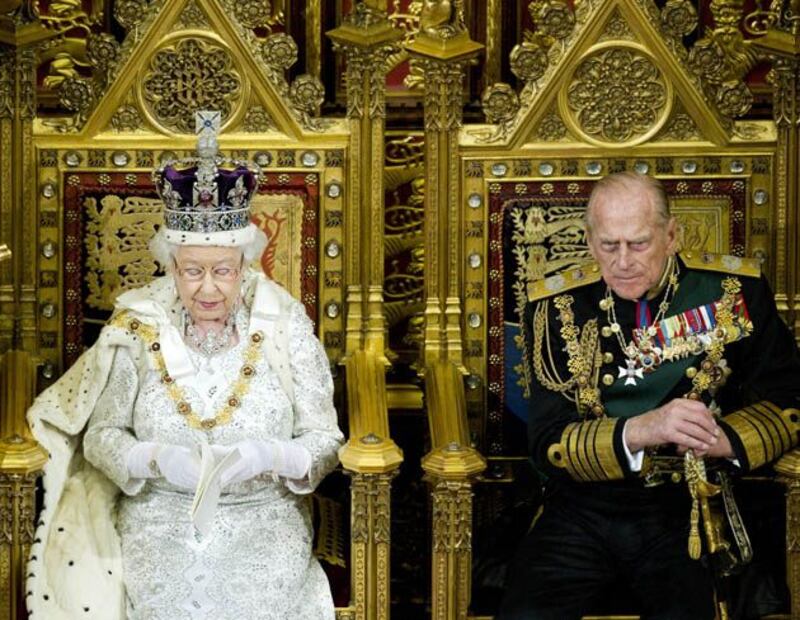
The book also sheds light on her marriage to Prince Philip. Often described as the steadfast core of the monarchy, the book reveals something else. Vickers shares some very personal details, saying Philip had an inoperable form of pancreatic cancer.
He writes that after the diagnosis, “there was a view that [Philip] might not be seen in public again” but that “the duke outwitted the pessimists,” with his cancer remaining a secret he never made public. Vickers also claimed Prince Philip “did not want to reach his 100th birthday” because he “disliked the fuss attendant at such events.”
Philip died ‘without saying goodbye’
Even as his health got worse, Philip stayed true to who he was. “On the last night of his life, he gave his nurses the slip, shuffled along the corridor on his Zimmer frame, helped himself to a beer and drank it in the Oak Room,” Vickers writes.
“The following morning, he got up, had a bath, said he did not feel well and quietly slipped away. By this point, he had lived with pancreatic cancer for nearly eight years – far longer than the usual survival time from diagnosis.”
When he passed, the Queen said it felt like an “Irish goodbye” – quiet, sudden, and what you’d expect from him. Vickers writes, “The Queen was not there when he died. There had often been times in earlier days when she had asked the staff to let her know when Philip was leaving, only to be told, ‘His Royal Highness left 20 minutes ago’.”
She was said to be “absolutely furious that, as so often in life, he left without saying goodbye.”
The clearest takeaway isn’t just about Philip’s character, but also about the essence of their bond. Their marriage wasn’t a perfect storybook romance lived side by side all the time.
As the years went on, they often spent significant stretches apart, living quite separate lives, each following their own pace of life.
Vickers describes their marriage as one built not on constant togetherness, but on shared understanding. It was a steady and quiet partnership that let both of them navigate the demands of royal life without losing their sense of self.
Diana’s schoolgirl crush: Andrew
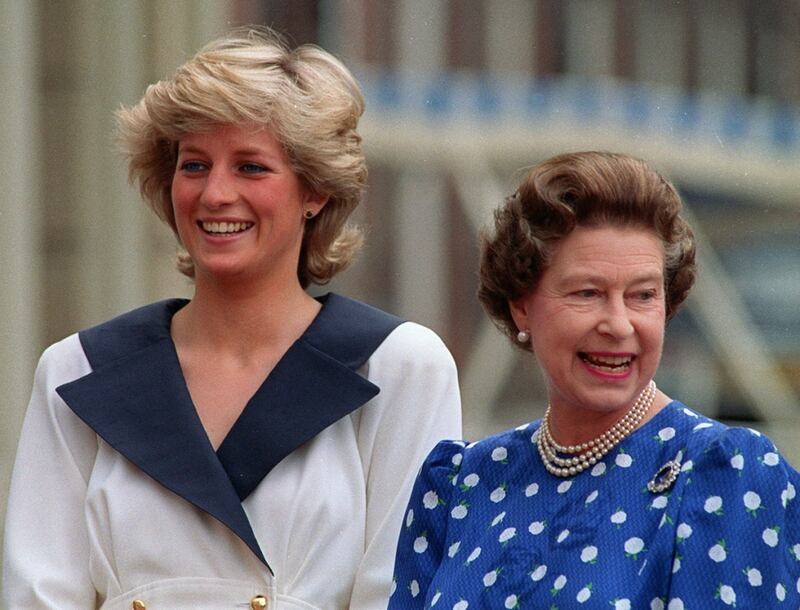
In Queen Elizabeth II: A Personal History we also get some insight into the relationship of Charles and Diana in the lead up to their wedding in 1981, where each of them were having doubts about their impending marriage. In fact, it seems Diana had her eye on another member of the Royal Familyas a child. Vickers says,
“As a schoolgirl, Diana had a professed ambition: to marry her childhood playmate Prince Andrew. The truth is she hardly knew Charles, and called him ‘Sir’ until the day of their engagement.”
It seems that Charles too, who was still in love with Camilla Parker-Bowles, had his own doubts. “During Ascot week, Prince Charles looked over at Diana at dinner and asked his neighbour: ‘Do you think you can fall in love after you’re married?’” Vickers wrote.
This book couldn’t come at a more important time. The monarchy, under King Charles III, is in a phase where it needs to adjust.
It’s trying to keep old traditions alive while meeting modern expectations and dealing with ongoing family struggles and controversy, particularly around the Queen’s favourite son Andrew. Meanwhile, Prince William symbolizes a future that seems more open and transparent.
Some might even say it feels easier to relate to. In this context, Vickers’ depiction of Queen Elizabeth II offers both a valuable perspective and a striking comparison.
It reminds us that today’s monarchy, which feels more open and responsive, rests on the disciplined and reserved foundation laid during her reign.
What makes Queen Elizabeth II: A Personal History stand out is not some groundbreaking reveal. Vickers paints her as someone who felt pain, dealt with frustration, and lived with a quiet inner struggle helping us grasp just how heavy her responsibilities were.
The more we see Elizabeth II as a person, not just as a symbol from history the better we grasp the depth of her accomplishments. She wasn’t flawless. She was human. She endured. And maybe that endurance tells us the most about her in the end.

