


The crew members aboard lunar mission Artemis II have landed in the Pacific Ocean to await pickup from U.S. officials, capping off their 10-day voyage around the moon.
It’s a soggy end to their descent through the Earth’s atmosphere, hurtling towards home at roughly 40,000 km/h.
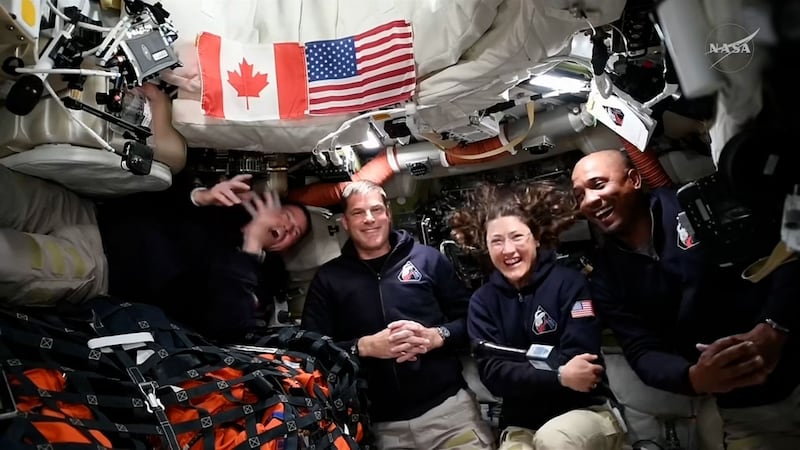
Canadian Jeremy Hansen – who has spoken to children, journalists, one prime minister and one president from the capsule – has made history with his three American colleagues.
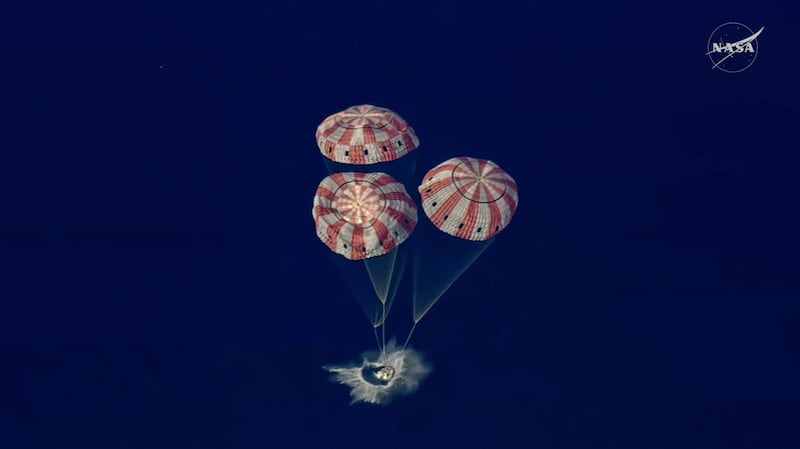
They have travelled deeper into space than anyone else before them. Hansen is the first Canadian Space Agency astronaut onboard a lunar mission.
A dynamic dance of parachutes, a durable heat shield and precisely planned burns carried the astronauts through the final leg of the mission.
Here’s CTVNews.ca’s coverage of the Artemis II crew’s return to Earth:
Return to Earth
Orion capsule sheds propulsion system
The Orion capsule returning the four astronauts from the Artemis II moon mission has shed its propulsion system ahead of re-entry through Earth’s atmosphere.
Reuters
Artemis II crew enter Earth’s atmosphere
The Artemis II crew have entered Earth’s atmosphere and are now descending back home.
There will now be a six-minute communications blackout between the crew and Mission Control as plasma envelope the capsule.
Joe Van Wonderen, CTVNews.ca journalist
Communication blackout ends
The Artemis II crew have re-established communications with NASA Mission Control. The capsule is approximately five minutes away from coming home.
Joe Van Wonderen, CTVNews.ca journalist
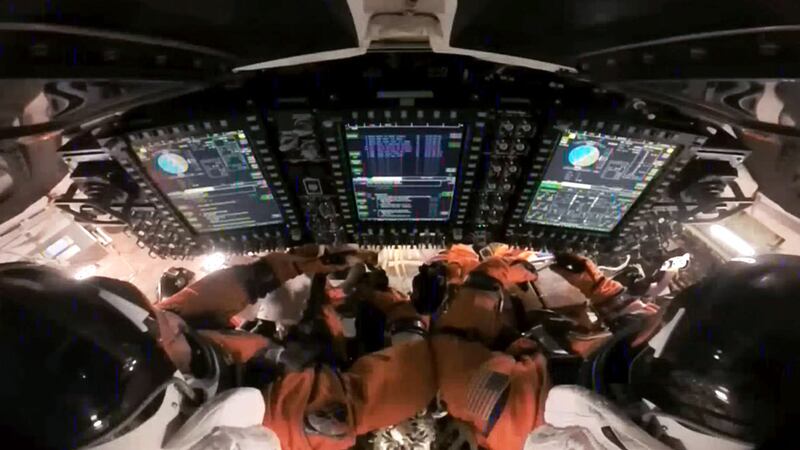
Parachutes released
The Orion capsule has released its parachutes and is coming back to Earth at an expected rate.
The search and recovery beacon has been activated. Multiple U.S. recovery vehicles have visuals on the craft and are ready to pick up the crew. NASA called it a “perfect descent.”
Joe Van Wonderen, CTVNews.ca journalist
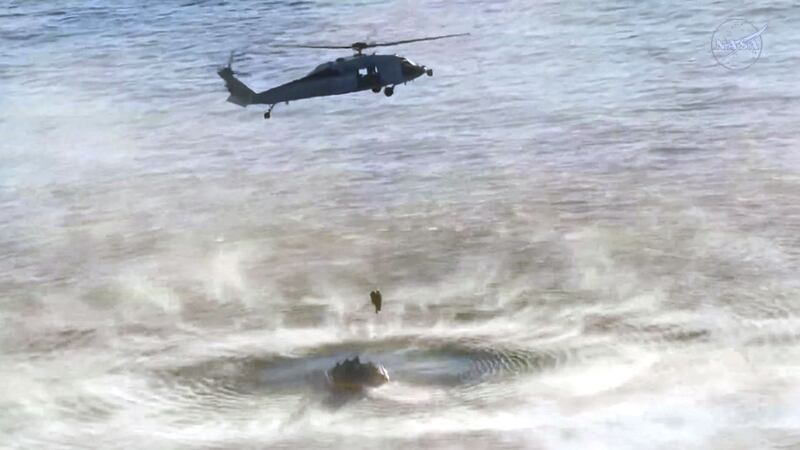
Crew lands in Pacific Ocean
The Artemis II crew has completed an approximately 1.1-million kilometre journey around the moon safely.
Splash down has been confirmed, with Jeremy Hansen and the rest of the historic crew back on Earth.
“A perfect bull’s eye splashdown,” said NASA officials.
Joe Van Wonderen, CTVNews.ca journalist
All four astronauts safe
“Four green crew members.”
Those are the words astronaut Reid Wiseman said to NASA Mission Control, confirming all four members of the Artemis II crew are safe and sound upon landing in the Pacific Ocean.
Hunter Crowther, CTVNews.ca journalist
Mission Control erupts in celebration
Mission Control celebrated Artemis II’s successful splashdown with cheers and applause, continuing after the four astronauts emerged from the capsule.
“This is Mission Control Houston: the mission is over, but the jubilation continues on,” NASA said in their official broadcast.
Joe Van Wonderen, CTVNews.ca journalist
‘Mission accomplished’
NASA Administrator Jared Isaacman congratulated the Artemis II crew as the Orion capsule landed in the Pacific Ocean, completing its 10-day mission flying around the moon and back.
“This was a test mission, the first crewed flight of SLS and Orion, pushing farther into the unforgiving environment of space than ever before, and it carried real risk,” Isaacman wrote on X.
He added that their mission paved the way for future Artemis programs and “prepare for what comes next.”
“Congratulations. Artemis II, mission accomplished.”
Hunter Crowther, CTVNews.ca journalist
What happens after splashdown?
Dr. Farhan M. Asrar, space medicine researcher and associate dean at Toronto Metropolitan University’s School of Medicine, says immediately after splashdown, the four astronauts will have their vitals checked.
“Blood pressure, heart rate, oxygen rate, breathing, then also asking their balance and orientation as they’ll be feeling dizzy and lightheaded,” Asrar said.
After the immediate assessment, Asrar says the astronauts will undergo more detailed checks, including their cardiovascular and muscular system.
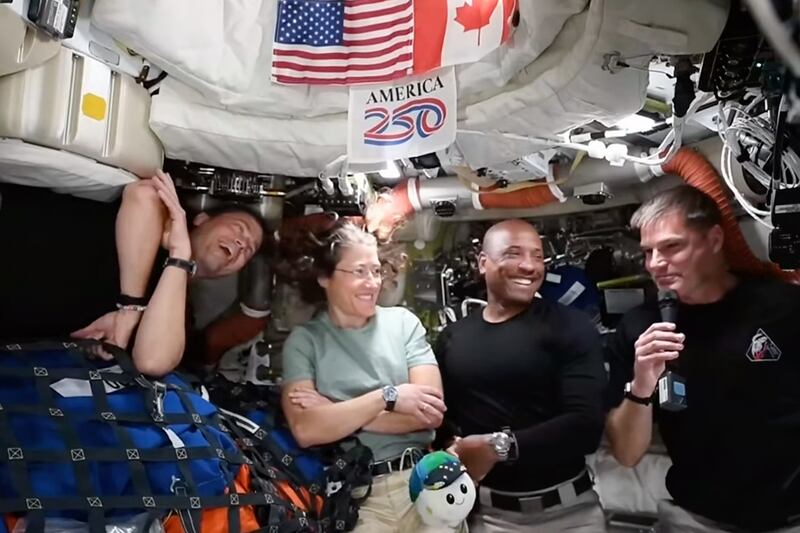
“There has been some muscle wasting being in space, although it was a short mission, but it still could impact them feeling weak, impact their ability to stand or walk,” Asrar said.
According to Asrar, when they are back at the Johnson Space Center, further assessments and rehabilitation to get back to pre-mission health will continue.
If the astronauts’ tests are normal, Asrar says the astronauts will still be periodically followed up to ensure issues do not arise after, noting that some astronauts have experienced bone fractures or eye issues after missions.
“The rehabilitation process also varies,” he said. “Given that this was a short duration mission, they could be back to their regular selves in a matter of days.”
Robin Della Corte, CTVNews.ca journalist
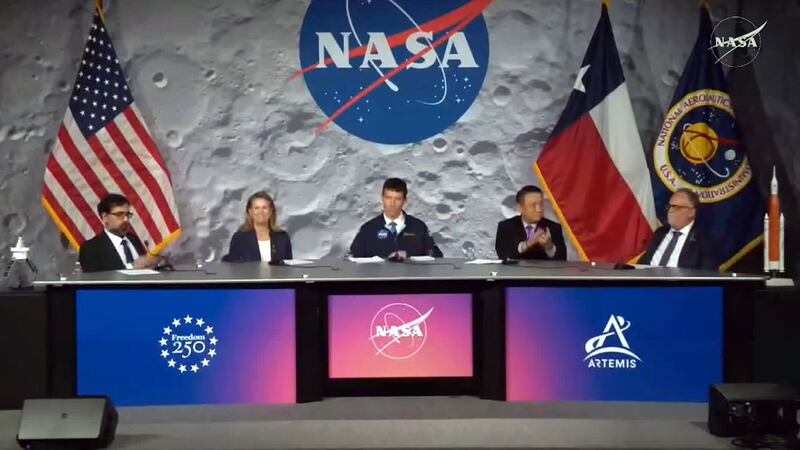
Post-mission news conference in Houston
NASA officials will speak at Johnson Space Center in Houston, Texas after the Artemis II capsule splashed down in the Pacific Ocean.
Joe Van Wonderen, CTVNews.ca journalist
‘Just the beginning’: NASA officials praise team
NASA associate administrator Amit Kshatriya opened the news conference with praise for the four-member crew and the engineers who built the Orion capsule.
“The path to the lunar surface is open, but the work ahead is greater than the work behind us.”
NASA Orion program manager Howard Hu called the mission “historic” and that it demonstrated new capabilities for Orion spacecraft.
“I’m so happy that we get to have this moment, but we’re going to have a lot of these moments coming up,” he said.
Hu added that his team will look through the data and take lessons from Artemis II, but that this was the start of “a new era of human space exploration.”
Dr. Lori Glaze, deputy associate administrator for NASA’s Exploration Systems Development Mission Directorate, said the Artemis II mission proved that “ambitious goals are worth pursuing.”
“This mission, as we’ve been talking about, is just the beginning,” she said. “Our first mission to the moon of many more to come.”
Joe Van Wonderen, CTVNews.ca journalist
‘Keep flying to keep learning’
Kshatriya said NASA had been waiting to fly the Artemis II mission for several years and wanted to make sure “the machine was perfect” before takeoff.
“But the real way to do that is to keep iterating, to keep flying to keep learning, to keep getting data in the flight environment,” he said.
A major point of focus for engineers will be the Orion capsule’s heat shield, which during the Artemis I mission revealed cracks and damage. Hu said officials will transport this mission’s capsule will be transported back to Kennedy Space Center in Florida.
“Obviously we haven’t had time to digest all that data, but we will in the next several days,” he said, adding that each team within NASA “will do their due diligence” with the data they’ve compiled.
Kshatriya said this was a “huge step” for NASA when it comes to taking risks going forward.
“When you fly any crew you can be paralyzed, you can almost be paralyzed by risk because you become so close to them,” he said.
“You have to make sure you find the right line between being paralyzed by it, and being able to manage it and bound it the right way.”
Joe Van Wonderen, CTVNews.ca journalist
Artemis II better than ‘Star Wars’: official
One reporter asked Hu about his love of the “Star Wars” franchise and if the Artemis II mission was better than the movies.
“(A) thousands of times better,” he said with a grin. “That little kid who saw and was inspired by the stars, and now we’re able to send our crew out to the stars.”
Hu added that any young people with aspirations of working in space engineering should “pursue their dreams.”
“You have opportunities to do what you are passionate about,” he said. “Come join NASA, come work for us. We got a lot of missions ahead.”
Joe Van Wonderen, CTVNews.ca journalist
PM Carney, Trump react
‘Welcome home’: PM Carney
Prime Minister Mark Carney celebrated the Artemis II crew’s mission soon after they landed in the Pacific Ocean.
“Congratulations to Colonel Hansen and the team on an historic feat,” Carney wrote. “Welcome home.”
Hunter Crowther, CTVNews.ca journalist
Trump congratulates Aremis II crew
U.S. President Donald Trump congratulated the Artemis II crew after they returned to Earth.
“The entire trip was spectacular, the landing was perfect and, as President of the United States, I could not be more proud!” he wrote on Truth Social.
“I look forward to seeing you all at the White House soon. We’ll be doing it again and then, next step, Mars!”

Hunter Crowther, CTVNews.ca journalist
What does re-entry feel like?
Former Canadian astronaut Col. Chris Hadfield said prior to touchdown, the four crewmates would feel a range of feelings – both physical and emotional – as they returned to Earth.
Physically, the final 30 minutes of descent after the astronauts entered the atmosphere are filled with gravity-fuelled whiplash.
The transition back from 10 days of weightlessness – the “ultimate laziness,” as Hadfield put it – feels “crazy unfair,” he said.
“You don’t have to hold your head up or lift a finger.” But as they descend closer to Earth’s surface, they’d feel themselves getting pushed into the floor of the spaceship, experiencing a gravitational pull several times greater than their bodyweight.
“Even your eyeballs feel strangely heavy,” said the former astronaut, who has been to-and-from space several times during his career.
“When the parachutes start opening, it’s like, crack the whip. … You get snapped around on the edge of the cables,” he said.
Eventually, once the spaceship settles into a parachute-assisted fall, “suddenly, you’re pristine.” At least, until the vessel makes its splashdown, or “bellyflop,” added Hadfield.
Key moments ahead of re-entry
Dr. Catherine Hansen on watching husband in space
As Artemis II prepares to return to Earth, the wife of Canadian astronaut Jeremy Hansen explained how a moon mission can affect an earthling family.
Dr. Catherine Hansen told CTV News Channel on Thursday she has experienced a “constant hum of anxiety” throughout the mission.
But she says her husband is enjoying his experience up in space and that their calls are happy.
“If you have gotten to know Jeremy at all, you’ll know he’s very authentic. Obviously, the whole crew is very heart-centred. Our private family conversations had that tone,” Catherine Hansen said in an interview Thursday.
“We had some laughter, we had some tears, we got to talk about all the things the kids are experiencing on this mission and it was really a great couple of family connections.”
Catherine Hansen says she hopes everyone who has followed Artemis II can see themselves “as part of the mission.”
“I really hope that everyone feels inspired and hopeful, optimistic, and definitely a part of what has happened here.”
Joe Van Wonderen, CTVNews.ca journalist
Calgary student’s question answered by Jeremy Hansen
A young Calgary student had an out-of-this-world experience last week when his question was asked during a live communication window with the crew from NASA’s historic Artemis II mission.
The Canadian Space Agency had invited students to submit questions for astronaut Jeremy Hansen, which he then answered from aboard the Orion spacecraft on April 4.
A question from Jackson Sullivan, a Grade 4 student at Jennie Elliott School, was selected to be asked.
Jackson’s question was: “How did you get to be on the Artemis II mission?”
“Jeremy and I were selected as astronauts together back in 2009,” said fellow astronaut Reid Wiseman. “He was a member, obviously, of the Canadian Space Agency and I was a member of NASA.
“When Jeremy interviewed to be an astronaut, our Chief Astronaut Peggy Woodsen was on the board – and Peggy came back from that interview and said, ‘If Canada doesn’t hire Jeremy, NASA will hire Jeremy’ – he did that well.”
Melissa Gilligan, CTV News Calgary digital journalist
Images of Earth
New, stunning pictures of Earth were taken by mission commander Reid Wiseman using his Personal Computing Device — a tablet that includes a camera — three days into the mission.
The first image was described by NASA Mission Control at Johnson Space Center in Houston as a “reminder that no matter how far we go, we are still one world, watching, hoping and reaching higher.”
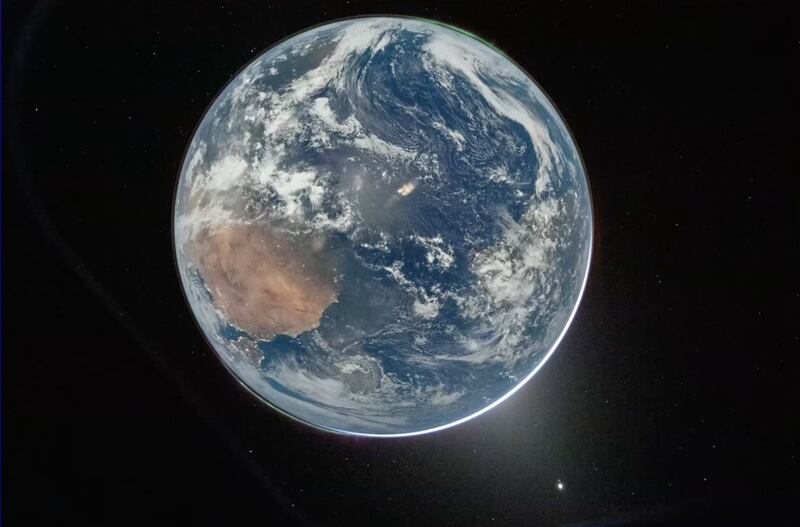
CNN. See more images here.
‘Organ chips’ onboard
Before four Artemis II astronauts strapped into their Orion capsule to soar toward the moon, a tiny bit of each of them was already on board.
Incubated in a small triangular container stowed on the spacecraft just before launch were four USB-size “avatars,” which rode along with the history-making moon mission. But in many ways, their journey is just beginning.
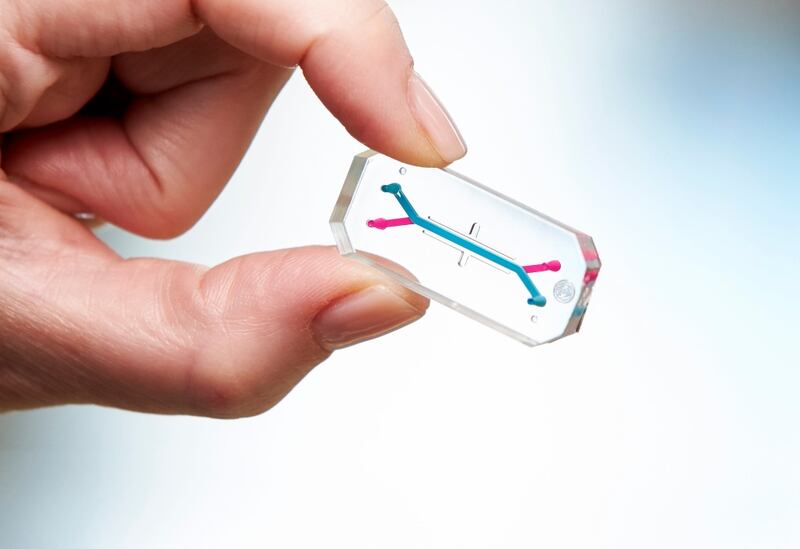
Known as organ chips, the avatar crewmates are made with bone marrow tissue derived from cells donated by their full-size counterparts — Reid Wiseman, Victor Glover, Christina Koch and Jeremy Hansen — and researchers believe the experiment could soon unlock unprecedented insights about the effects of space on human health.
CNN. Read the full story here.
Lunar crater named ‘Carroll’
Artemis II astronauts took a poignant page from Apollo 8 earlier this week, proposing deeply personal names for a pair of lunar craters.
Commander Reid Wiseman and his crew asked permission to name one small, fresh crater after their capsule called Integrity and another after his late wife, Carroll. Hansen made the request right before Monday’s lunar fly-around. Wiseman was too emotional to talk.
Carroll Wiseman, a neonatal nurse, died of cancer in 2020.
The Associated Press. Read the full story here.
Music in space
Despite being hundreds of thousands of kilometres from home, the Artemis II crew starts each day with a familiar tune.
Since the mission launched on Wednesday, National Aeronautics and Space Administration (NASA) Mission Control has played the astronauts, among them Canadian Jeremy Hansen, a wake-up song after a period of scheduled sleep.
On Day 1, they heard “Sleepyhead” by Young & Sick. See the full playlist here.
Jordan Fleguel, CTVNews.ca journalist
A special coin
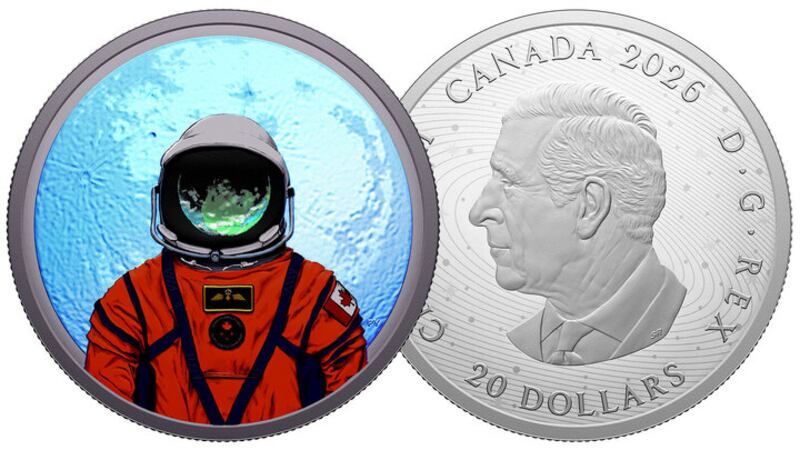
The Royal Canadian Mint has launched a new collector coin celebrating Canada’s part in NASA’s Artemis II mission.
The coin, designed by Canadian artist Pandora Young, is a $20 fine silver coin — 99.99 per cent pure silver — which illuminates with a blacklight.
Robin Della Corte, CTVNews.ca journalist. Read the full story here.

