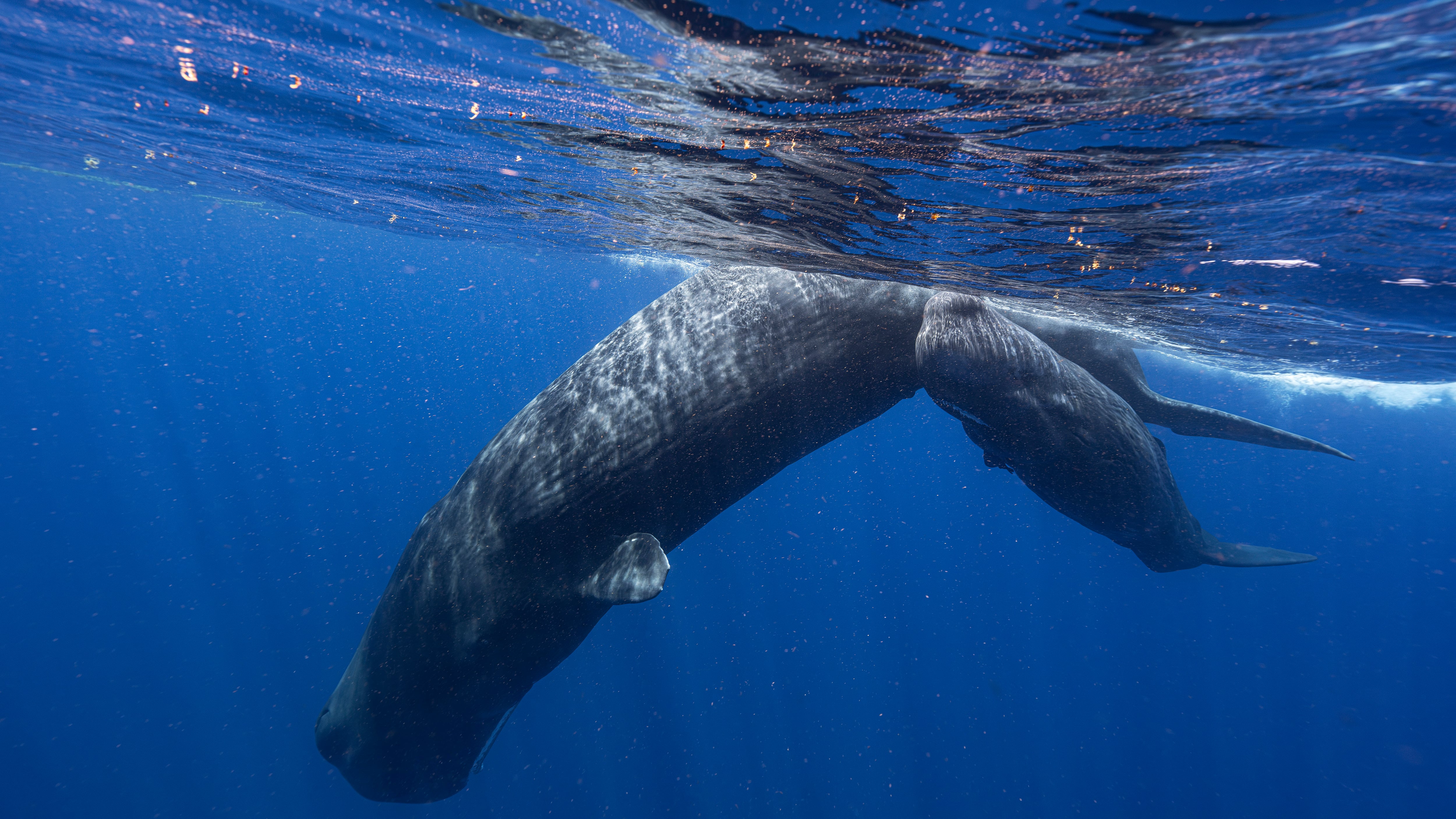
A new study found that the way sperm whales communicate is one of the animal communication systems most similar to the structure of human speech sounds.
According to the study, published in The Royal Society Publishing on Wednesday, one type of sound sperm whales use to communicate is a sequence of clicks called a coda.
Previous research showed that there are two different types of sperm whale vowel codas — a codas and i codas— and they resemble human vowel sounds. Vowels are understood by how they sound based on frequently patterns known as formants.
But this study found that these codas are structured and organized similarly to human language.
“Our findings demonstrate that sperm whale vocalizations are highly complex and likely constitute one of the most phonologically sophisticated (currently known) communication systems in the animal kingdom,” the study reads.
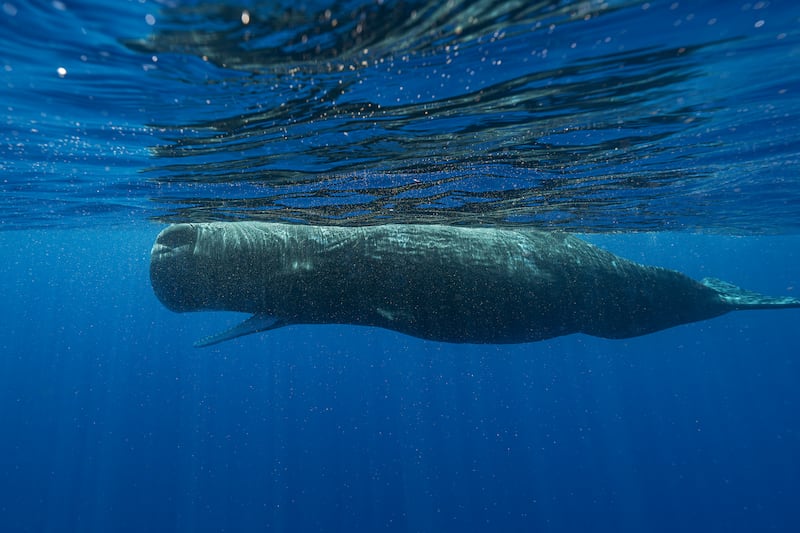
New communication systems discovered
Five new communication systems were discovered from this study that all resemble human language patterns.
The first is that coda type, or sequence of clicks, relates to vowel type a and i.
In some coda types, a and i codas are evenly distributed, while other coda types appear more frequent, like the a codas.
“The uneven distribution of coda qualities across types further supports the claim that coda vowel features are deliberately controlled,” the study reads.
Researchers also found that a-codas are generally longer than i-codas, citing parallels with human language.
“Low vowels such as a are cross-linguistically longer than high vowels, such as i or u,” the study notes.
The study also observed different i codas. In sperm whales, the a vowels tend to have one consistent duration, whereas i vowels include both short and long forms.
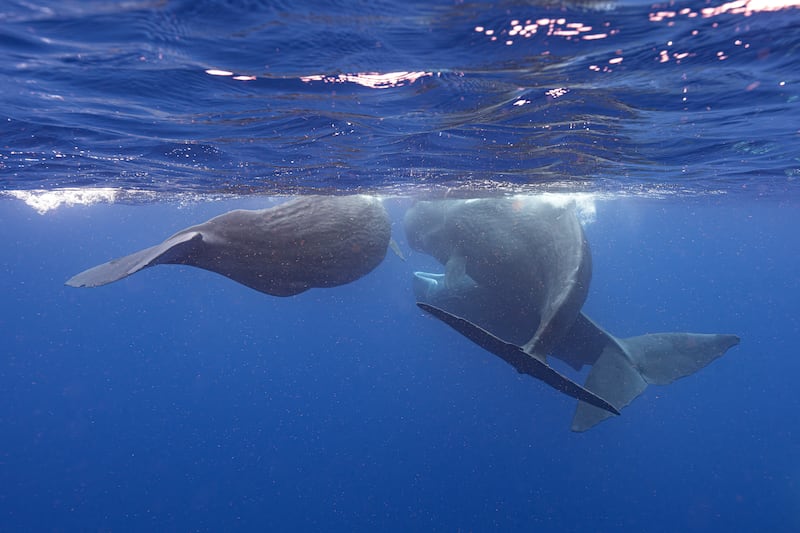
Parallels with human communication
Researchers also observed differences in communication patterns between individuals whales.
“The differences in coda duration among individual whales are paralleled by a similar variation among the speakers of human languages,” the study reads.
“Different people have different habitual speaking rates, which gives rise to differences in average vowel duration.”
Lastly, researchers observed coarticulation, a process where sounds overlap and influence each other, in sperm whales’ communication.
Coarticulation also occurs in human communication, researchers noted. According to the study, in hypothetical words eli and ebi, the same vowel is pronounced differently than in ela and eba.
Codas usually consist of a or i types, but in some cases, researchers saw that the first click differed from the rest of the sequence.
This is a phenomenon that resembles human speech, the study notes.
“All five properties have close parallels in the phonetics and phonology of human languages, suggesting independent evolution,” the study says.

