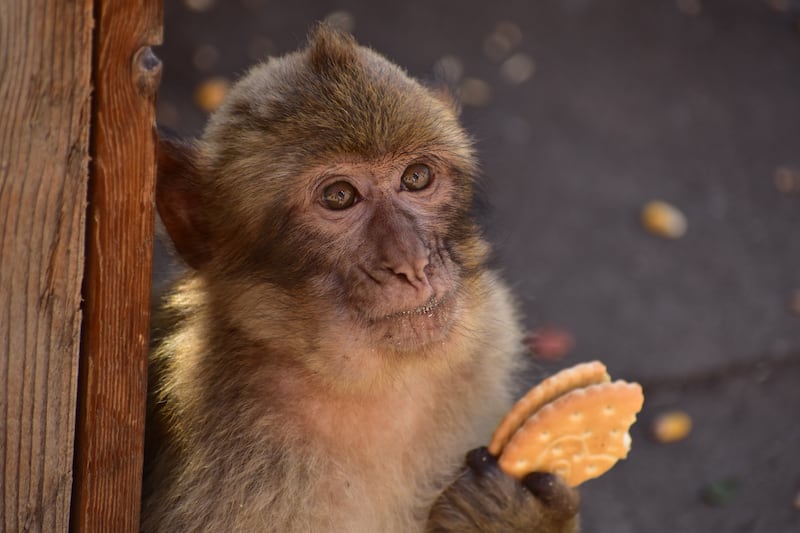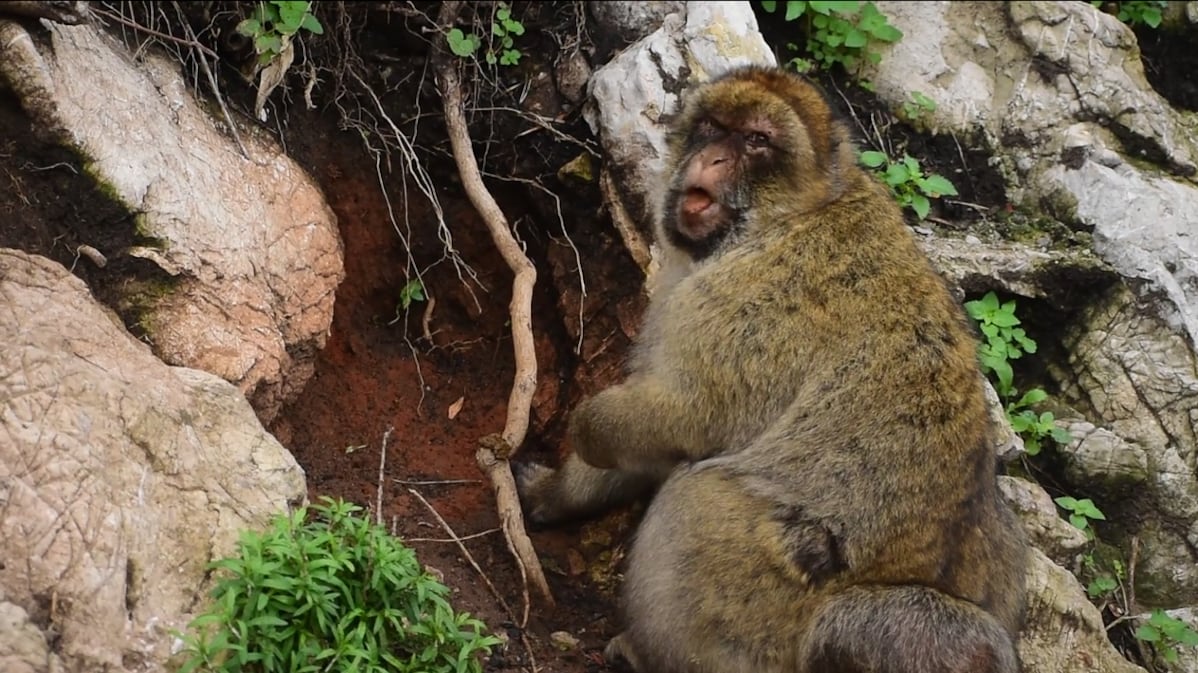
Gibraltar’s famous wild macaques have been observed doing something relatively uncommon for monkeys – eating dirt.
Researchers found that the practice of geophagy, the deliberate consumption of earth, was much higher among macaques in the British overseas territory of Gibraltar, which borders southern Spain, compared to other macaque populations in the world.
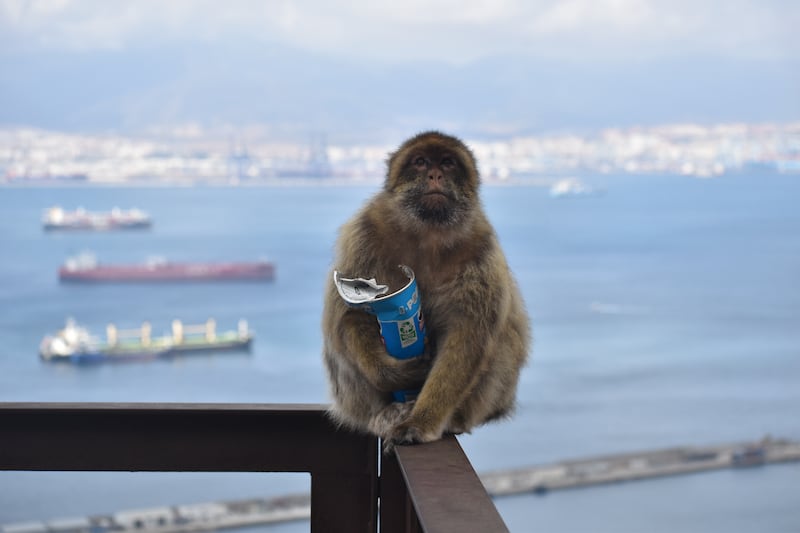
What’s more, instances of geophagy were noticeably higher in the summer when tourist numbers peak, and when the macaques have access to the sweet, fatty and high-calorie foods that visitors like to eat.
The findings were published last month in the journal Scientific Reports, led by researchers from Cambridge University in the U.K.
“Foods brought by tourists and eaten by Gibraltar’s macaques are extremely rich in calories, sugar, salt and dairy,” said Sylvain Lemoine, a biological anthropologist from Cambridge’s department of archeology, in a story published Wednesday that detailed the findings.
“This is completely unlike the foods typically consumed by the species, such as herbs, leaves, seeds and the occasional insect.”
Gibraltar’s macaques, the only wild monkey population in Europe, have steady access to the ice cream, chips and candy often supplied by tourists, but those foods can disrupt macaques’ digestion and the health of their gut microbiome, scientists say.
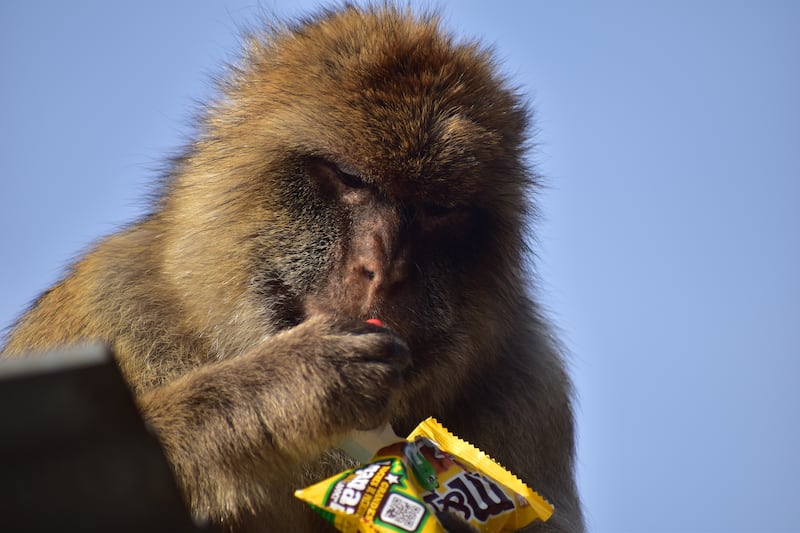
Researchers hypothesized that the monkeys have started eating soil in search of relief.
Lemoine said humans have evolved to seek out energy-dense fatty and sugary foods to survive periods of scarcity, and the increased availability of these foods to the Gibraltar macaques may have triggered a similar evolutionary response in them.
“Soil-eating may allow them to keep consuming food that has negative digestive effects but is as delicious for them as it is for us,” he said.
‘Buffer their digestive system’
Scientists say they believe the behaviour is transmitted socially amongst the various troops of macaques present in Gibraltar, with different groups of monkeys showing preferences for certain types of soil.
Lemoine noted that after weaning, non-human primates become lactose intolerant, so the consumption of ice cream, which is hugely popular with tourists in Gibraltar, can be particularly harmful for macaque digestion.
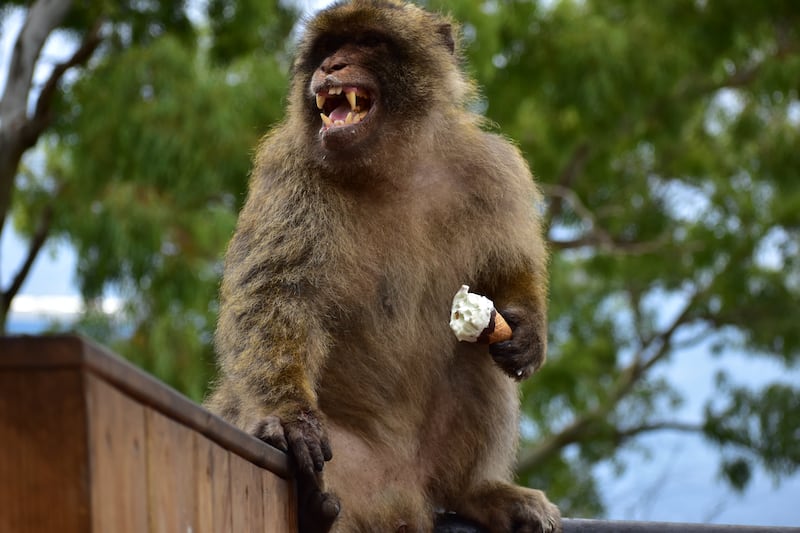
“We think the macaques started eating soil to buffer their digestive system against the high energy, low fibre nature of these snacks and junk foods, which have been shown to cause gastric upsets in some primates,” said Lemoine in a University of Cambridge article.
“The consumed soil acts as a barrier in the digestive tract, limiting absorption of harmful compounds. This could alleviate gastrointestinal symptoms from nausea to diarrhea. Soil may also provide friendly bacteria that helps with the gut microbiome.”
Visitors to Gibraltar are technically forbidden from feeding the monkeys, though many do, and the roughly 230 macaques that live there often steal snacks from unwitting tourists.
The researchers found that across the entire population, and throughout the time they’ve been observed, nearly a fifth of the diet of Gibraltar’s macaques is made up of junk food brought by tourists.
“Gibraltar’s macaques are deeply entwined with human history, offering a striking example of a human-primate interface,” said Lemoine.