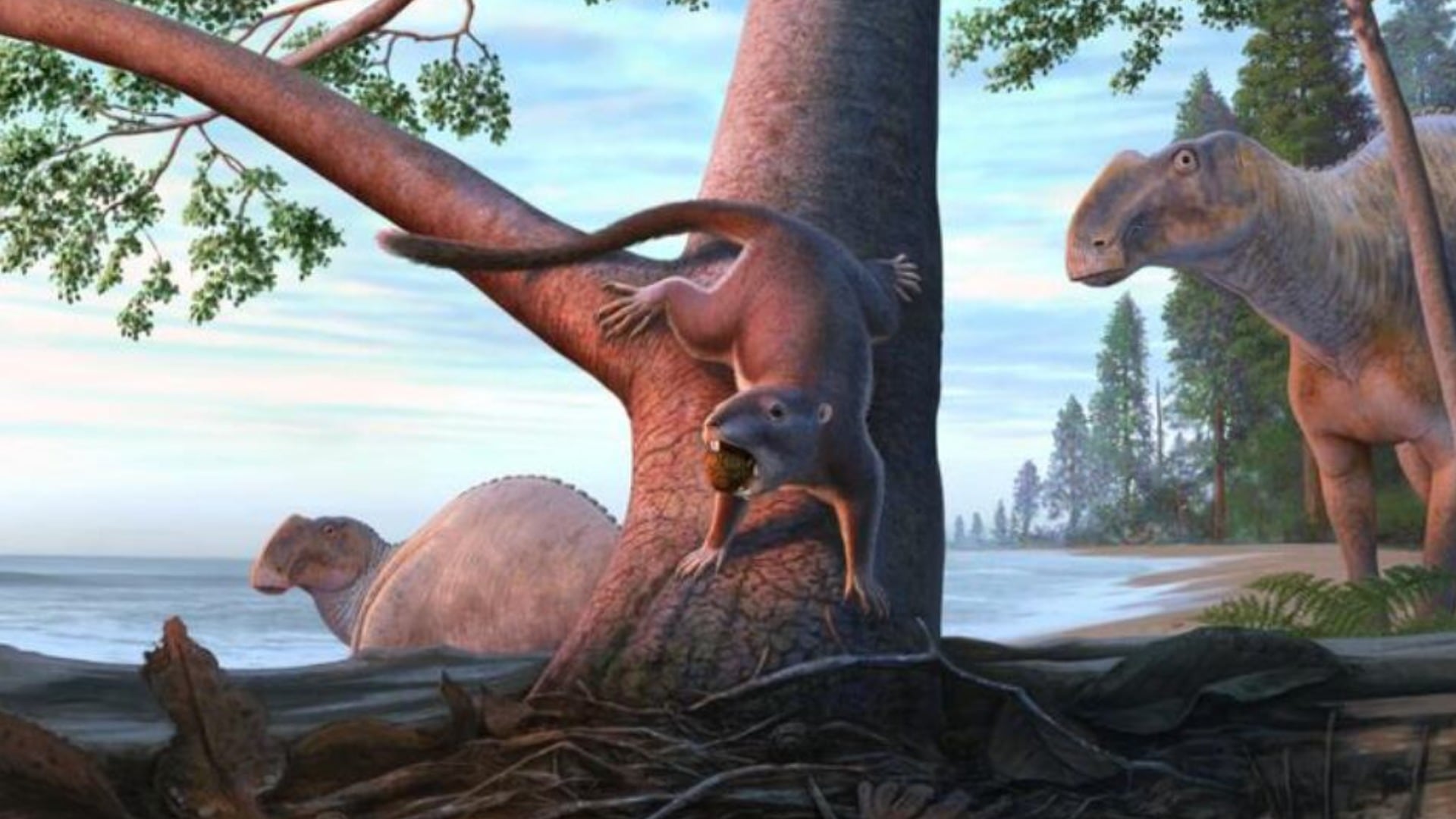
Researchers have made a rare discovery of a fossil belonging to a hamster-sized mammal that shared the planet with dinosaurs millions of years ago.
A catastrophic event 66 million years ago destroyed 75 per cent of life on Earth. While most dinosaurs weren’t so lucky, the mammals in the Cimolodon genus survived – including hamster-sized creatures.
The fossil was about 75 million years old and belonged to a new species called Cimolodon desosai, according to the study published last week in the peer-reviewed Journal of Vertebrate Paleontology.
"This new species, Cimolodon desosai, was ancestral to the species that survived the extinction event," said Gregory Wilson Mantilla, the report’s senior author, in a recent press release. “It and its descendants were relatively small and omnivorous — two traits that were advantageous for surviving.”
The species was the size of a golden hamster, a common pet today that can grow up to up to 18 centimetres (7.1 inches). Experts believe the creatures probably ate fruits and insects, and scurried on the ground and in trees.
The findings help experts understand how the creatures survived the event, and evolved into today’s diverse mammals, according to the press release.
‘Very hard to find fossils at this site’
Led by the University of Washington, the research team made the discovery at a site in Baja California, Mexico in 2009.
“It’s very hard to find fossils at this site compared to other areas,” Wilson Mantilla, a University of Washington professor of biology and curator of vertebrate paleontology at the Burke Museum in Seattle, said in the press release. “At first, my field assistant found just a little tooth poking out. If he had just found that, I would have been over the moon. But then when we looked inside the crack of the rock, we could see there was more bone.”
The researchers also found teeth, a skull, jaws and parts of the skeleton.
Wilson Mantilla said the team named the species after Michael de Sosa VI, the field assistant who initially found the fossil and died while researchers were still analyzing it.
The Cimolodon desosai were part of the multituberculates, a now-extinct group of mammals dating back to the Jurassic Period. They survived for around 100 million years, according to the release.

