
They boarded a cruise ship in Argentina last month for a once-in-a-lifetime expedition across the Atlantic Ocean to see unique wildlife and remote islands. Six weeks later, most of the American passengers who were aboard the MV Hondius are now in a small and spartan room with a bed and an exercise bike at the National Quarantine Unit in Omaha, Nebraska, and face potential weeks of isolation.
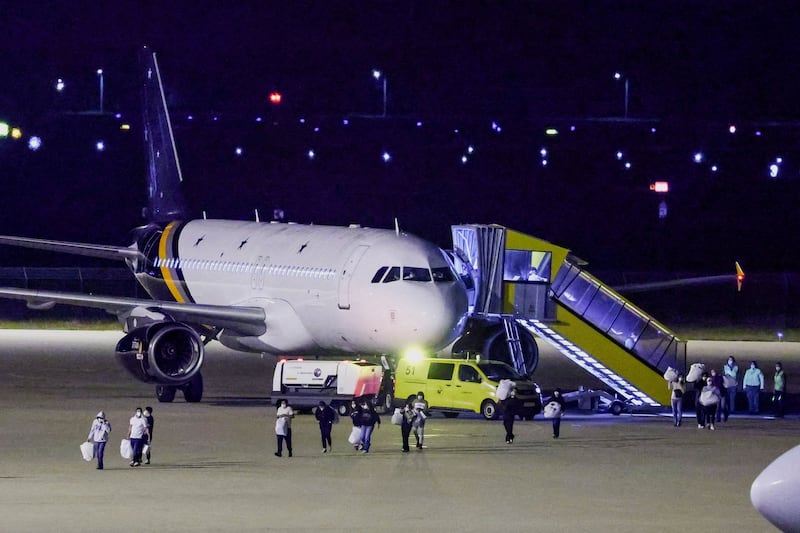
“Hopping back on for a second to let everyone know I’m okay and feeling well,” passenger Jake Rosmarin wrote in a post to Instagram Monday, alongside a smiling selfie in the room where he is quarantining.
“The repatriation flight was smooth, and I safely made it to the National Quarantine Unit in Omaha. It’s been a very long few days, but hopefully I can start giving more updates again soon.”
A little over a week since the World Health Organization (WHO) reported an outbreak of the rare hantavirus aboard the Hondius, operated by Oceanwide Expeditions, a global repatriation effort is still underway for the passengers and crew who were aboard the ship.
As of Tuesday morning, 122 people — 87 passengers and 35 crew members — had been evacuated, and most had returned to their home countries. Five Australians and one New Zealander are in the Netherlands and set to be repatriated later this week, according to authorities.
The remaining 27 people aboard the ship — 25 crew members and 2 medical professionals — are now sailing to Rotterdam, the Netherlands, where the ship will be disinfected. They are expected to arrive Sunday evening, according to Oceanwide.
Three passengers have died since April 11 and there are several other confirmed or probable cases, according to WHO, which has reiterated that the risk to the general public is low.
Speaking to reporters on Tuesday, WHO chief Tedros Adhanom Ghebreyesus said that in total, 11 cases of hantavirus have been reported. That includes the three deaths.
All of the 11 cases are among passengers or crew on the ship, he said, with nine of the cases confirmed as the Andes strain of the virus. The other two are “probable” cases, he said.
Weeks of monitoring ahead
The next few weeks will be mired in uncertainty for those who were onboard the ship, where human-to-human transmission of the Andes variant of the hantavirus is believed by the WHO to have occurred.
In the US, 17 Americans and one British dual-national are being monitored in medical facilities like the one Rosmarin posted from. The ages of the passengers range from late 20s to early 80s, with older people and those with medical comorbidities at higher risk for severe outcomes.
Sixteen of those individuals are the University of Nebraska Medical Center (UNMC). One is in the biocontainment unit after testing positive for the virus and 15 are in the quarantine unit. All are asymptomatic.
Two other people — a couple — were transferred to Atlanta’s Emory University, where they are being held in a biocontainment unit, because of capacity limitations at UNMC. At least one person at Emory is showing symptoms.
After assessing the passengers for a few days, authorities will decide if each individual should complete their 42-day monitoring period at home or in the medical facilities.
In addition to these 18 people, at least 11 others are being monitored across seven states. Passengers in Arizona, California, Georgia, Texas and Virginia had previously disembarked from the ship and individuals in New Jersey and Maryland were exposed to a confirmed case while on international flights.
Global containment efforts
As the American passengers undergo observation, authorities continue to test and observe people who were on board the hantavirus-hit ship and those who have come into close contact with confirmed cases.
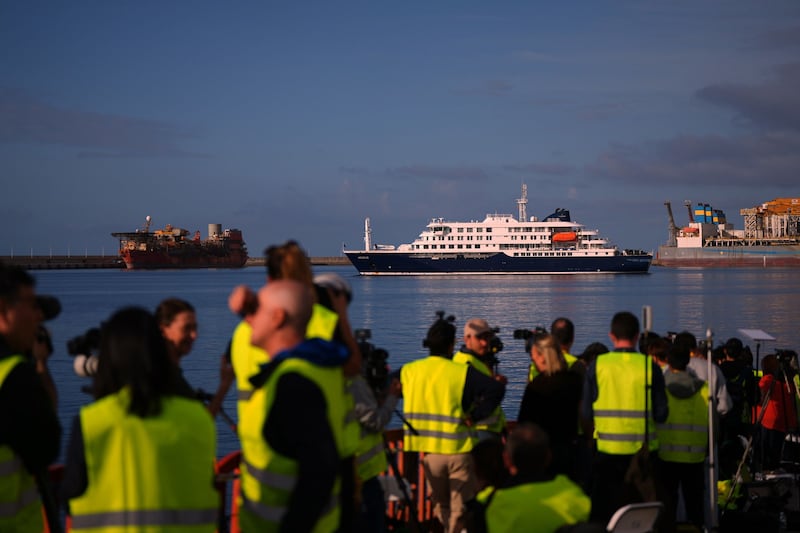
The ship, which departed Ushuaia, Argentina, on April 1, made stops in remote territories including St. Helena – where more than 30 passengers disembarked - and Tristan da Cunha before it was forced to anchor off Praia, Cape Verde, near western Africa, while authorities scrambled to manage the outbreak.
On Sunday, it anchored near Tenerife in Spain’s Canary Islands, where medical teams boarded the ship to run tests and passengers were evacuated alongside medical staff.
A French woman, one of five French nationals who were evacuated from the ship, tested positive during her return from Tenerife and is being treated in a specialist hospital, French Health Minister Stephanie Rist told French radio station France Inter.
And a Spanish passenger currently in isolation at a hospital in Madrid has tested positive for hantavirus after a preliminary test, according to Spain’s Health Ministry.
Ghebreyesus said Tuesday that he expected “more cases” to emerge among passengers due to the six- to eight-week incubation period of the virus. However, he stressed all passengers were in “good hands” with access to excellent medical care.
Risk remains low
Authorities across nearly two dozen countries are working to contain the spread of the virus which can cause severe and deadly respiratory disease.
Hantavirus, a rare disease typically caused by exposure to infected rodents’ urine or feces, can cause headaches, fever, gastrointestinal issues and respiratory problems.
Still, the American public should not panic, Department of Health and Human Services official said.
“Let me be crystal clear: The risk of hantavirus to the general public remains very, very low,” said Dr. Brian Christine, DHHS assistant secretary for health.
“The Andes variant of this virus does not spread easily, and it requires prolonged, close contact with someone who is already symptomatic.”

