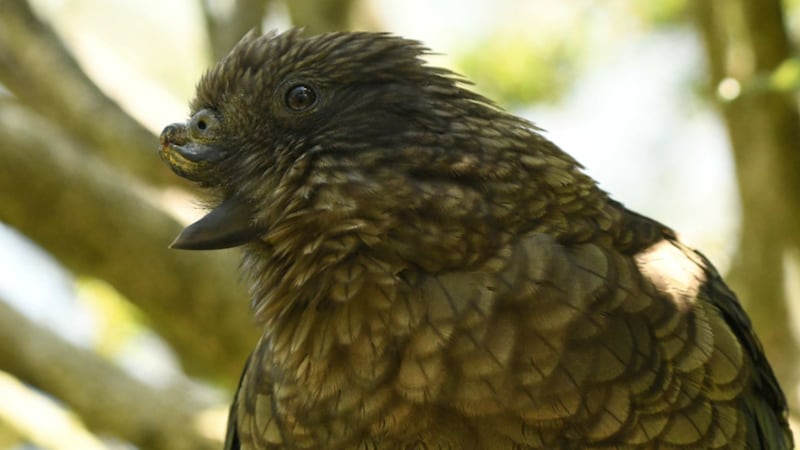
Researchers have made a surprising finding on how an endangered, disabled kea parrot became the “alpha male” of his social group.
Despite missing his entire upper beak, Bruce demonstrated his dominance over the other captive kea males by jousting, something that was not observed in another kea before, according to a new study published in Current Biology on April 20.
Researchers found that while other kea mostly fought by biting necks, Bruce’s jousting technique was more effective than his peers.
“Everything we know about animal contests predicts that the bigger, better-armed competitor should prevail,” Alex Grabham, one of the study’s lead researchers from New Zealand’s University of Canterbury, said in a press release published on April 21. “Missing his entire upper beak should have put Bruce at a serious disadvantage. Yet Bruce, the only disabled bird in the group, was undefeated in his dominance interactions with other males. Bruce was the alpha male.”
Bruce is the first known disabled animal of any species to achieve and maintain “alpha-male status” without allies through “behavioural innovation,” according to the release.
“Bruce has not just found a way to compensate for his missing beak; he innovated a completely novel fighting style and turned it to his advantage,” Grabham said.
Bruce is a captive kea at Willowbank Wildlife Reserve in Christchurch, New Zealand. His species is known for being sociable and highly intelligent, according to Kea Conservation Trust, a research and advocacy group. The kea is native to the Southern Alps in New Zealand, though fewer than 7,000 individuals remain in the wild, the organization stated on its website.
For the study focusing on Bruce’s social interactions, researchers collected kea droppings to measure corticosterone hormone levels, according to the press release. The researchers also documented the birds fighting, interacting at feeding stations and preening.
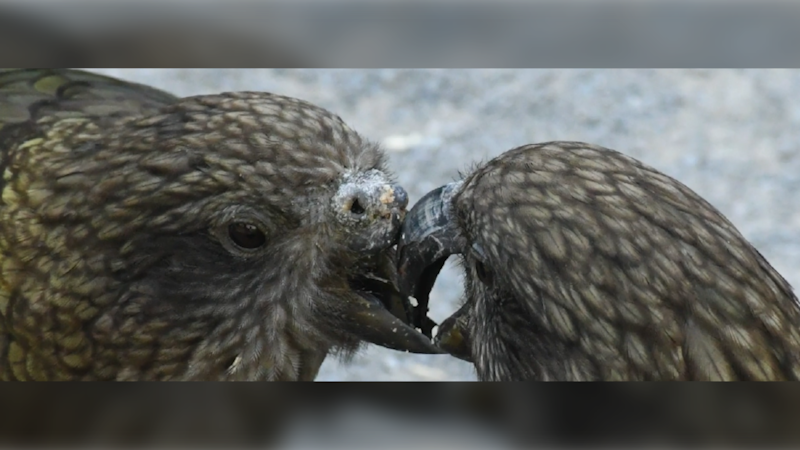
They discovered that Bruce’s stress-related hormone levels were lower than those of his peers. Bruce also had “priority access” to most of the feeder stations, the study found. In addition, subordinate males preened the inside of his lower beak, since Bruce struggled to remove debris himself.
“Subordinate birds groomed him and never challenged him while he ate, likely contributing to his low corticosterone levels,” Grabham said in the press release. “Bruce is a profound example of a disabled animal not just surviving, but thriving,”
Jousting isn’t Bruce’s first innovative way of thriving. The kea parrot had previously captured global attention in 2021. Despite missing his upper beak, Bruce used stone tools to preen himself.