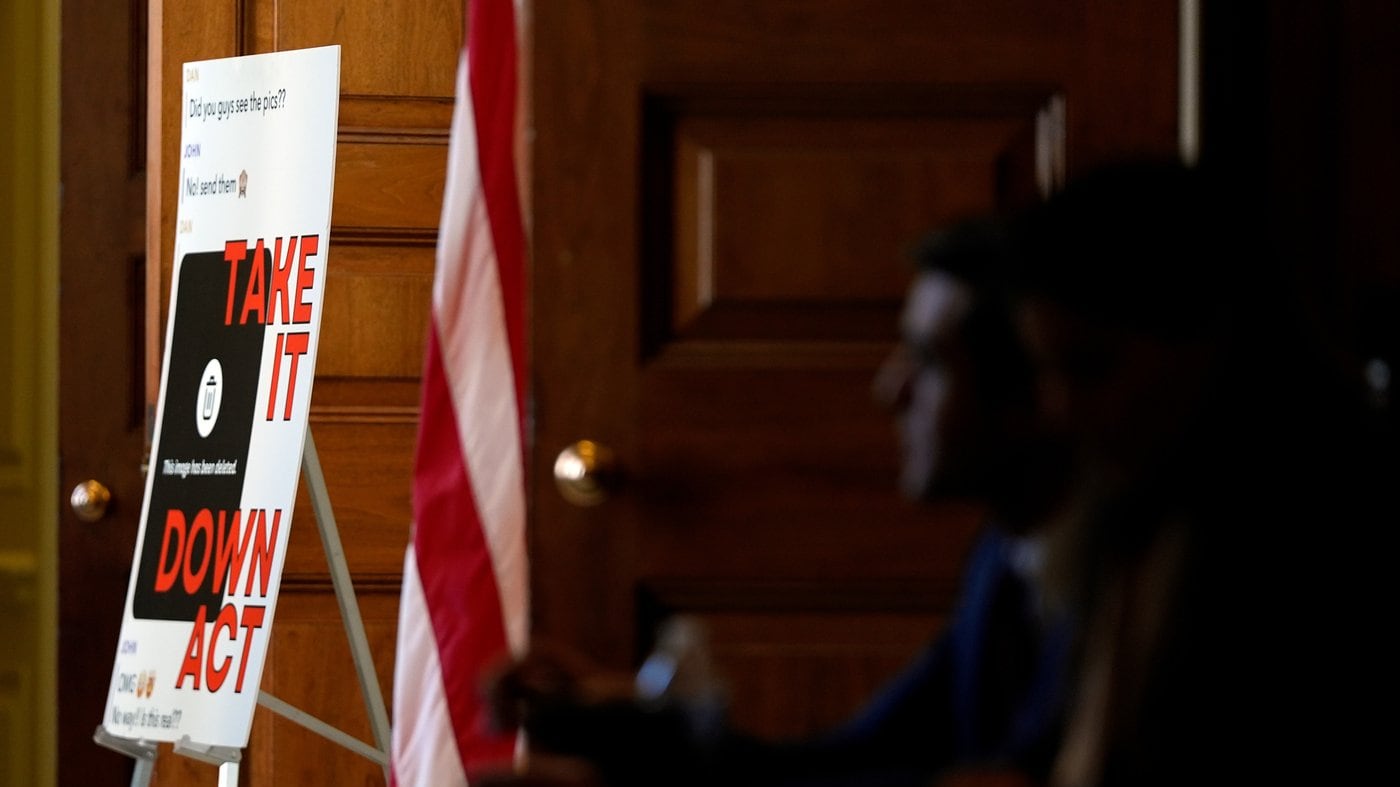
NEW YORK — Federal prosecutors have charged two men with using artificial intelligence to create nude videos and photos of female celebrities under a newly enacted law meant to halt the spread of deepfake pornography.
Cornelius Shannon, 51, and Arturo Hernandez, 20, were both arrested Tuesday for generating sexually explicit AI content that drew millions of views online, according to criminal complaints.
The men — who do not appear to be connected — are among the earliest defendants to face charges under the Take It Down Act, a law signed last year by U.S. President Donald Trump that adds stricter penalties for publishing AI-created deepfakes and “revenge porn.” The bill drew bipartisan support, as well as the public backing of U.S. first lady Melania Trump.
Under the new law, the men now face up to two years in prison.
Attorneys for Shannon and Hernandez did not immediately respond to a request for comment.
In a statement, Joseph Nocella, the U.S. attorney in Brooklyn, said the men had ”used cutting-edge digital technology to create images that degraded and violated” dozens of women. “This case makes clear that posting deepfake pornography is not a victimless crime,” he added.
Shannon, a resident of New Jersey, published at least 240 albums of AI-generated pornography featuring female politicians, musicians and singers, according to the complaint.
The deepfakes published by Hernandez, of Texas, included both celebrities as well as private women, including recent high school graduates, prosecutors said.
The arrests come as increasingly sophisticated generative AI tools have raised alarm about the online spread of sexually explicit fakes, often depicting minors.
Last month, an Ohio man became the first person convicted under the Take It Down Act after pleading guilty to using AI to generate child sexual abuse material.
In March, two teenage boys received probation for creating explicit AI images of their classmates at an exclusive private school in Pennsylvania.
And in a separate case filed earlier this year, three teenagers in Tennessee sued Elon Musk’s xAI, claiming the company’s Grok tools morphed their real photos into explicitly sexual images.
The high school students are seeking class-action status to represent what the lawsuit says are thousands of people who were similarly victimized as minors.
Jake Offenhartz, The Associated Press
If you or someone you know is struggling with sexual assault or trauma, the following resources are available to support people in crisis:
- Call 911 if you are in immediate danger or fear for your safety.
- The Canadian Association of Sexual Assault Centres' website has a comprehensive list of sexual assault centres in Canada that offer information, advocacy and counselling.
- The Ending Violence Association of Canada‘s website has links to helplines, support services and locations across Canada that offer sexual assault kits.
- Indian Residential School Survivors Society crisis lines: +1 866 925 4419 or +1 800 721 0066 (24/7)
- Toronto Rape Crisis Centre crisis line: +1 416 597 8808 (24/7)
- Canadian Human Trafficking Hotline: +1 833 900 1010 (24/7)
- Trans Lifeline: +1 877 330 6366
- Suicide Crisis Helpline: call or text 988 (24/7)
- Sexual Misconduct Support and Resource Centre for current and former Canadian Armed Forces members: +1 844 750 1648
- Read about your rights as a victim on the Canadian Resource Centre for Victims of Crime website.

