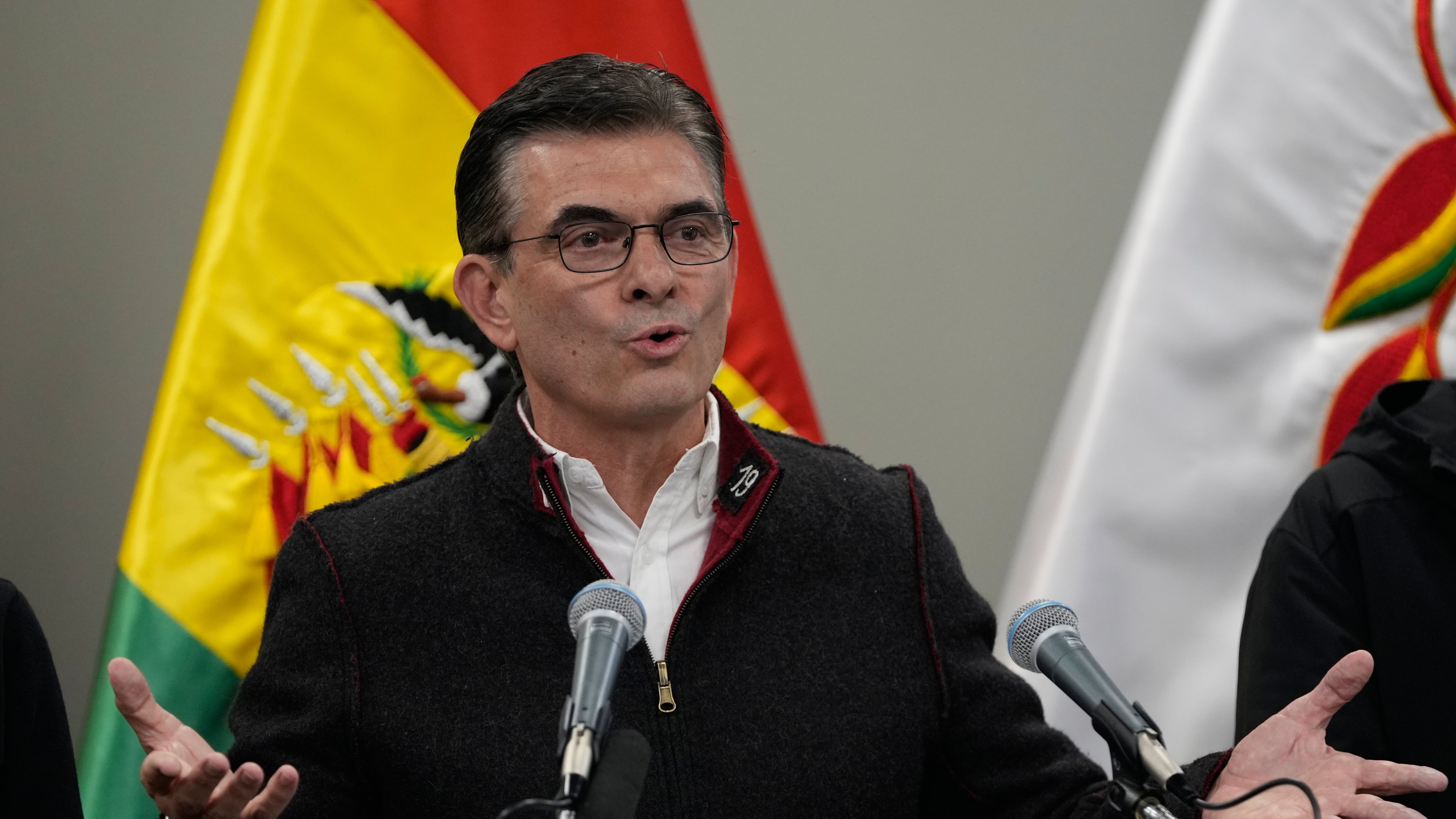
Bolivian President Rodrigo Paz said Monday he would slash his salary by 50 per cent to try to end weeks of anti-government protests.
But the announcement by the center-right leader fell on deaf ears, with protesters calling for his resignation and clashing again with police in the Andean city of La Paz.
The US-backed Paz has made various gestures aimed at ending a popular revolt that has exploded just six months into his presidency.
The demonstrations have radicalized since trade unions began protesting in early May for salary increases, stable fuel supplies and sounder economic management.
Speaking in the southeastern city of Sucre, the president said he had decided “as part of his efforts and commitment to the country, to reduce his salary by 50 per cent.”
His monthly salary is currently set at around 24,000 bolivianos ($3,500), one of the lowest of any Latin American leader but about eight times that of the average Bolivian, according to 2024 statistics from the International Labor Organization.
The gesture failed, however, to appease the protesters, who have been blocking roads leading to the political capital La Paz for nearly a month, causing acute shortages of food, fuel and medicine.
On Monday, the police again clashed with protesters after thousands of miners, farmers, factory workers and other groups marched through the city for the third time in a week.
“What do we want? For him to resign! When? Now!” the demonstrators shouted as they marched down the mountain to central La Paz from the predominantly Indigenous neighboring city of El Alto.
The rioting began when the protesters attempted to break through police lines near parliament.
The police responded with tear gas.
Humanitarian corridor
Paz’s previous attempts at outreach, including his firing of an unpopular labor minister and promises to give trade unions and Indigenous groups more of a say in policy-making, failed to take the heat out of the protests.
On Saturday, police attempting to clear a “humanitarian corridor” through roadblocks leading to La Paz clashed for hours with demonstrators armed with stones and sticks.
On Monday, Paz, a trained economist from a political family, again appealed for dialogue with organizations representing the protesters while denouncing demonstrators who resorted to violence.
His election last year marked an end to two decades of socialism launched in the mid-2000s by Evo Morales, Bolivia’s first Indigenous leader.
Since coming to power, 58-year-old Paz has attempted to tackle the root cause of the economic crisis -- a shortage of currency caused by generous fuel subsidies -- but has failed to stabilize fuel supplies or end surging inflation.
Morales, who made a failed comeback bid last year despite being wanted by police on charges of trafficking a minor, on Sunday called for Paz to hold new elections within 90 days.
The United States has, however, expressed strong support for the president.

