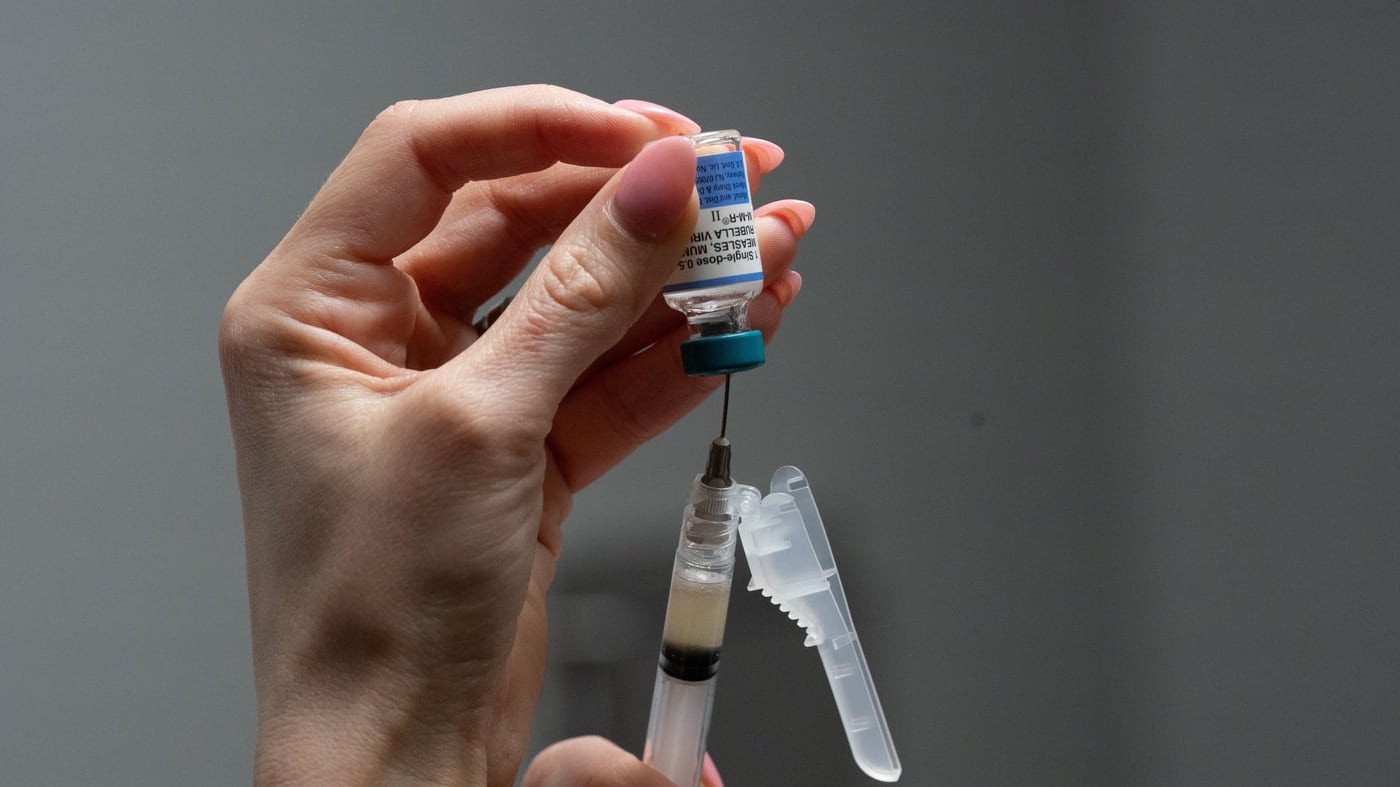
The families of two Black babies who died in 1967 after secretly being given an experimental vaccine are suing the United States government for damages, their lawyers said Thursday.
The babies, Ross Otto Hambrick and Victor Marcellus King, were used to test an early vaccine against respiratory syncytial virus (RSV), a highly contagious virus, the leading cause of hospitalization among infants in the United States.
“The complaint alleges that tissue samples harvested from their autopsies decades later informed the development of RSV vaccines approved” by the federal regulators in 2023, and are “now generating billions in revenue,” their attorneys said in a press release.
They allege the babies, aged two months old and four months old, were chosen without their parents’ knowledge or consent to test “a dangerous, highly concentrated experimental vaccine known as ‘Lot 100.’”
Both boys died in January 1967, the statement said.
The National Institutes of Health sponsored an experimental RSV vaccine trial in 1965 and 1966.
“The complaint, brought under the Federal Tort Claims Act, alleges that the United States government, through the NIH, selected the most vulnerable children it could find — Black infants from low-income families,” the statement said.
The United States has a long history of secretly conducting medical experiments on Black people. For example, in 1997, then-U.S. president Bill Clinton formally apologized for the Untreated Syphilis Study at Tuskegee between 1932 and 1972, where hundreds of Black men with syphilis were not offered available treatments, even after penicillin became widely available.

