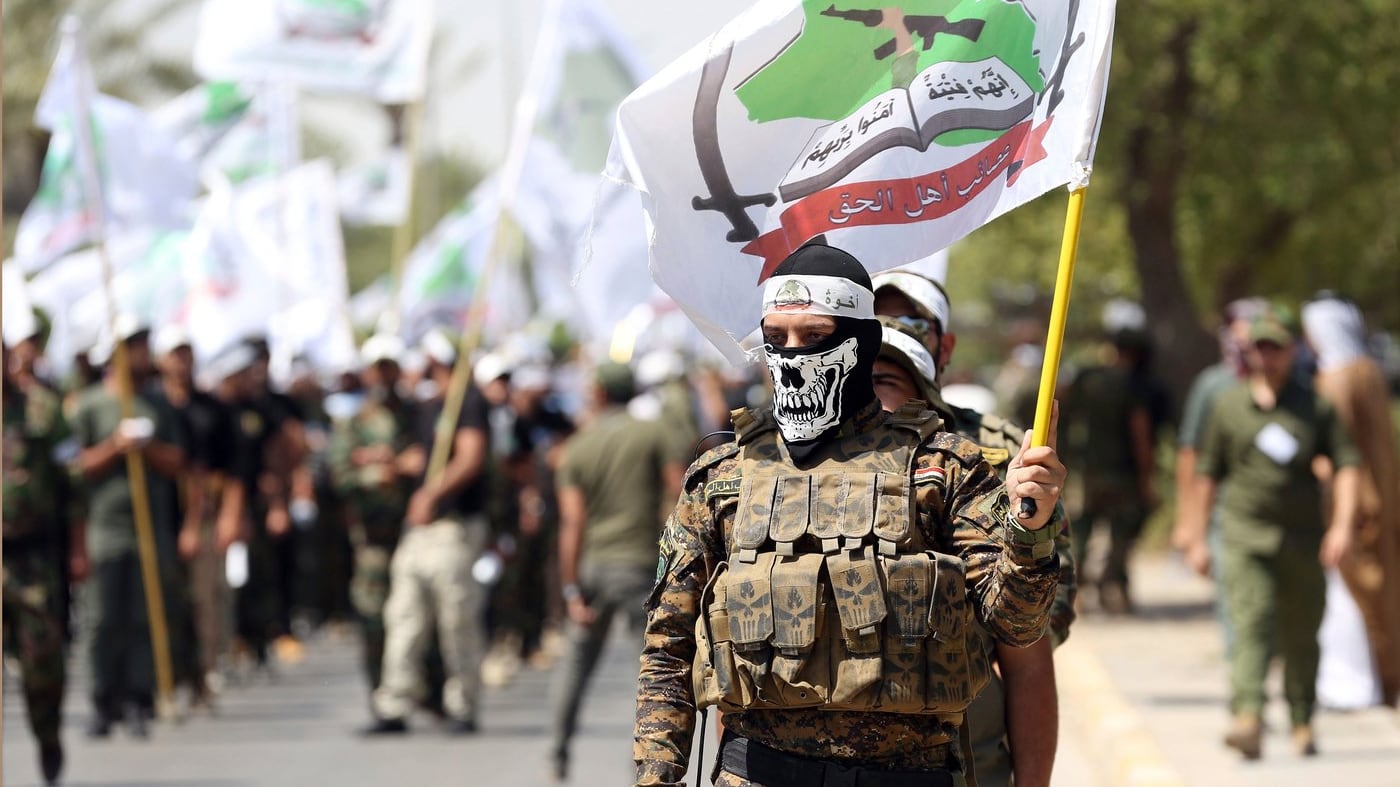
IRBIL, Iraq — Two of Iraq’s most powerful Iran-backed militias said on Tuesday they would begin handing in their weapons to the authorities, a major step in the new government’s effort to rein in militias that have long operated on their own even though they were nominally under state command.
One of the groups, Asaib Ahl al-Haq, said it had formed a committee to oversee the move, inventory its fighters, weapons and equipment, and coordinate with the commander-in-chief of Iraq’s armed forces. It cast the decision as a response to calls by Iraq’s top Shiite religious authority and the Iran-aligned Coordination Framework, the largest bloc in Parliament that dominates Iraqi politics.
The second group, the Imam Ali Brigades, made a similar announcement saying the time has come “to build a strong state with full sovereignty.” It added that its aim was now to have weapons only with the state and help boost state institutions.
The war in the Middle East, which the United States and Israel launched on Feb. 28 with strikes on Iran, has exposed the fragility of Iraq’s state institutions and their limited ability to restrain Iran-backed groups.
A parallel confrontation between Washington and the militias has deepened the crisis, with factions acting as an extension of Iran’s regional campaign and escalating attacks on U.S. assets in Iraq before a tenuous ceasefire deal was reached in April.
A week ago, influential Shiite cleric Muqtada al-Sadr said his Saraya al-Salam militia, also known as the Peace Brigades, would split from his political movement and integrate into state institutions.
Under pressure from Washington, Prime Minister Ali al-Zaidi has been working to assert state authority over weapons. Al-Zaidi, a 40-year-old banker sworn in last month, has made a state monopoly on arms a centerpiece of his program.
The Trump administration has warned against having any Iraqi government influenced by Iran-linked factions and has tied defense cooperation and funding to efforts to curb them.
Many Iran-backed militias are funded through the Iraqi state budget and embedded within the security apparatus, although not under the government’s control. This has drawn criticism from the U.S. and other countries that have borne the brunt of attacks by the militias and which say Baghdad has failed to take a tougher stance on armed groups.
Several armed factions aligned with Iraq’s Coordination Framework have taken a different stance on efforts to bring weapons under state control. Two important groups, Kataib Hezbollah and Harakat al-Nujaba, have rejected disarmament, tying the issue to Iraq’s sovereignty and the presence of foreign troops.
Kataib Hezbollah welcomed moves by other factions to place weapons under state authority but said its own armed activity will continue as part of what it describes as “resistance work.”
In a recent statement attributed to its Abu Mujahid al-Assaf social media channel, the group said it would offer to coordinate with the paramilitary Popular Mobilization Forces — a state-backed umbrella of mostly Shiite armed groups — rather than surrender its arms.
The Popular Mobilization Forces was formed in 2014 to fight the Sunni militant Islamic State group, which at the time had seized a wide swath of Iraqi territory. Many of its groups still keep their own command and ties to Iran.
Stella Martany, The Associated Press

