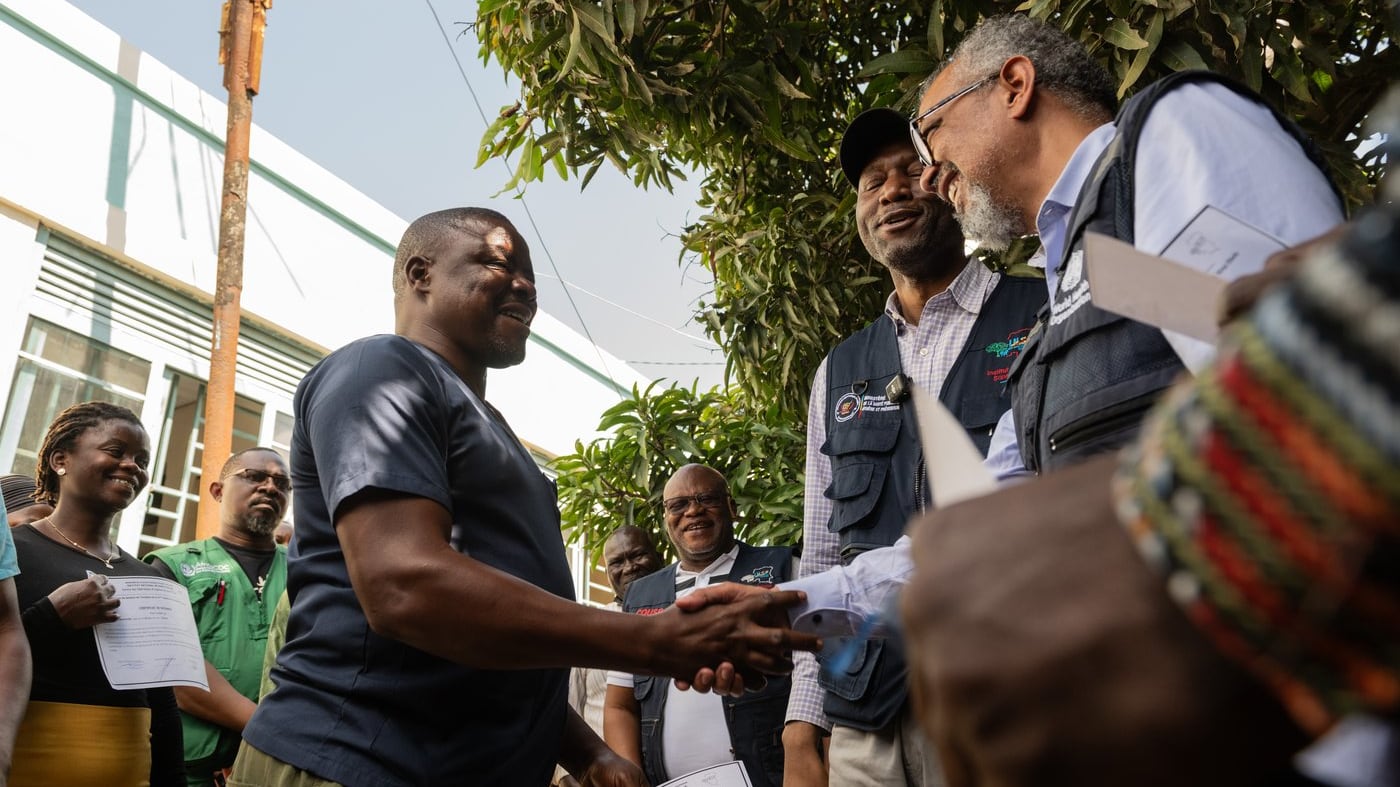
DAKAR/NAIROBI - The World Health Organization chief announced a US$518 million six-month joint plan to fight Ebola on Friday, calling for money and political commitment to halt the spread of an outbreak that is already the fourth biggest on record.
The strategy aims to help the Democratic Republic of Congo and neighbouring Uganda contain their outbreaks, while assisting other countries to prepare for possible cases through measures including enhanced border screening, the WHO and Africa Centres for Disease Control and Prevention said.
“The outbreak is moving fast and we are still playing catch-up,” WHO Director-General Tedros Adhanom Ghebreyesus said.
“Containing Ebola requires political commitment, sustained finances and trust in engaging the communities,” he added.
Many challenges
The epidemic went undetected for weeks, the Africa CDC said at the same briefing, leaving health authorities behind the curve and struggling to bring it under control.
So far there have been 381 confirmed cases in Congo and 62 confirmed deaths, according to Africa CDC. Uganda has recorded 19 cases and two deaths.
The outbreak involves the rare Bundibugyo strain of Ebola, for which there is no approved treatment or vaccine.
“This outbreak is very serious. If you compare with previous Bundibugyo outbreaks this is the most serious Bundibugyo outbreak we have,” Africa CDC Director-General Jean Kaseya said.
He said donors have so far pledged $315.8 million towards the response, down from an initial $498 million after he said some had “corrected” their figures, without giving details.
The Africa CDC announced Congo’s 17th Ebola outbreak on May 15, and the WHO soon after declared it a public health emergency of international concern.
Testing has been a challenge, as commonly used Ebola tests initially failed to detect the Bundibugyo strain, while delays persist in obtaining results.
“It’s taking several days to a week or more. And that’s frustrating,” said Franklin Graham, president of Christian aid group Samaritan’s Purse, which is working in Congo’s Ituri province.
Mistrust and resistance have also hampered the response, with attacks on burial teams and treatment centres reported.
Highlighting security risks, the WHO said on Friday it had received three armoured vehicles from the UN peacekeeping mission in Congo.
Reporting by Anait Miridzhanian and Emma Farge. Editing by Alex Richardson and Mark Potter.

