DUBAI, United Arab Emirates -- Israel and Iran appeared to back away from further strikes Monday, hours after they traded fire for the first time since the U.S. agreed to a ceasefire with Tehran two months ago. Both countries warned that they were ready to launch retaliatory attacks if provoked.
The renewed hostilities raised concerns that the Middle East could be plunged back into a full-scale war.
Since the U.S. and Israel began striking Iran on Feb. 28, the war has shaken the global economy, driven energy prices up around the world and made many basics, including food, more expensive. Officials have been unable to turn the April ceasefire into a deal to permanently end the conflict.
The new attacks prompted U.S. President Donald Trump to call for an immediate stop to fighting between Israel and Iran.
Soon after, the Iranian military’s joint command issued a statement that said it was halting offensive strikes. The statement said further “aggression and hostile acts” by Israel and its supporters, including in southern Lebanon, would be met with “much more severe and crushing measures than before.”
Israeli Prime Minister Benjamin Netanyahu, speaking in a videotaped statement, implied that the current round of fighting was over. But he also warned that if Iran “makes the mistake and returns to attacking us, we will respond with force.”
Netanyahu said Israel is continuing to operate in Lebanon against the Iranian-backed militant group Hezbollah, and that Israel “has full right to self-defence, and we will exercise it to the full extent necessary.”

Both countries lift restrictions
Both countries lifted restrictions they had imposed as safety precautions. The Israeli military said most schools in Israel that closed Monday would reopen. Iran’s official Mizan news agency reported that the Islamic Republic had lifted airspace restrictions affecting civilian flights.
During the truce, Iran has maintained its stranglehold on the Strait of Hormuz -- a crucial passage for the world’s oil and natural gas whose closure was the primary reason global fuel prices skyrocketed. Israel has continued to strike Hezbollah, Iran’s ally in Lebanon, and pushed deeper into that country.
The U.S. military continues to impose a blockade on Iranian ports. U.S. Central Command said its forces on Monday fired on and disabled a Palau-flagged oil tanker, the M/T Marivex, in the Gulf of Oman after the ship attempted to breach the blockade.
Officials in India said the tanker’s crew of 24 Indian sailors were all reported safe after a fire broke out on the vessel. It was the seventh commercial vessel the U.S. military has disabled to enforce its blockade, which began in mid-April.
Diplomats race to save the ceasefire
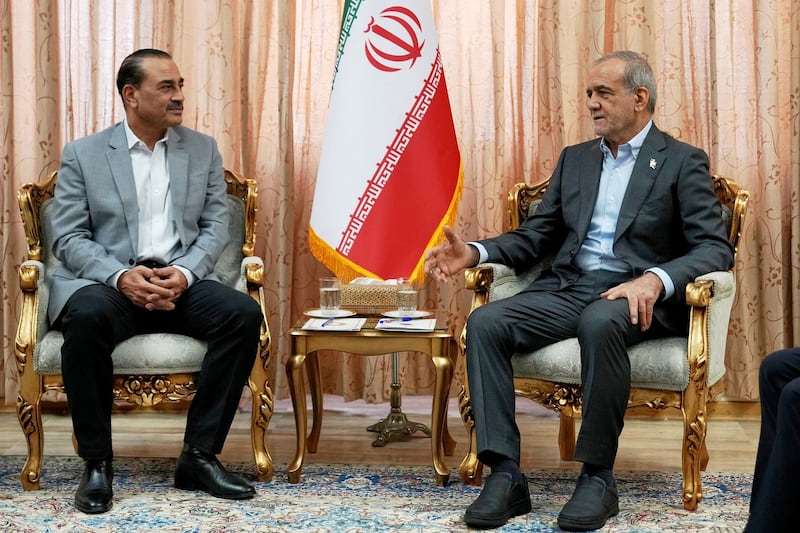
Pakistani Prime Minister Shehbaz Sharif expressed concern Monday over the surge in violence. In a post on X, Sharif urged all parties to “exercise restraint and give peace a little more chance.”
Two regional officials said diplomatic efforts included Egypt, Saudi Arabia, Turkiye, Pakistan and Qatar, which all urged the Trump administration to pressure Israel to halt strikes on Iran and Beirut.
Those countries also urged Iran to stop attacking Israel, the officials said. Both spoke on condition of anonymity because they were not authorized to speak to reporters.
Iran’s ambassador to the United Nations said Monday that Iran and the U.S. are still working to negotiate a peace deal. After speaking at a U.N. Security Council meeting, Amir Saeid Iravani told The Associated Press he was hopeful that “very soon” the two sides would reach “a conclusion.”
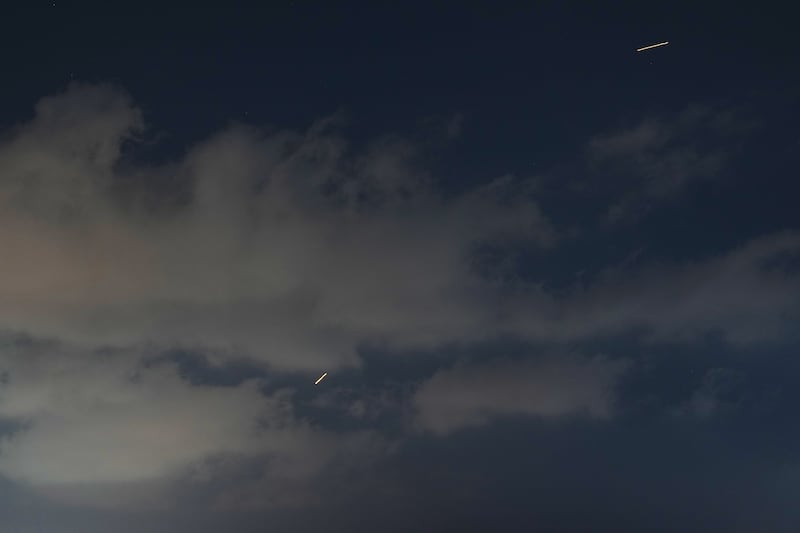
Explosions sound in Tehran and central Israel
Iran launched waves of attacks on Israel on Monday, and Israel launched strikes on central and western Iran.
Iranian state media reported at least 15 people were wounded after explosions sounded in Tehran and other cities. There were no immediate reports of fatalities.
The semiofficial Fars and Mehr news agencies said Israeli strikes hit a petrochemical factory in the city of Mahshahr. They did not elaborate on any damage. The Israeli military confirmed the strike on the plant, saying it targeted sites that produce materials for ballistic missiles. Israel said it also targeted truck-based missile launchers.
Israel said its strikes were in response to an Iranian missile attack. Tehran warned Sunday that it would retaliate after Israel struck Beirut’s southern suburbs without warning. When Israel struck back, Iran fired again.
Explosions could be heard in central Israel as air defenses sought to intercept incoming Iranian fire. Iran’s paramilitary Revolutionary Guard said it had targeted two military bases in Israel.
Iran blamed the United States for the escalation.
“No one believes that the Israeli regime would take any action without co-ordination with the United States,” Iranian Foreign Ministry spokesman Esmail Baghaei told journalists in Tehran.
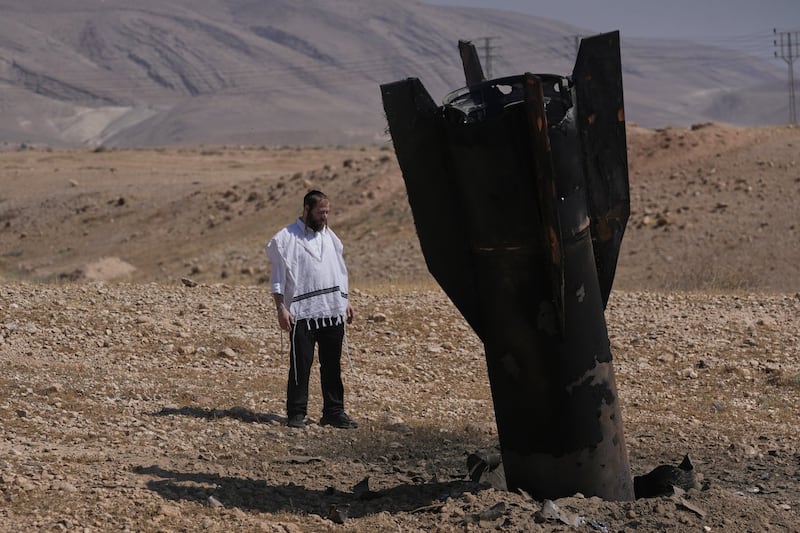
Tensions appear to be growing between Trump and Netanyahu
Trump and Netanyahu launched the war in a closely coordinated attack, with Israeli officials proudly boasting of unprecedented “shoulder to shoulder” co-operation.
The conflict reached 100 days on Monday, and the two leaders have moved in opposite directions, with tensions sometimes spilling out into the open.
Netanyahu appears to have openly defied Trump with the strike Sunday in Beirut and subsequent attacks in Iran. Trump has voiced his displeasure with Israel, including belittling Netanyahu by declaring to the Financial Times that “I call all the shots.”
Their differences appear to be rooted in each leader’s domestic considerations. Netanyahu faces elections this fall and is under public pressure to strike back against ongoing Hezbollah attacks on northern Israel. He also is wary of appearing too subservient to Trump.
The U.S. president, meanwhile, also faces elections -- for Congress in November -- and is eager to end a war that has jolted the global economy and raised prices for consumers.
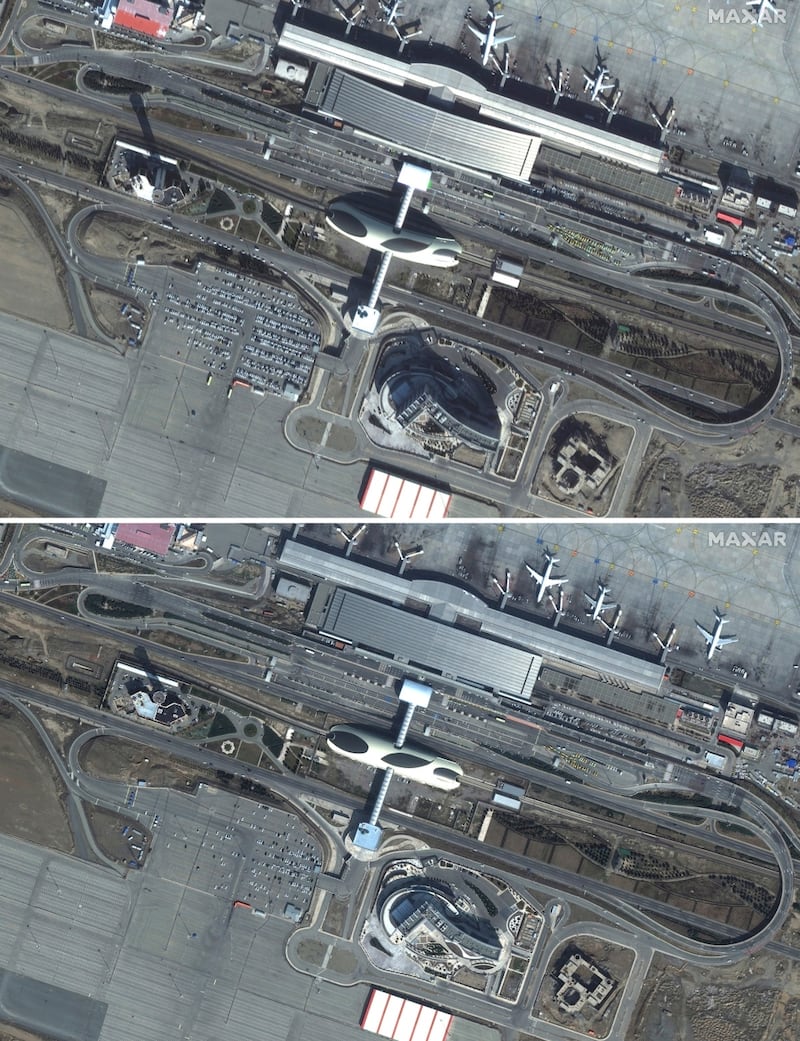
The Houthis claimed an attack on Israel
Yemen’s Iran-backed Houthi rebels claimed an attack on Israel on Monday and said Israel-affiliated vessels would again be a target in the Red Sea, putting the waterway in danger along with the Gulf of Aden and the narrow Bab el-Mandeb Strait connecting them. The statement from Brig. Gen. Yahya Saree was broadcast on the Houthis’ al-Masirah satellite news channel.
The Houthis made a similar threat during the Israel-Hamas war in the Gaza Strip and launched attacks that killed at least nine mariners and sank four ships. They often targeted vessels with tangential or no ties to Israel.
The assaults upended shipping in the Red Sea, through which about US$1 trillion of goods passed each year before the war.
- READ MORE: U.S. says ‘slight progress’ in Iran talks as Pakistan renews efforts to mediate a peace deal
By Jon Gambrell And Melanie Lidman
Lidman reported from Tel Aviv, Israel. AP journalists Munir Ahmed in Islamabad; Matthew Lee in Washington; Michelle L. Price in Bridgewater, New Jersey; Elena Becatoros in Athens, Greece; Samy Magdy in Cairo; Josef Federman in Jerusalem; and Russ Bynum in Savannah, Georgia, contributed.
Correction
This Associated Press story has been updated to correct the day the Iran war started to Feb. 28.

