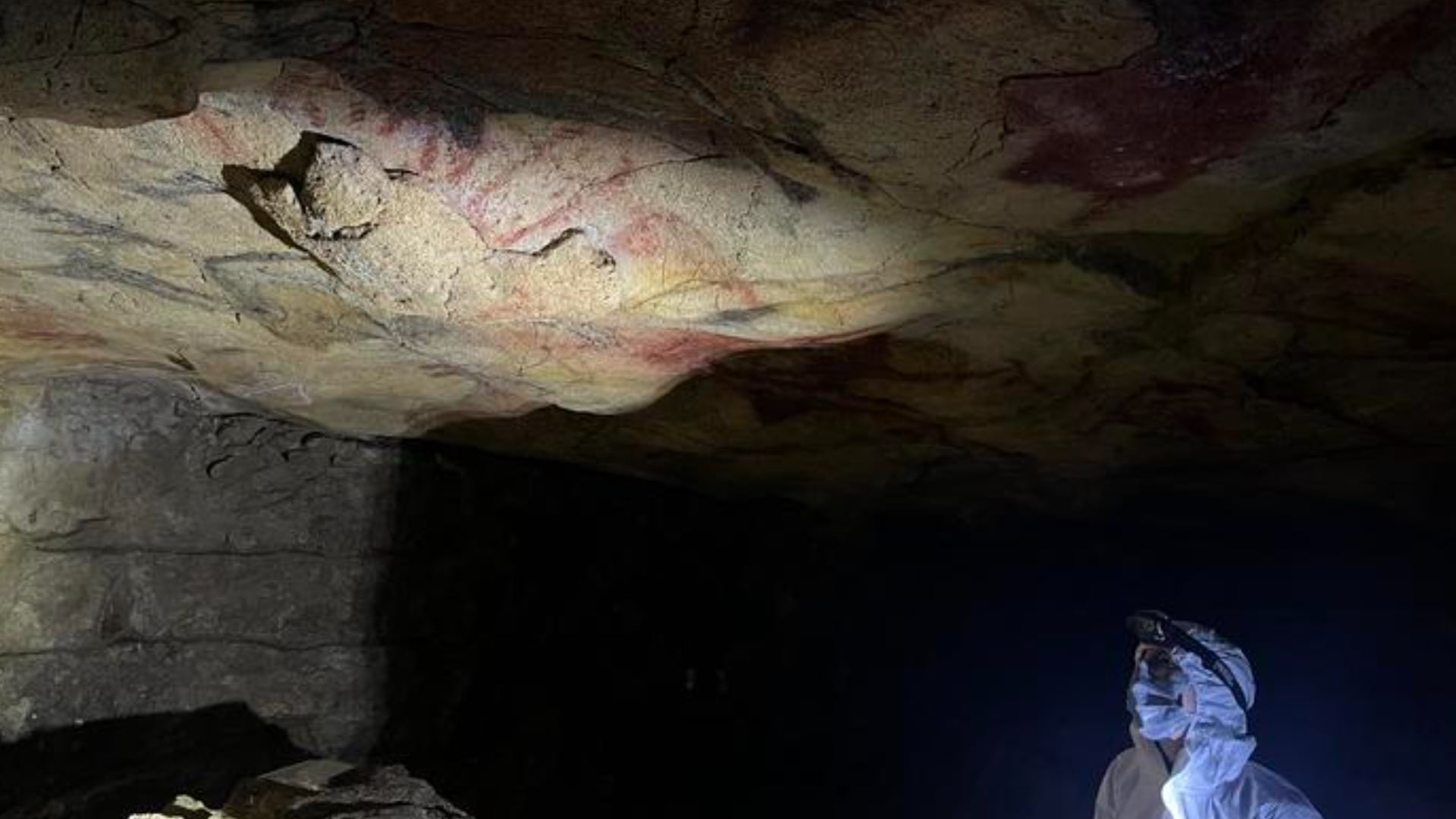
Ancient human DNA discovered on cave walls suggests it can survive thousands of years, according to a new study.
Scientists discovered DNA on cave walls in Portugal and Spain that was at least 2,000 years old according to study published Wednesday.
“This study fundamentally changes how we think about where ancient DNA can be found”, Matthias Meyer, a paleogeneticist at the Max Planck Institute for Evolutionary Anthropology and the study’s senior author, said in a press release. “We were surprised to see that ancient DNA can be recovered not only from pigmented samples, but also from cave walls that show no visible evidence of past human activity.”
He says the discovery opens up the door for future researchers to examine prehistoric behaviour, without upsetting sensitive archeological sites. Using the DNA, scientists can potentially determine what the people inside the caves looked like.
“This is not just about rock art”, Hipólito Collado Giraldo, an archeologist who co-led the research, said in the press release. “It’s about understanding how people used caves and where they left their marks.”
The breakthrough opens the door for further research, but not every piece of prehistoric art will yield DNA evidence. Ancient DNA was detected in just three instances across 24 rock panels. The study looked at two dozen art panels across 11 caves, including everything from simple markings to hand stencils.
The samples found DNA mostly from females, matching modern humans. The findings come from the Escoural Cave in Portugal, Covaron Cave in Spain, and other Iberian sites.
“The preservation of human DNA on cave walls is highly variable,” said first author Alba Bossoms Mesa, a doctoral researcher at the Max Planck Institute for Evolutionary Anthropology in Leipzig, Germany.
“But when it does survive, it tells a powerful story. And while these first results are promising, I think our priority now should be to refine the methods and to understand, under what conditions, we can expect a higher success rate.”
“This is just the beginning”, added Meyer. “We now know that cave walls are archives of past human presence. The next step is to test more sites, art styles and techniques, especially hand stencils and figurative art in caves with good molecular preservation, as far as minimally invasive sampling allows.”

