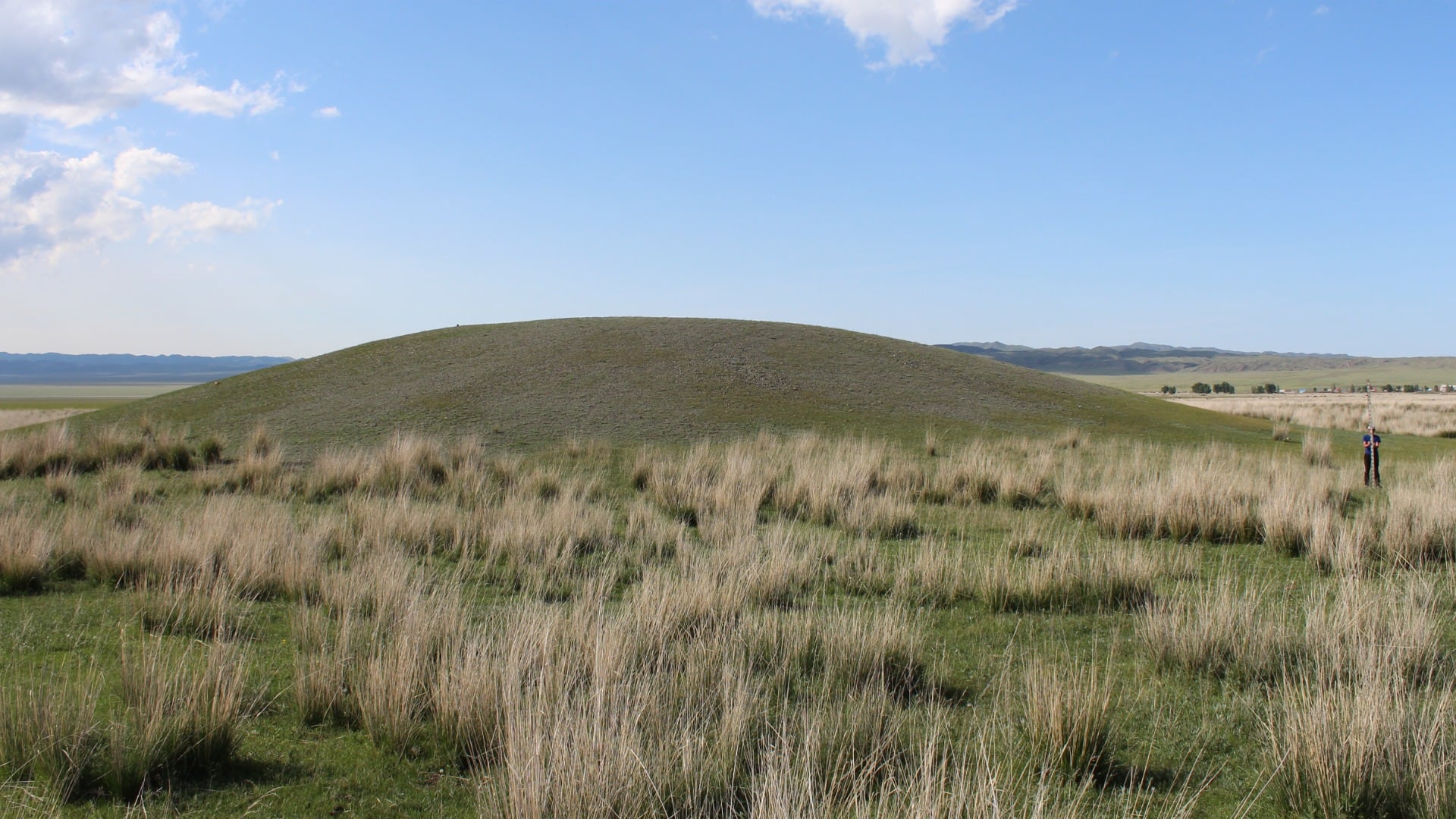
Elite horse-riding nomads may have passed on political power through family lineages, rather than winning it through achievements, based on ancient DNA from elaborately decorated burial sites during the Iron Age, according to a new study.
A team of international researchers found evidence of close family ties connecting the elite Scythians across numerous graves and “signs of unions between relatives,” according to the press release about the study published Friday in the peer-reviewed Science Advances journal.
“We did not expect to find that social status was passed down from generation to generation, but it was clear that high-status individuals were more related to each other, even when buried at different archeological sites, than to people of lower status who were buried at the same sites with the elites,” Ainash Childebayeva, an assistant professor of anthropology at University of Texas at Austin, stated in the press release.
Researchers also used archeology, anthropology and genetics to discover how social inequality and political authority formed among these ancient nomadic societies, who lived in the Eurasian steppe during the first millennium BC. They examined genome-wide DNA from 85 Iron Age people across Central Eurasia, including 38 who were deemed to be elite and 47 who were considered to have lower status.
Humans started using iron and steel to make tools and weapons between 1,200 BC and 600 BC, which was a period known as the Iron Age, according to History.com.
During this period, big and elaborate burial mounds for high-status people began to appear across the Eurasian steppe, a vast region of grasslands and plains in Europe and Asia, according to a press release on the study.
“Richly adorned women and men” with gold ornaments, weapons and animals were usually found in the graves.
On the other hand, some people were buried in significantly smaller and simpler graves, with few or no other items accompanying them.
“Such striking differences have long been interpreted as evidence of growing social inequality and the emergence of powerful elites among the Iron Age population,” the press release stated.
Role of women in Scythian society
Despite social inequality, researchers observed a “noticeable presence of elite women.”
According to researcher Ayshin Ghalichi, almost half of the elite people they studied were female, “indicating that women held high social status within Iron Age Scythian society.”
“The presence of elite women in richly furnished graves, together with genomic evidence linking high-status individuals across burial sites, points to a social world in which status, authority and kinship were closely connected,” according to the press release.
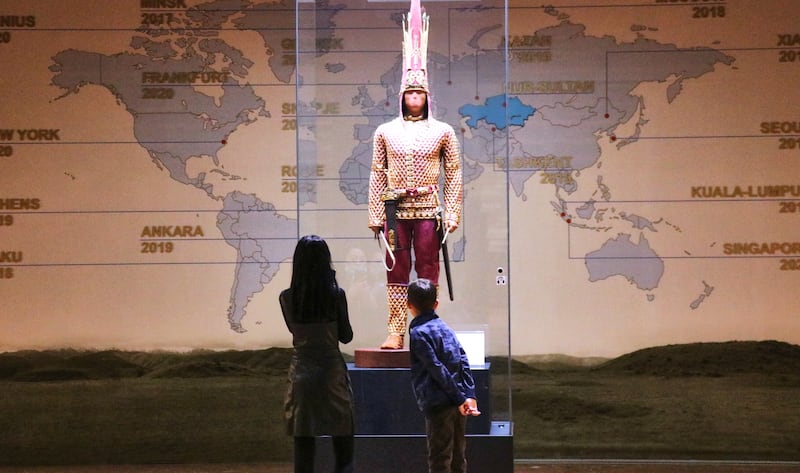
‘Golden Man’ findings
Researchers also discovered " the first genetic insight" about the famous “Golden Man” of the Issyk site in Kazakhstan, including that “the individual was most likely male than female.”
The Golden Man was buried in a royal complex connected with the Iron Age Saka culture in 400 to 300 BC. Their grave was a wooden chamber with “more than 4,000 gold ornaments, weapons, gold-embroidered headdress, zoomorphic artifacts, and a silver bowl with unknown writing,” the press release stated.
Scythians and Sakas refer to the nomadic tribes from the Central Eurasian region during the early Iron Age, with ancient Greeks calling them “Scythians” and Persian and Indian people calling them “Sakas,” according to Leyla Djansugurova from the Institute of Genetics and Physiology in Almaty, Kazakhstan.
“All these tribes were united by the so-called Scythian-Saka animal style in art, a distinctive military skill, and nomadic herding,” Djansugurova said in the press release. “They did not have their own written language, but they left behind grand burial mounds, the study of which has shaped the global understanding of the culture of the nomadic peoples of Eurasia during this period.”

