
Paris — If you’re visiting Paris this summer, you may want to add swimming in the Seine to your itinerary. And after the heat this city has seen in the past few weeks, you may absolutely need to.
Paris just experienced its hottest day on record, with temperatures topping 104 F (40 C) in late June. With a third heatwave set to hit next week, the opening of three swim spots along the river couldn’t come at a better time.
From Saturday, Parisians and tourists can take a refreshing plunge in the Seine, for the second summer in a row. A century-old ban has given way to what is fast becoming a new Parisian summer tradition.
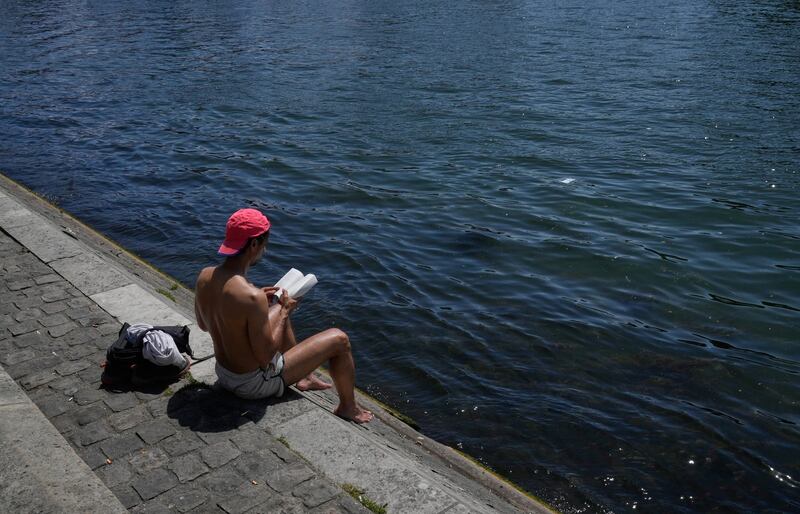
The seasonal opening on Saturday has been timed to mark 250 years of Franco-American friendship. For American visitors, there may be no more quintessentially Parisian way to celebrate the 4th of July than a dip in the Seine.
Centuries in the water
Though many are treating river swimming as a modern novelty, Paris has a deep, complicated history with the Seine.
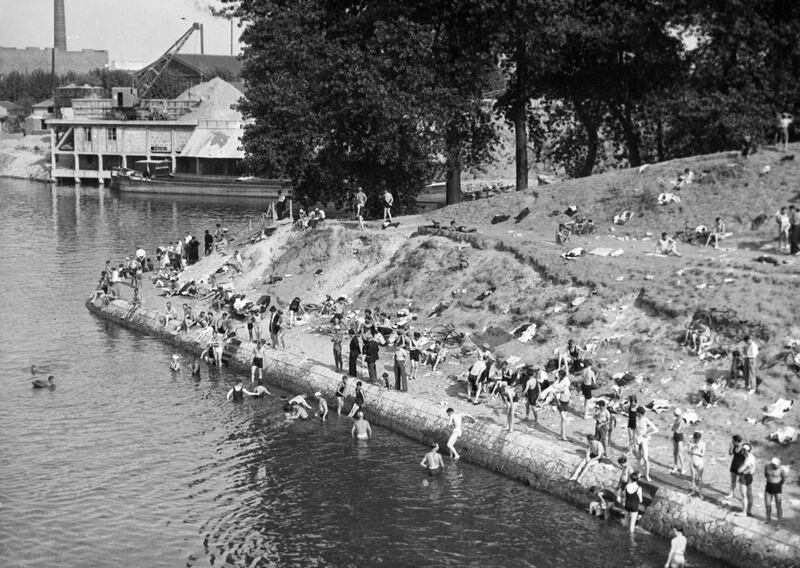
It all began in the 17th century as a casual, nude practice straight off the river’s sloped banks — a habit initially banned in 1716 on the predictable grounds of public decency. That restriction gave way to floating baths in the 18th century: flat-bottomed vessels draped in canvas where bathers climbed down internal ladders to swim directly in the river’s current within a marked-off safety area.
By the 19th century, bathing had evolved from a quick cool-down into a major social and sporting event. Wealthier establishments along the banks offered restaurants, cafés and swimming lessons. One of them, the Piscine Deligny, became one of the city’s most fashionable spots, eventually hosting swimming events for the 1900 Paris Olympics.
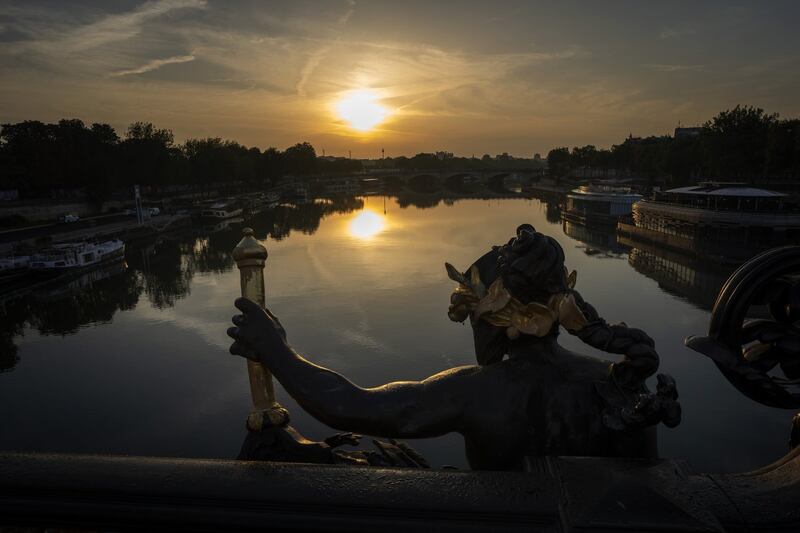
The river’s golden age began to fade around the turn of the 20th century. A wave of drownings and river-traffic accidents led to the French government implementing a total ban on swimming in 1923.
The Deligny managed to survive the ban by rebuilding itself as a floating, filtered pool separate from the river water, carrying on as a Paris institution until it mysteriously sank in 1993. Elsewhere, unauthorized bathing persisted anyway, especially during hot weather, and a long-distance swimming race that had been held since 1905 continued regardless in defiance of the authorities.
Biologically dead
But the real death of Paris’ swimming culture wasn’t down to rules and regulations — it was caused by pollution.
Water quality experienced a catastrophic decline throughout the mid-20th century. By the 1970s, the Seine was, in effect, a flowing urban cesspit: more than half of the region’s wastewater was dumped straight into it untreated. The toll on its ecosystem was almost terminal and by 1970, the river was effectively biologically dead, its fish population reduced to just three resilient species.
Serious efforts to reverse the damage began in the mid-1980s, leading to a political promise that would haunt French leadership for a generation. In 1988, Paris mayor Jacques Chirac, then running for reelection, made a bold pledge that within three years, he would swim in the Seine in front of witnesses, to prove the river was clean. He repeated the pledge on television in 1990, but it never happened, transforming it into a running joke. The Seine remained stubbornly toxic. As recently as 2013, the Paris triathlon had to be canceled outright because the water quality was too dangerous for athletes.
The billion-euro fix
The ghost of Chirac’s promise was finally revived in 2016, when mayor Anne Hidalgo relaunched it ahead of the city’s 2024 Olympic bid. This time it took more than a billion euros and a monumental engineering project to overhaul the French capital’s wastewater treatment and connect thousands of riverside homes to the sewer network for the first time.
The centrepiece of the operation is a cavernous, largely underground basin dug near Gare d’Austerlitz. The structure is a massive concrete cylinder, 50 metres wide and 30 metres deep, held up by pillars sunk deep into the ground, capable of holding 50,000 cubic metres of stormwater — roughly the volume of 20 Olympic-sized swimming pools.
Because Paris’ existing sewers, built during Haussmann’s 19th-century modernization of the city, combine rainwater and wastewater in the same pipes, heavy rain has always sent the overflow straight into the river. Now, that excess gets diverted into the Austerlitz basin instead, where it’s held deep underground until the weather clears, then pumped gradually to treatment plants outside the city. Officials say the system has successfully cut the number of major sewage overflow events into the Seine from 15 a year to around two.
Back in the water
The operation was timed to be ready for the Olympic triathlon and marathon swimming events. Despite some athletes reporting illness afterward, no clear link to the water was confirmed, and the century-long psychological barrier to bathing in the Seine was finally broken. Despite the city’s trademark scepticism, around 100,000 people showed up in the first public season in 2025.
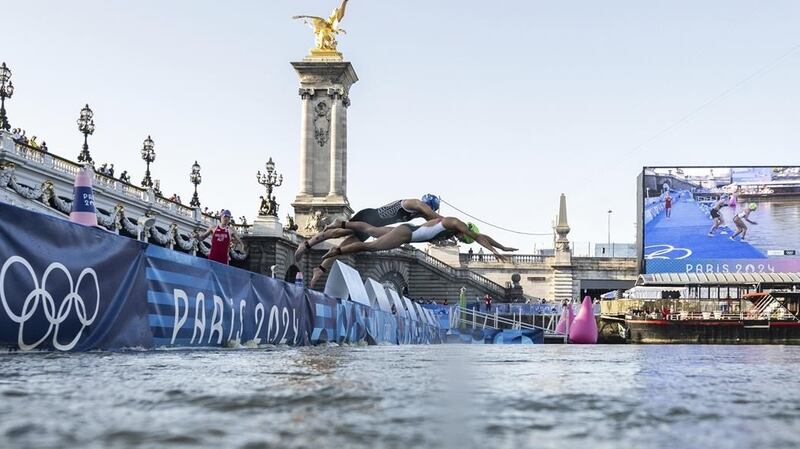
This summer, the city has refined the layout, offering three distinct, free public swim spots.
At Bras Marie , beneath the 19th-century Pont Louis-Philippe near Notre-Dame, bathers get a quintessentially Parisian view of the old city.
Grenelle, located further west, offers swimming with direct views of the Eiffel Tower while facing a quarter-scale replica of the Statue of Liberty.
Bercy, in eastern Paris, is the largest of the three sites and the best for anyone wanting a real workout: one of its two pools stretches 67 metres, with the Bibliothèque nationale de France across the water.
A rite of passage
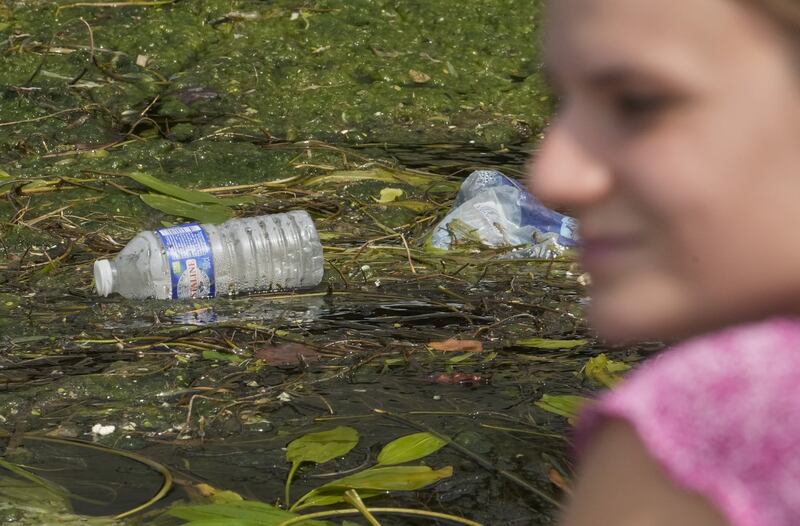
A word of warning: this is not the Côte d’Azur. The water is more khaki than turquoise, and swimmers might come across the odd bit of floating debris, and the smell leaves something to be desired. But the experience makes up for it.
Much like at beaches, there’s a flag system to indicate whether it’s safe to swim: green means good to go, yellow means proceed with caution, often due to strong currents or storms, and red means swimming is not allowed, whether that be because of poor water quality or weather conditions.
The system isn’t infallible. Last July, the green signal was only raised on 18 of 31 days. That’s because the city performs daily tests for signs of sewage contamination, mainly E. coli, at multiple points along the river. If the signal is red, the swimming spots are out of bounds for a day or two while the river flushes itself out.
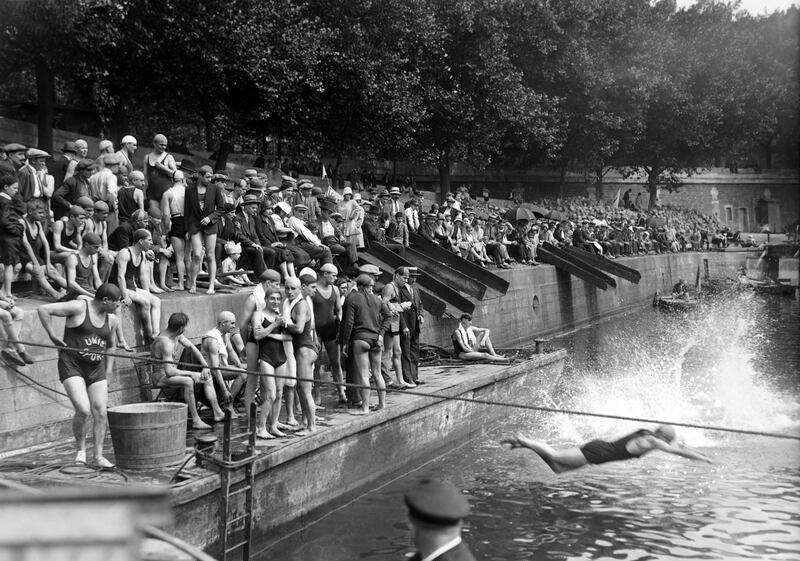
Yet the momentum is undeniable. Building from its sporting roots, the Grenelle spot will host open-water and high-dive events for the European Swimming Championships later this month — the first time Paris has held the competition since 1931.
Whether the hugely expensive cleanup was worth it remains a matter of debate among Parisians. But as the next heatwave rolls in and the city begins to cook again, the verdict could become clearer if many more of them finally decide to take the plunge.
Camille Knight, CNN

