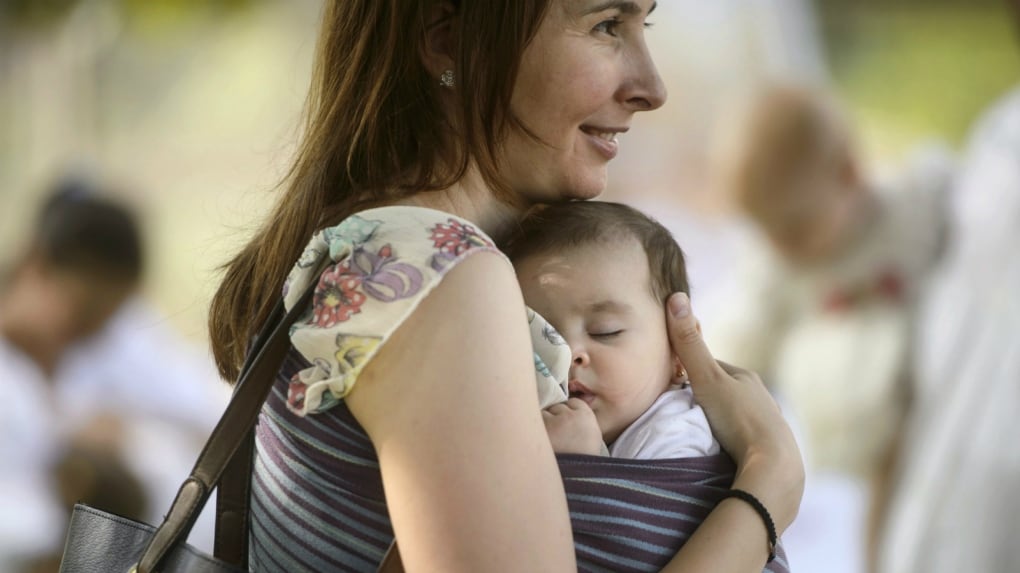
A new study by Japanese researchers suggests that feeding your newborn breast milk in the first six months after birth can help them sleep better.
Researchers at the University of Toyama analyzed data from the nationwide Japan Environment and Children’s Study (JCES), wherein 82,918 mothers were surveyed on their babies’ feeding and sleeping practices.
The findings were published in the European Journal of Clinical Nutrition on March 31 and elaborated on in an article published last month by science non-profit Eureka Alert.
Yuri Nakagawa, the lead study author and mother of a three-year-old herself, said she was “really surprised” by the results.
“To be honest, I thought babies would sleep better with formula,” she said in an interview with CTVNews.ca Friday. She attributed her assumptions to previous research on formula and common concerns around the quality of breast milk that a mother could provide her child.
It had become a common question in her personal and professional life. As a plastic surgeon, she said her patients would often ask her which is better, she said. As a mother, she personally found breastfeeding “extremely challenging.”
Curious about the difference, Nakigawa and her colleagues began work on the nationwide study two years ago.
The mothers were given questionnaires at six months post-birth that asked about the feeding practices they followed for their babies. The data was then categorized into four groups, by feeding method: infants fed exclusively with formula, infants fed exclusively with breast milk, infants who were fed breast milk for less than six months, and infants who were fed breast milk through the six-month period with formula supplementation.
When the children reached one year of age, the parents were surveyed again on their child’s sleep duration.
The study found that babies exclusively breastfed for six months had the lowest risk of insufficient sleep, at 8.8 per cent, while babies exclusively fed with formula for the same duration had the highest risk of short sleep, at 12.2 per cent.
The findings suggest the longer a child was breastfed in the first six months, the more likely they slept a sufficient time.
Children sleeping less than 11 hours a day were considered to have insufficient sleep, a metric based on U.S. National Sleep Foundation recommendations.
Breast milk, Nakagawa explained, contains melatonin, a hormone that promotes sleep onset and sleep quality. As newborns only secrete a small amount of their own melatonin, breast milk can supplement the quantity and support development of healthy sleep patterns in the baby.
Breast milk also contains tryptophan, an amino acid used to produce melatonin which could also promote the baby’s sleep, according to the study.
While formula is standardized, breast milk is adaptive and can better meet the needs of the baby, the study suggested.
It also found that children breastfed for the entire six months and supplemented with formula had a 9.7 per cent risk of shorter sleep.
“Six months of exclusive breastfeeding and breastfeeding with formula is actually almost no different,” Nakagawa said.
She recalled her own struggles with feeding her child breastmilk and said she was only able to keep it up for three months before turning to formula.
“But based on these results, even just a little bit of breastfeeding is fine,” she said. “Even if the amount is small, if they continue with breastfeeding for six months and use formula with it, the babies will sleep just fine.”
She added that she hoped the study would “encourage” mothers to continue breastfeeding.
“This (study) was only up to one year but we have data up to age three,” she said.
Researchers have yet to analyze the remaining data, she added. She hypothesized that by then, the results may change as children typically have started producing their own melatonin.
“I would like to move this research forward,” Nakagawa said of next steps to the study. “If I could produce data that truly encourages mothers, that would be very meaningful.”

