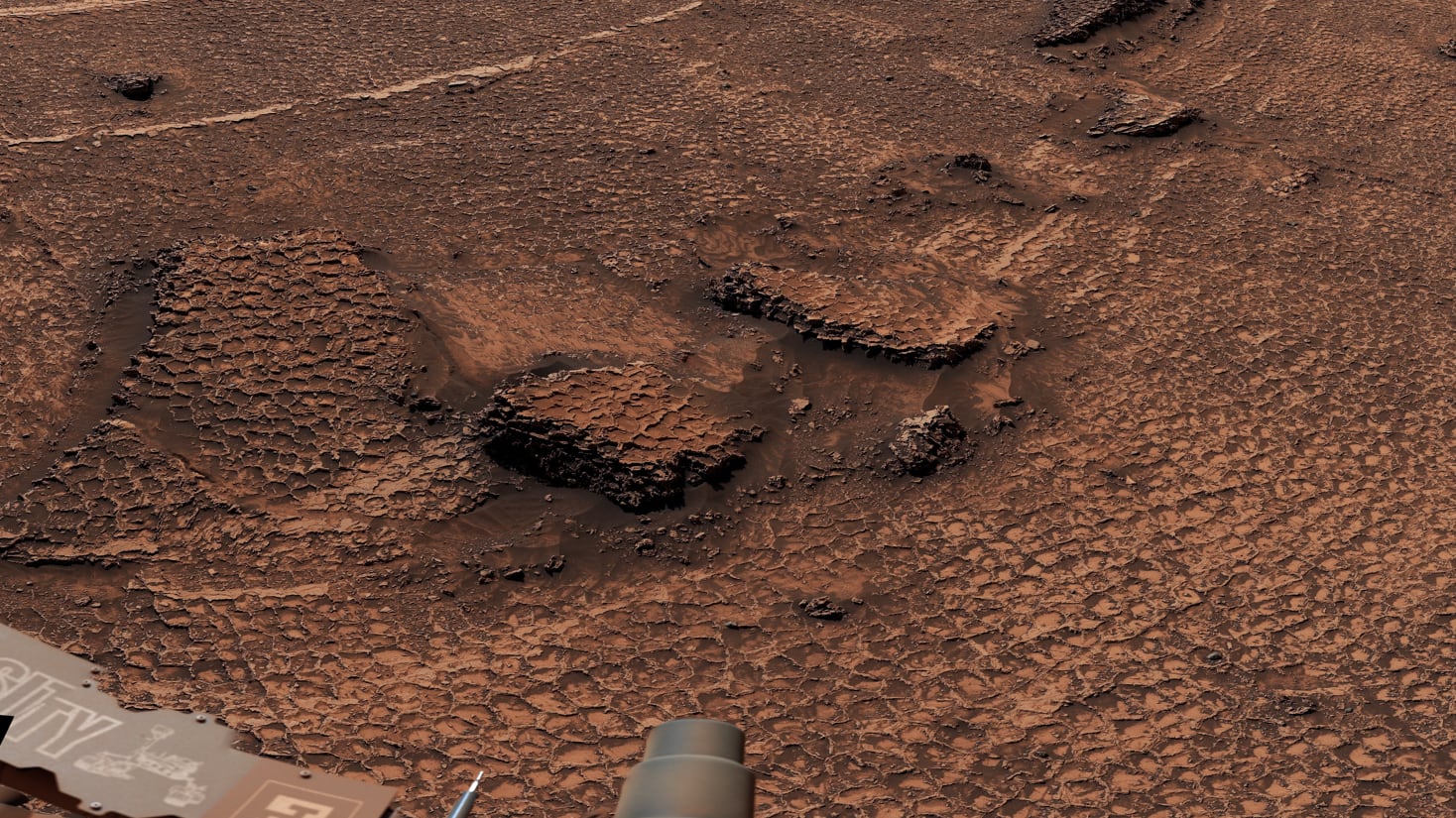
NASA’s Curiosity rover has noticed little patches of “honeycomb-like textures” on Mars several times before, but for a few days in June, it spotted a “sea” of them that stretched as far as the mobile science laboratory could see.
In a press release Wednesday, NASA shared images of the polygonal fractures, or polygons, that the rover captured while it climbed a Martian valley dubbed “Valle Grande” on June 19 and 20.
NASA said the newly discovered polygons, which typically measure out to be about 1.5 to three inches (four to eight centimetres) each, were “nothing at the scale discovered in Valle Grande.”
“We’ve seen a lot of fascinating landscapes through Curiosity’s eyes, but this sea of polygons took our breath away,” Ashwin Vasavada, the mission’s project scientist, said in a statement. “We measured their shapes and chemistry carefully and are hopeful there are clues in the data as to how these features formed.”
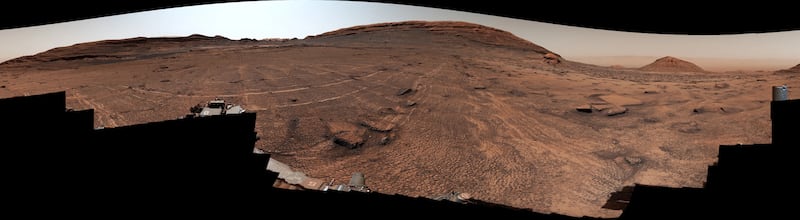
According to NASA’s press release, various processes can help form the honeycomb textures, such as a sequence of warm and cold temperatures, or “compression” – pushing water out of the sediment. Some of the mysterious polygons the rover previously found were “clearly formed as mud cracks,” NASA said.
Curiosity made other key discoveries since it landed on the red planet in 2011. According to the press release, the rover discovered that billions of years ago, Mars had lakes and streams, and it essentially had the “water, chemistry, and nutrients to support microbial life.”
“The rover has previously uncovered chemistry left over from Mars’ watery history, including carbon-based molecules believed to be precursors to RNA and DNA, two nucleic acids that carry genetic information,” NASA said in its press release.
“Scientists have no way of knowing whether these organic molecules were created by biologic or geologic processes — either path is possible — but their discovery reconfirmed that ancient Mars had the right chemistry to support life.”
Curiosity is part of NASA’s Mars Science Laboratory mission, which aims to find out if the red planet ever had the environmental conditions to support life.

