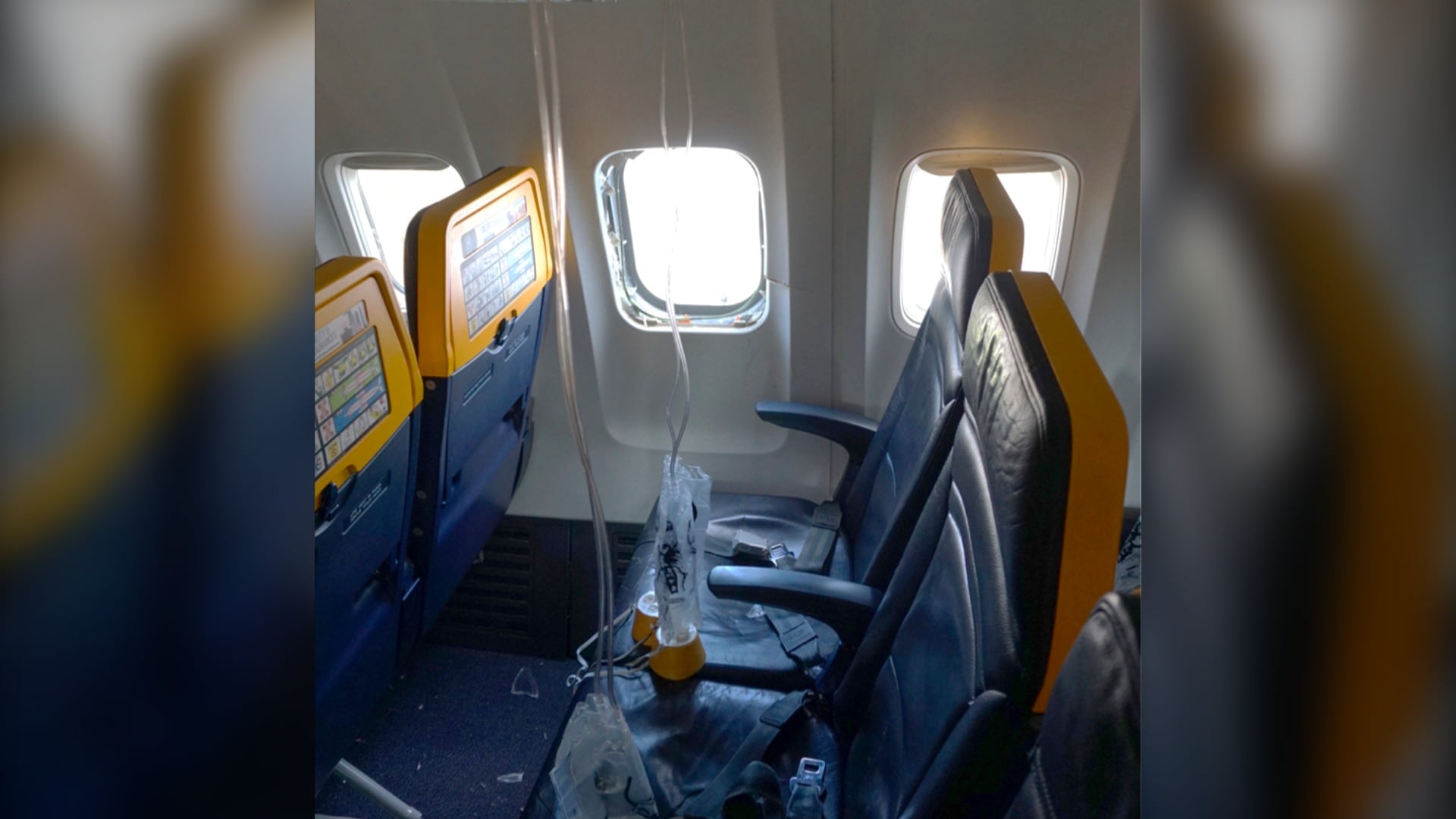
Broken engine parts shattered a window on a Ryanair flight shortly after takeoff in Greece last month, causing a man’s head to be sucked through the opening before his fellow passengers pulled him back inside, U.S. investigators said Thursday.
A fan blade in the Boeing 737-800’s right engine broke loose, sending fragments through the fuselage, according to a preliminary report by the National Transportation Safety Board.
The July 10 incident happened after the flight departed the northern Greek city of Thessaloniki. Investigators found bird remains inside the engine, suggesting the plane may have struck birds during takeoff, though they haven’t determined what caused the fan blade to break loose.
The 61-year-old man who was nearly sucked out of the plane suffered neck and shoulder injuries and friction burns.
Panicked passengers helped the man after the window broke
The flight attendants told investigators that they heard and felt loud continuous vibration and saw smoke or fog inside the cabin before the oxygen masks dropped from the ceiling.
One flight attendant then noticed some passengers standing and calling for help. The man in a row 11 window seat was partially lodged in the damaged window, and other passengers pulled him back into the cabin.
The injured passenger was moved to row 12, where a passenger who is a doctor tended to him. Other passengers got a metal box from the flight attendants, which they used to try to block the broken window until the plane could land.
A series of short videos recorded from inside the plane and shared by Radio Thessaloniki showed passengers wearing oxygen masks after the cabin lost pressure. Another appeared to show the blown-out window, with a man seated nearby wearing an oxygen mask. A third video, apparently filmed after the aircraft landed, showed first responders working in the aisle.
The engine’s fan blades were inspected in May
Maintenance records show that the fan blades on the right engine that failed had undergone ultrasonic inspections in May 2026 and November 2025 without finding damage. But the NTSB said that four suspected bird strikes to the same engine had been reported by the flight crews over the past year. Bird remains were found after two of them.
Jeff Guzzetti, a former NTSB and FAA investigator who reviewed the preliminary report, told The Associated Press that the maintenance appears to have been performed at the required intervals. But investigators will likely examine how those inspections were carried out and whether the four previous suspected bird strikes could have contributed to preexisting damage.
“We know what happened and even to some extent why it happened, but there’s still unanswered questions that the NTSB will get at,” Guzzetti said.
The NTSB last month reprimanded Ryanair CEO Michael O’Leary after he told investors the investigation was focused on foreign object damage rather than the plane’s age or maintenance history. The agency said investigators had not ruled anything out and O’Leary wasn’t authorized to discuss the investigation.

Ryanair said Thursday it would not comment further until the NTSB investigation is complete. Boeing and CFM International, the engine maker, said they are assisting with the investigation.
FAA had ordered fixes after similar accidents
The FAA issued three directives last year requiring airlines to strengthen parts of the engine coverings on Boeing 737s after two previous fan blade failures sent pieces of the engine coverings flying. In one accident, a Southwest Airlines passenger was killed in 2018 after debris struck the fuselage and knocked out a window, causing the cabin to rapidly lose pressure.
The directives, which took effect in April 2025, require changes aimed at keeping pieces of the engine covering from breaking away and striking the plane if a fan blade breaks loose. Among other things, airlines must replace certain fasteners and spacers that attach the engine’s inlet covering and revise their maintenance and inspection programs.
The FAA gave airlines until July 2028 to complete the major modifications, and the NTSB report says the required changes had not yet been made to the Ryanair plane.
Guzzetti said the latest accident could prompt the FAA and NTSB to examine whether that deadline should be moved up.
“It takes time to do the maintenance, to get the parts, and the risk at the time was assessed such that the industry could probably wait that long. Now with this event,” Guzzetti said, “that may change things.”
Asked whether the July 2028 deadline could change, the FAA declined to comment on the open investigation, saying it closely supports the NTSB and will “take any necessary safety actions based on the evidence.”
The plane returned about an hour after takeoff
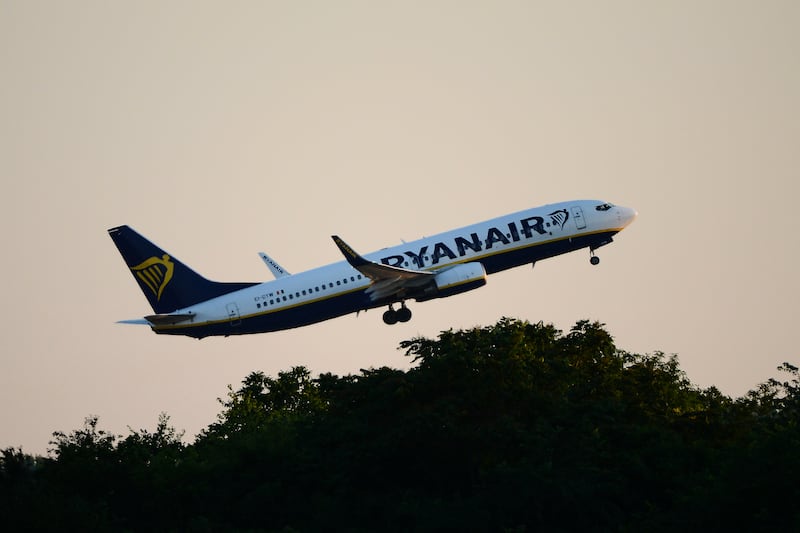
The 737-800, which can seat up to 189 passengers, was delivered new to Ryanair in 2008, according to flight-tracking site Flightradar24.
Flight records show the plane climbed above 15,000 feet (4,570 metres) about six minutes after departure before descending to about 6,000 feet (1,830 metres) “to burn fuel for 30 minutes” and returning to Thessaloniki about an hour after takeoff, Flightradar24 said.
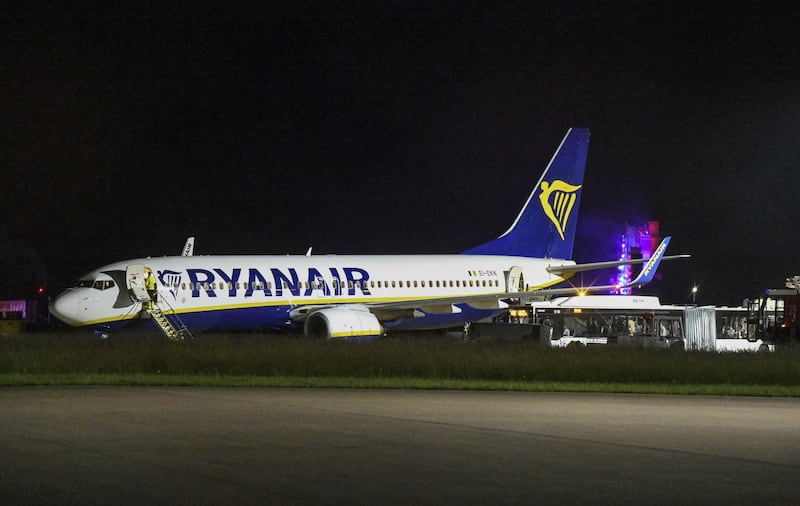
The flight was operated by Malta Air, a subsidiary of Ryanair, Europe’s largest budget carrier.
The plane landed normally and passengers returned to the terminal. One passenger requested and received medical assistance on the ground, the airline said in a statement at the time.
Josh Funk And Rio Yamat, The Associated Press

