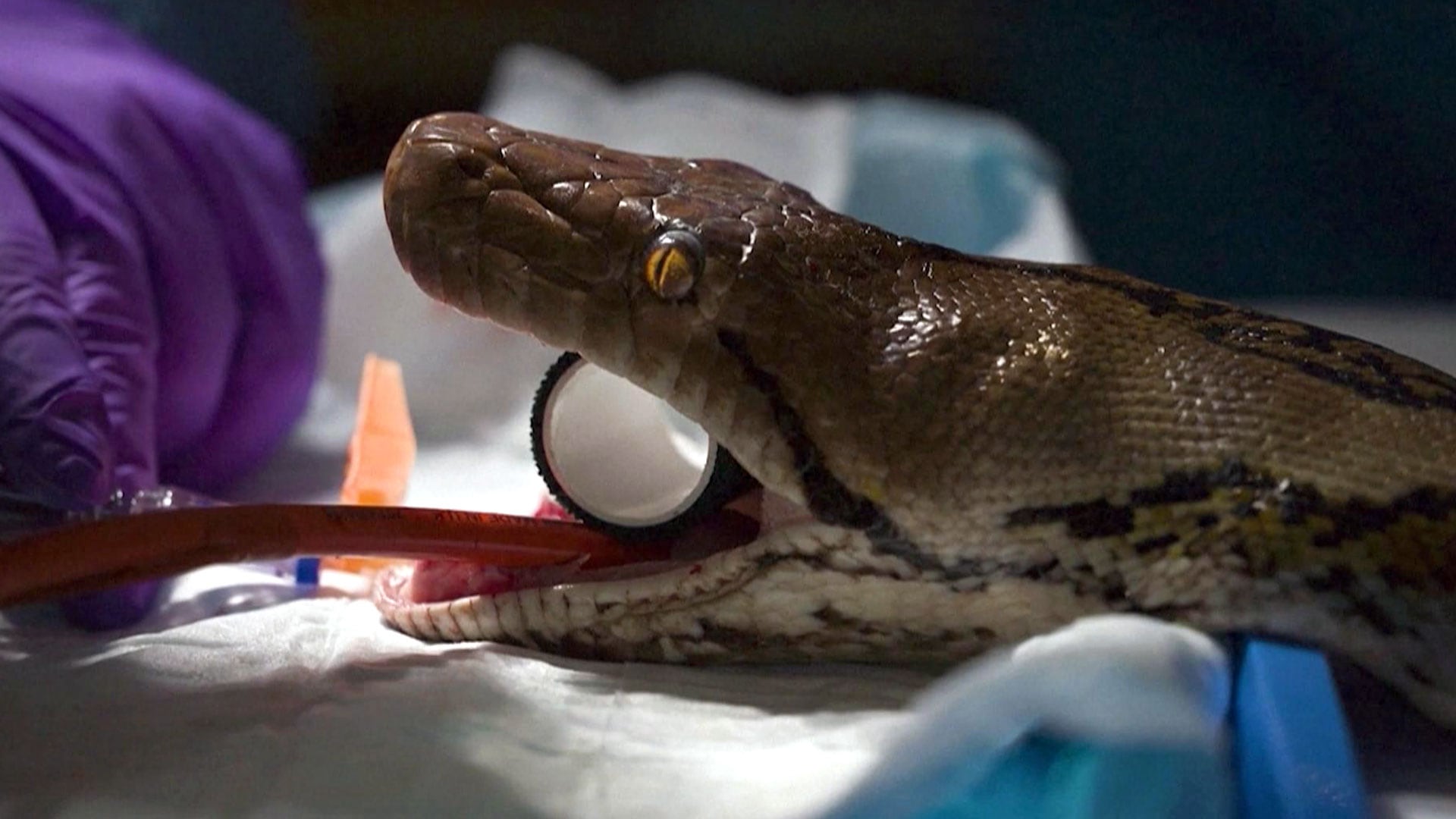
A U.K. zoo on Friday hailed curing a cancer-stricken python named after Hollywood star Jodie Foster, who became the first snake to receive an innovative treatment combining surgery and electrochemotherapy (ECT).
Chester Zoo, in northwest England, said the 4.5 metre (15-foot) reticulated python had fully recovered after first undergoing surgery and then receiving ECT following the return of a cancerous tumour in her jawbone.
Animals are increasingly being treated for cancers with drugs and therapies once only used on humans.
Other creatures -- including a turtle and lizard -- have had ECT treatment previously, according to case reports posted on medical science databases.
But Chester Zoo’s veterinary team, who worked alongside University of Liverpool cancer specialists to adapt the pioneering treatment, believe it is a first for a snake.
“We were facing the possibility of losing her as the tumour made it more and more difficult for her to eat,” Chester Zoo vet Ian Ashpole said in a press release.
“So we worked with cancer specialists to see whether we could adapt electrochemotherapy for a snake. As far as we’re aware, this is the first time it’s ever been used in one.”
Zookeepers first became concerned when 23-year-old Jodie -- who has been at the zoo for two decades -- began eating less and spending more time inactive in her habitat.
‘Bright and feisty’
Tests confirmed a malignant tumour in her jaw, which was removed through surgery. But it then returned, prompting another surgical procedure when ECT was also deployed to target any remaining cancerous cells.
ECT combines the use of cancer drug bleomycin with a series of electrical pulses directly on the tumour site which temporarily make cancer cells more permeable, allowing the drug to enter more effectively.
“She is so big we had to put two operating tables together, effectively making one the size of a double bed,” recounted Ashpole, who carried out the procedure. It included removing part of the python’s jawbone.
“We used heated blankets and warmed air to keep her body temperature stable throughout the operation. After 90 minutes of surgery, she recovered remarkably quickly.”
Following a check-up this week, the zoo said Jodie is “cancer-free, eating normally and back to her usual ‘bright and feisty’ self”.
Jose Alvarez Picornell, of Liverpool University’s small animal and clinical science department, called the successful treatment “a testament to the power of collaboration”.
“By working closely with Ian (Ashpole), we were able to develop a plan that not only benefited Jodie Foster but will also contribute to the wider veterinary community,” he added.
Picornell noted the team will be formally publishing details of the procedure “so that veterinary colleagues around the world can learn from and build upon our approach”.
Jodie was named by Chester zookeepers 20 years ago, after she first arrived there nameless with paperwork marked “JF” -- shorthand for “juvenile female” but the same initials as the Oscar-winning actress.

