As the chief medical examiner for a county that stores the most human remains in the nation, Greg Hess has for decades been accustomed to the many that arrive at his office every year after being found in the vast and rugged southern Arizona desert.
People travelling through the remote Sonoran Desert die from its extreme heat, harsh conditions and rough terrain. Most of the people who are found dead there every year are assumed to be migrants, Hess says, because of the desert’s location on the southern border.
But ever since Nancy Guthrie disappeared from her home in Tucson nearly seven months ago, the first question Hess says he asks himself when a set of human remains arrives at his office in Pima County for examination is whether they could be hers.
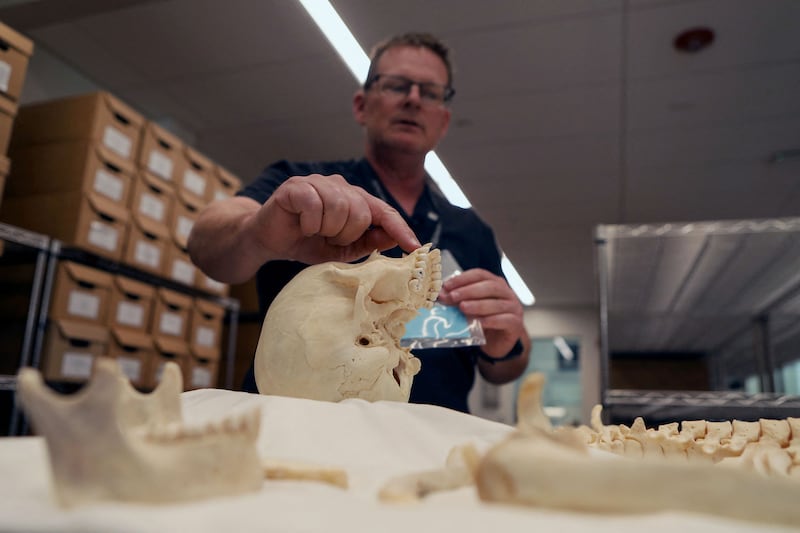
“Every time somebody found a body in the wash or somewhere else in southern Arizona over the past few months, there’s speculation that it’s the person everybody’s interested in,” Hess told CNN.
Questions swirled last week when human remains were found in the desert about 24 kilometres from where the mother of NBC “Today” show host Savannah Guthrie lived.
While announcing the discovery, authorities said there was “no indication” the remains belonged to Guthrie but stopped short of fully ruling out a connection. The sheriff’s office later declined to say why that determination was made, when the remains were found or who found them when asked by CNN.
Pima County has for years ranked among the highest in the nation for the number of unidentified human remains, according to the National Missing and Unidentified Persons System (NamUs).
The fact a majority of them belong to people who travelled from another country and the conditions of the desert itself both complicate efforts to identify remains, therefore hindering missing persons cases, experts say.
Heat, sunlight exposure, monsoons, animals and others speed up decomposition, Hess says. Many of the human remains that arrive at his office are either fully or partially skeletonized, he added.
The national spotlight on the area since Guthrie’s disappearance has in turn led to a greater public awareness about the many people who go missing or die in the sprawling desert and reveals just how many families are also searching for answers.
Why it’s not unusual to find remains in Tucson
Last Monday, sheriff’s deputies were seen at the reported location of the human remains, on a hillside covered in saguaro cacti overlooking a busy four-lane highway in southwest Tucson.
The residential area, which sits on the outskirts of the city limit, is one turn off a road called Ajo Way that leads to a handful of homes with long driveways.
Just three months earlier, another discovery of human remains near Guthrie’s home also made headlines. Meanwhile, investigators continue to run lab analyses on DNA found at her home as the desperate search for Guthrie continues.
Many of the human remains found in the Sonoran Desert, which covers over 100,000 miles, are believed to be people who have often died from dehydration or exposure to other harsh conditions, according to experts including Hess.
The desert’s location on the southern border has led to many migrants attempting to cross it by using dangerous backcountry routes, the experts said.
All four of the land border states — California, Arizona, New Mexico and Texas — have significantly high rates of human remains discovered and unidentified persons cases every year, according to Dr. Molly Kaplan, post-doctoral scholar at Texas State University who also works for its program focused on border crossing-related deaths in Texas.
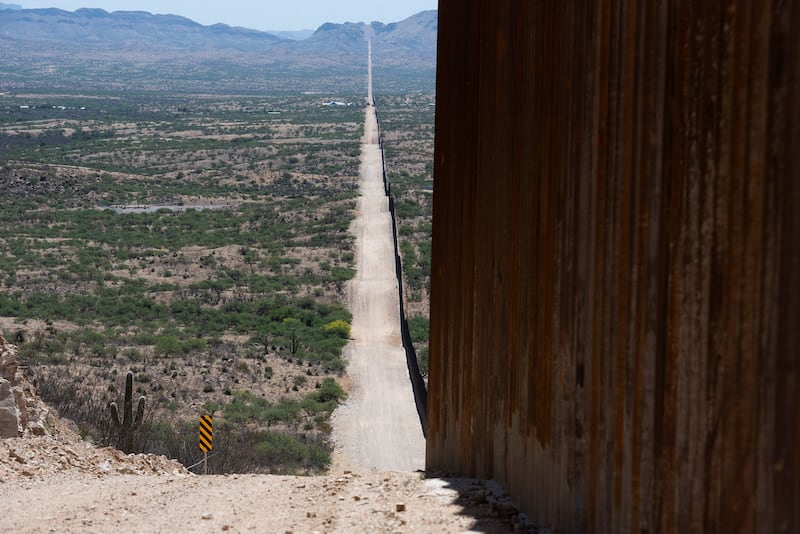
Anthropology experts like Kaplan consider deaths in those regions an ongoing “chronic mass disaster,” she says.
Most of the roughly 150 sets of human remains that Hess says are discovered in Pima County every year turn up after monsoon season ends in late September, said Bradley Bartos, assistant professor at the University of Arizona.
Monsoons bring extreme winds and flash flooding that can free the remains from wedged or remote positions and push them “down-wash into a more eminently discoverable place,” Bartos said.
“Those same reasons explain why there is very low probability those recently discovered remains will turn out to be related to the Nancy Guthrie case,” Bartos said.
Hess says he’s always been able to quickly rule out that any of the human remains found in Pima County were consistent with Guthrie.
He says his office receives up to 5,000 death reports yearly and stores about 600 sets of human remains, which is the most of any county nationwide.
In comparison, Tucson’s county seat is storing 300 more unidentified human remains than Los Angeles County — an area home to 9 million more residents, according to NamUs.
Pima County, however, is set up to handle the workload. “We’ve had a lot of experience with people dying in desert areas,” Hess says.
It’s unusual for even one anthropologist to be on staff at a medical examiner’s office, but there are three at Hess’ office, which he says is because, “We just get the volume of skeletal remains.”
Damage to the remains could complicate evidence
The discovery of human remains that set off a firestorm of questions about a possible link to Guthrie developed during an agonizing, monthslong search for the beloved mother.
The investigation continues to produce few public leads despite intensive efforts to find her.
But the lack of clarity from officials doesn’t mean they’ve hit a dead end; There may be “practical law enforcement concerns behind their silence,” according to CNN Chief Law Enforcement and Intelligence Analyst John Miller.
Authorities saying there is no indication the remains are tied to the Guthrie case and a statement officially ruling it out are “two different things,” Miller said.
“The first requires an investigative judgment based on what they see, but the second requires actual scientific evidence,” he said. “Authorities understand that ruling out a connection before they are certain would only draw more criticism to a case where they have already heard their share.”
But the scientific evidence needed to rule out that connection could be complicated if the remains are damaged, said Miller.
With a complete set of remains, a forensic pathologist could determine fairly quickly whether the bones belonged to a male or female, but without, that task could prove more difficult, he added.
The condition of the remains is unclear and officials did not respond to CNN’s request for comment, but Pima County Sheriff Chris Nanos said the remains had already been at the location “for an extended period of time” by the time they were discovered.
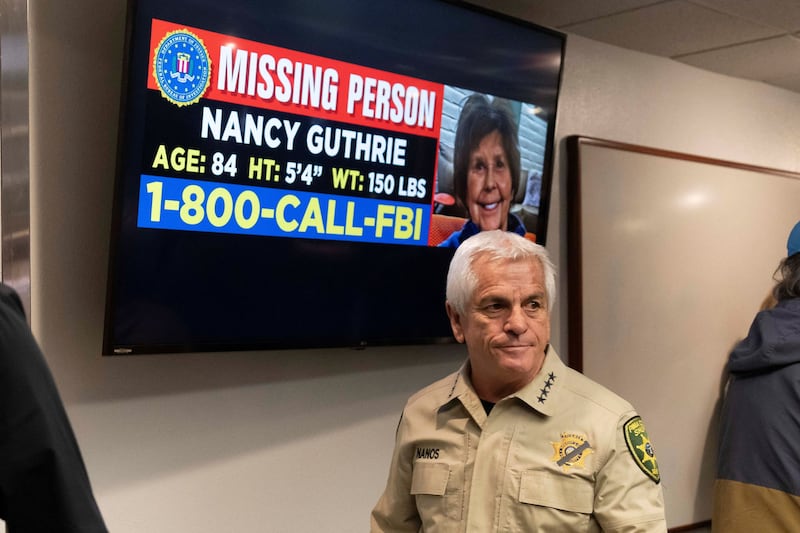
In the desert, it’s common for human remains to be damaged and become skeletal much faster than in other environments — even as soon as a month or two, according to Hess.
Anthropologists such as those at Hess’ office work with the bones to create biological profiles that will help determine the sex and estimate the age, according to Kaplan. At that point, they need to rely on DNA to complete the process, which can be difficult to extract when the remains are fragile, she said.
Once they are recovered, the remains are often sun-bleached, scavenged and without any recognizable features, Kaplan said. Remains in the desert might not only get damaged but also scattered over large areas, she added.
Damage to the remains creates challenges for families who don’t know where to report their loved one missing, as well as for law enforcement trying to coordinate search efforts and recover remains, she added.
Number of human remains in deserts is underreported
Even with the volume of lives lost in deserts, experts believe “the numbers of recorded remains found in these environments is a gross underestimate,” Kaplan said.
Taking into consideration all of the people who haven’t been discovered, it would be impossible to quantify the number of lives lost in the area every year and the lasting impact on those left searching for them.
To help families with missing loved ones get closure, the Pima County medical examiner started a program in 2018, making it the only county nationwide to store skeletal remains in an air-conditioned space, according to the National Association of Counties.
Medical examiners typically cremate remains after a certain period of time if they are not claimed, which prevents family members from making an identification at a later time, Hess said.
Even though it comes as a byproduct of the devastating and ongoing search for Nancy Guthrie since her apparent kidnapping in February, Kaplan says any awareness of what anthropologists call the “chronic mass disaster” – or the countless yearly deaths near the southern border – is important.
“It makes sense that people would have questions when there’s a specific person who is being looked for,” Kaplan said. “But the reality is that this is happening quite regularly and actually needs to be talked about more.”
“Every missing person counts,” she added.

