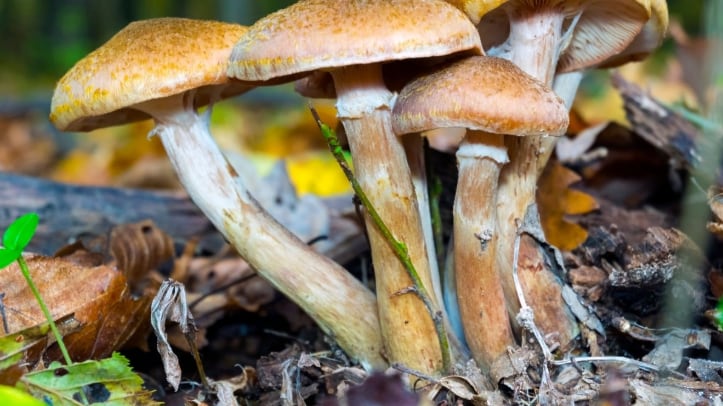
Get out your garlic butter.
Mushrooms are popping up all over the place in the Edmonton area after months of wet warm weather. Whether you like to look or you like to cook, the explosion of life has plenty for fungi fans to enjoy.
Expert forager Martin Osis explains that fungi are widespread but often operating unassumingly out of sight, waiting patiently for the perfect conditions to reproduce.
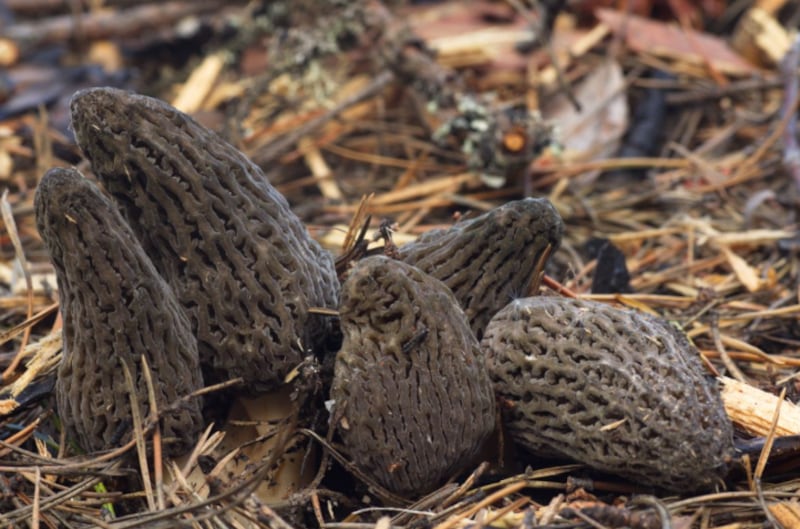
With everything sufficiently soggy, many species are seizing up the opportunity to spread their spores.
“The mushroom is the fruiting body of a fungus and it only produces that fruiting body when it’s motivated,” Osis said.
“When they pop up in front of you, it’s this little gift that happens,” he continued. “It’s a little view into their world, which we usually don’t see.”
Osis has been hunting, studying and promoting fungi in Alberta for more than three decades, holding positions with the Alberta Mycological Society and the North American Mycological Association.
He said the bloom of mushrooms brought on by the rain has brought out species even he rarely – if ever – sees.
“There’s things that I’ve seen once, sometimes the first time I’ve ever seen it, sometimes the second time I’ve ever seen it in my life,” Osis said. “And I spend a lot of time out there looking for mushrooms.”
The fungi kingdom is incredibly diverse, with McGill University’s Canadian Biodiversity website estimating that more than 11,800 species live in Canada alone. The Canadian Encyclopedia puts the number of global fungi species at close to 1.5 million.
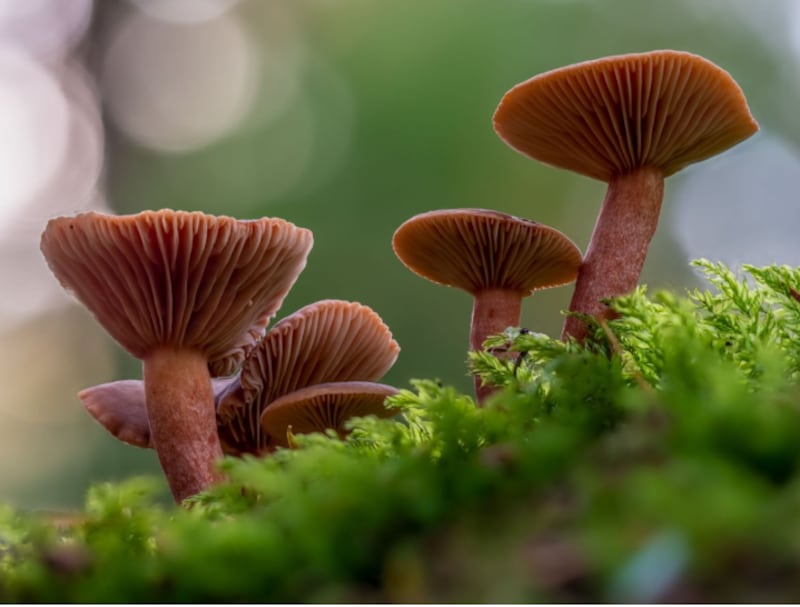
Mushrooms, moulds, yeast and other fungi are critical pieces of our world, recycling the dead into nutrients to support new life. Their networks run underground, storing carbon and supporting their neighbouring flora, even going as far as to protect them from drought and disease, according to the Fungi Foundation.
Fungi help heal humans, too; penicillin comes from mushrooms and psilocybin (found in dozens of mushroom species) is being increasingly used to treat multiple mental health conditions.
And don’t forget, they’re great to eat. Soy sauce, bread, beer and wine – all products of fungi’s fermentation power.
To eat or not to eat
Osis said there are between 3,000 to 3,500 mushroom species in Alberta. Most won’t taste great and some can even poison you, but others are downright delicious.
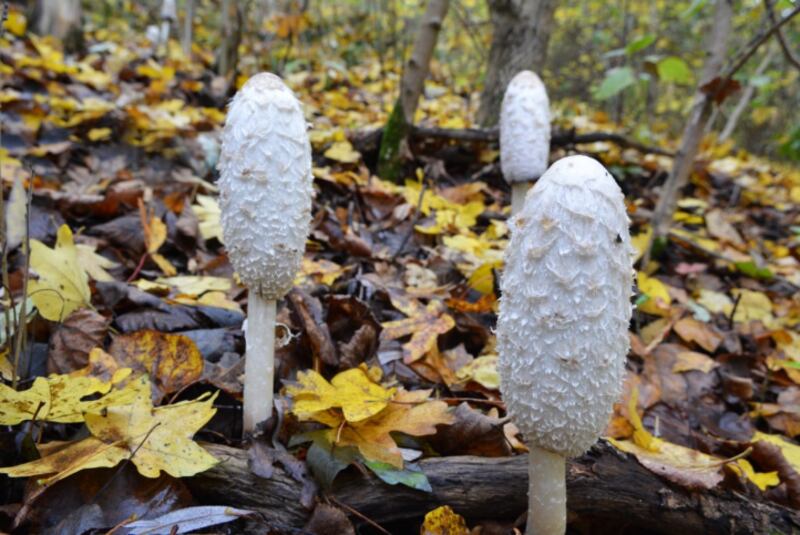
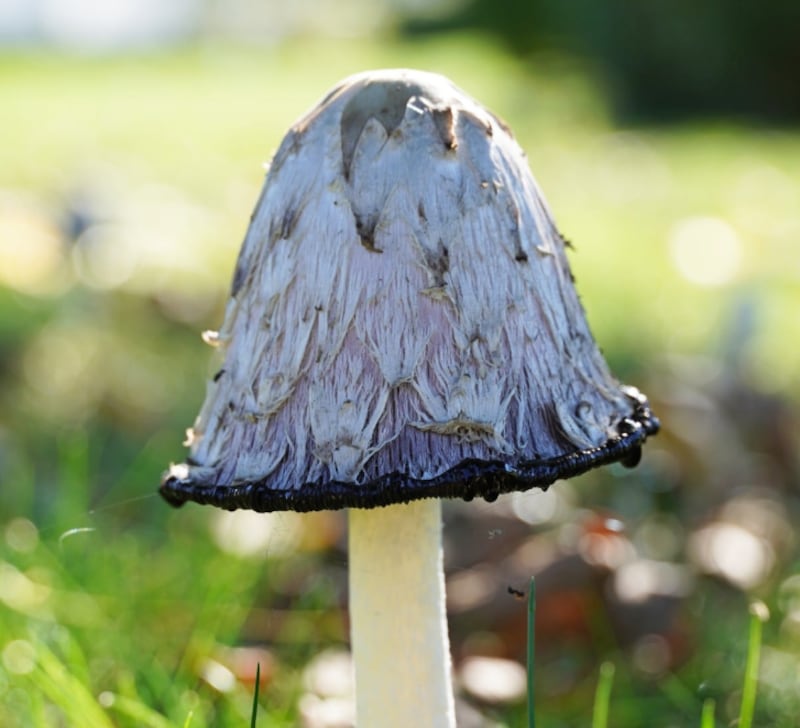
Local edible varieties include shaggy parasols, honey mushrooms, shaggy manes, coral tooth and morels. One you might even consider a pest.
“Most people look at the fairy ring on their lawn and go, ‘Ah, how do I get rid of these,’” Osis said. “If you go to the Italian centre you can buy fairy ring … but it’s $60 a pound.”
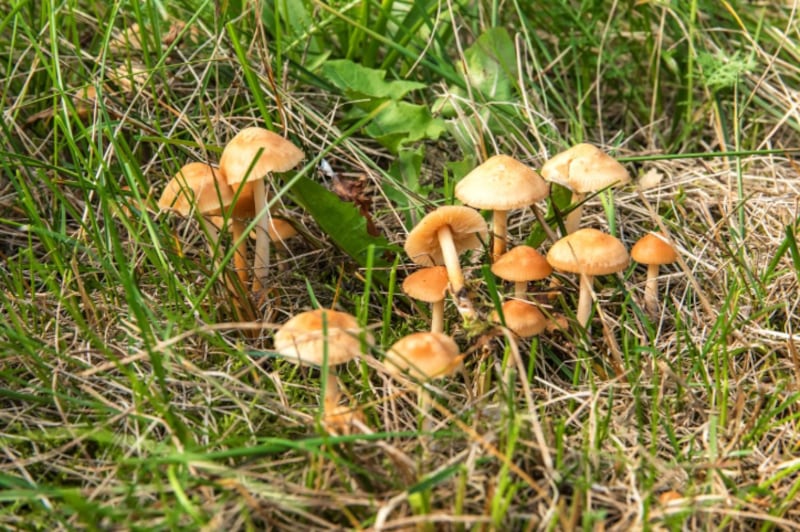
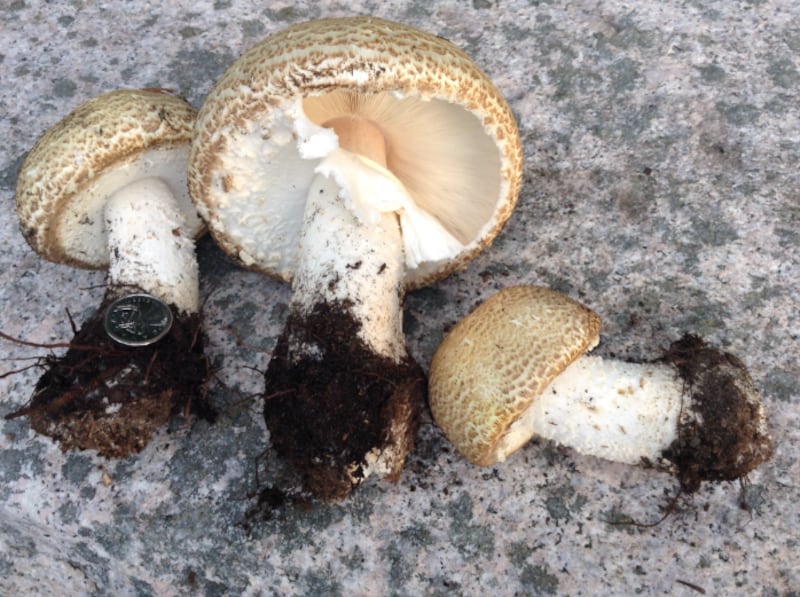
Portabellas, belonging to the genus Agaricus, are also commonly found on Edmonton lawns. The edible species, Osis said, greatly outperform their plastic-wrapped counterparts in the flavour department.
“You’ll find them to be way sweeter, way firmer, much more flavorful,” Osis said. “It’s the difference between buying a tomato at a big grocer or having a sun-ripened tomato in your backyard.
“It’s profound, the taste difference.”
But - and this is a big, big but - before you fill your frying pan with foraged fungi, you need to be certain of what you’ve found.
For example, one of those portabella species can make you very sick; If it turns yellow when cut or picked and smells bad - you’ve stumbled across the inedible Agaricus xanthoderma.
Even experts like Osis can mix them up, so be careful and never eat anything you’re not 100 per cent sure of.
“I’ve picked those and missed those characteristics or sometimes those characteristics aren’t really bold,” Osis warned. “I got into the kitchen and I had them in the frying pan … it was an awful smell.
“And I thought, ‘Nope, this is not right. And that was the mushroom warning me … telling me, ‘You’re about to spend a whole bunch of time sitting on the toilet.’”
‘A pretty sweet deal’
Registered dietician Heidi Bates, with the division of human nutrition at the University of Alberta, said mushrooms are neat and nutritious.
“A single cup of mushrooms will give you more than most people take in potassium in a day,” Bates explained. “Helps offset all of the high sodium or salt foods in our diet.”
They are high in fibre, which she said helps people feel full longer, and antioxidants, which are probiotic compounds that slow body breakdown.
Bates adds fungi are also one of the few non-animal sources of vitamin D, which people in northern communities like Edmonton are often short on. They’re also often affordable.
“They’re a pretty sweet deal,” she said. “In a world where food is expensive, and we’re trying to really eat well, we want to take advantage of that.”
You can have too much of a good thing, though. Both Osis and Bates warn that too many mushrooms can have unintended consequences.
“The mushrooms that cause most of the mushroom poisonings – the reported poisonings – are honey mushrooms, shaggy manes … and what we call the rough stems or the red talls,” Osis said.
“Those are all absolutely delicious mushrooms with no toxins,” he added. “It’s just from overconsumption.”
Bates explains that many Canadians aren’t really “fibre people,” so the high fibre content in mushrooms, along with compounds that break down into sugar alcohols, can cause tummy aches if you dive in too deep.
“If people were to start really going to town on mushrooms … that sometimes can cause the digestive tract to have a little bit of a freakout, if you will, and it can produce bloating and gas and those kinds of symptoms. Usually, they’re very mild,” she said.
‘Be careful. Don’t experiment.’
Bates said the grocery store is her recommendation for sourcing mushrooms, as some wild varieties can cause serious harm.
“The challenge is always, ‘Are these the safe ones or not?’ Because the average Joe won’t know,” Bates said.
“There have been situations where people have mistakenly thought that they could identify, in the wild, a safe mushroom,” Bates said. “They, visually to an untrained non-mycologist, can look very similar.”
For example, in February, four people died and three others needed a liver transplant after eating death cap mushrooms in California. And last year, a woman in Australia was convicted of using poisonous mushrooms to kill three people.
To help beginner foragers stay safe, Osis recommends learning about a few edible species and focusing on those.
He believes fall will bring a bounty of delicious shaggy manes, so those could be a good place to start. Leave all the little brown varieties alone, he emphasized.
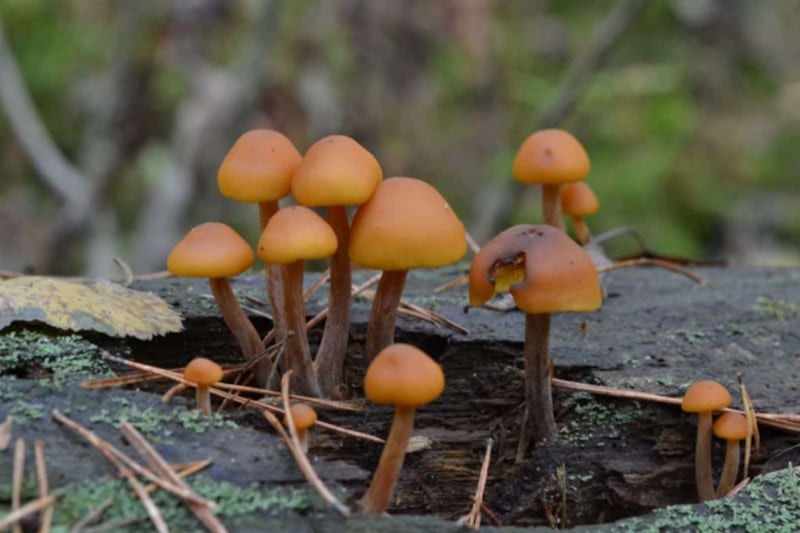
“Little brown mushrooms are the hardest to identify, and they’re also typically some of our more poisonous mushrooms, so those are good ones to avoid,” he explains.
“Be careful. Don’t experiment with stuff that you don’t know what it is,” he added.
The Alberta Mycological Society website offers resources, including a poster of some local edible varieties.
If you’re interested in learning more about mycology, you can find mushroom foraging workshops and walks with Osis through his website Martin on Mushrooms.
Forage Edmonton and YEG Cooking Classes by Sorrentino’s also offer mushroom foraging events.
For more advanced mushroom lovers, the Alberta Mycological Society holds regular foray events for members, where attendees can learn to find and identify mushrooms while helping gather data about Alberta’s fungal diversity.
Mushrooms can be picked on Crown land without permission, in most cases, as well as private land where the owner has granted you permission.
It is illegal to pick mushrooms in any Canadian National Park or National Historic Site; however, you are allowed to forage mushrooms for personal use from Alberta Parks, as long as you have verbal permission from a district conservation officer.
With files from The Associated Press

