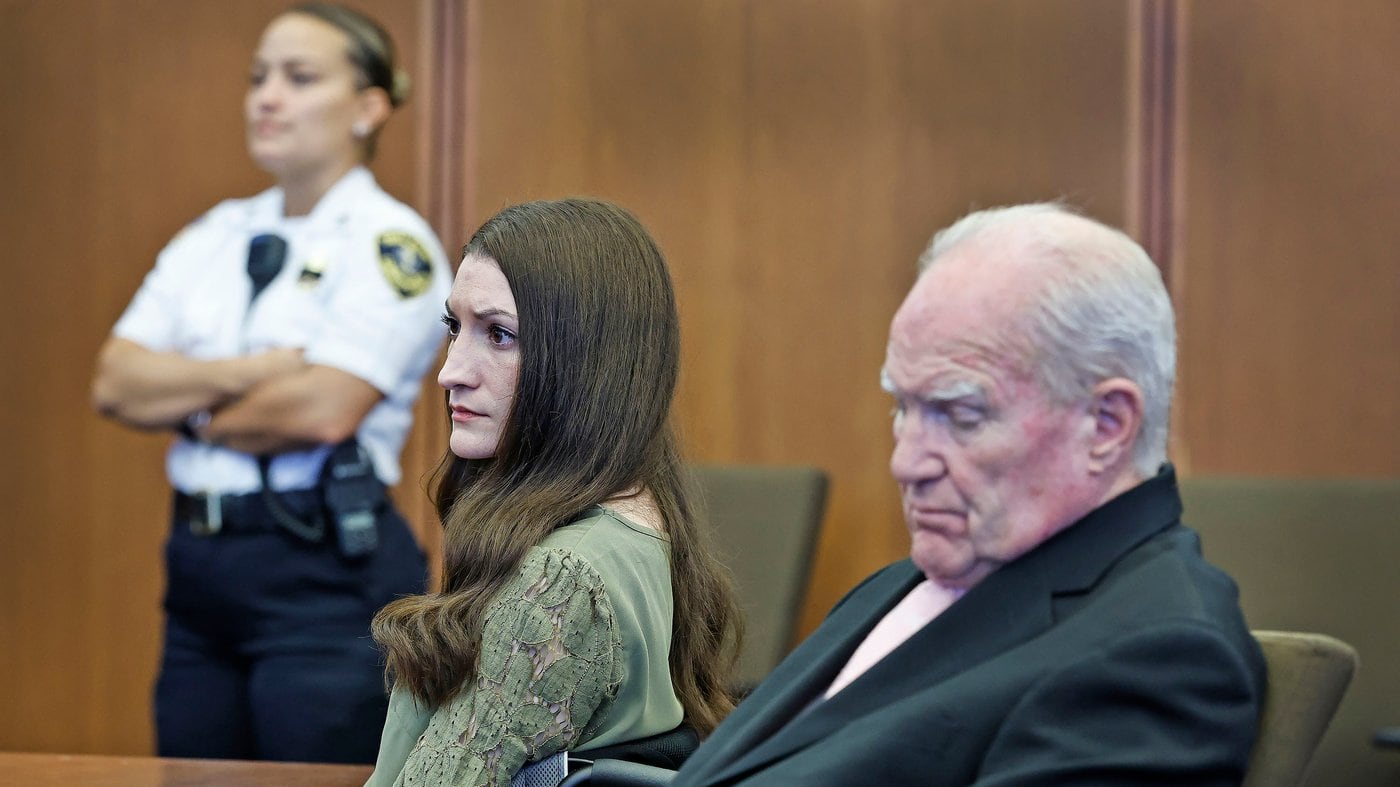
What exactly was the lone holdout juror in Lindsay Clancy’s triple-murder trial thinking?
The juror himself has not spoken, but several other jurors said the holdout acknowledged he had doubts about the prosecution’s case but still declined to find Clancy not guilty by lack of criminal responsibility. At least one juror said the holdout was unable to cite evidence or testimony that helped prove what he was saying.
“He had the hardest time getting off the fact that Lindsay viciously killed her children,” one juror told NBC10 Boston.
Those who have studied the so-called “insanity defence” say the holdout juror’s apparent position is not uncommon: Many people struggle or refuse to accept an insanity plea as a legitimate defence.
“There are people who in their heart believe there’s never any reasonable explanation that does not require punishment for somebody who murders their children,” said Dr. Joni Johnston, a forensic psychologist.
“It’s a natural inclination for people, reasonable people, to want to hold people responsible for what they do,” said Gary Galperin, a former prosecutor with a focus on forensic psychiatry and psychology. “Our system of criminal justice is premised on convicting and holding people liable if they engage in wrongdoing.”
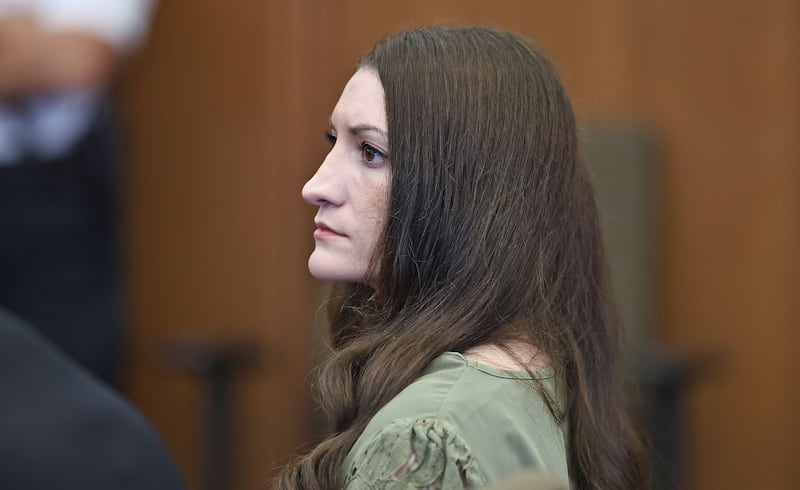
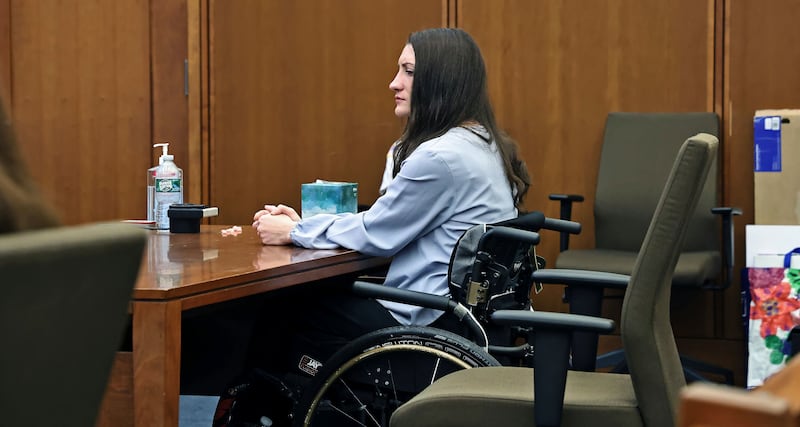
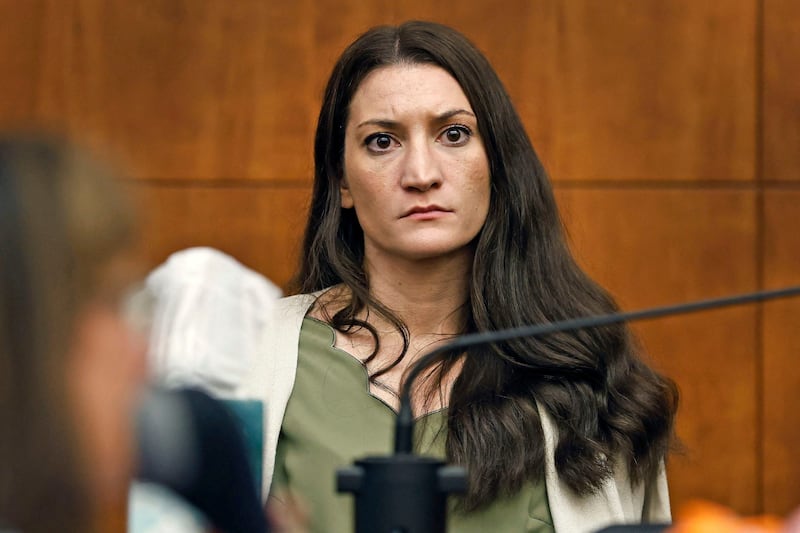
Their analysis adds further insight into the cause of the mistrial for Clancy, the 36-year-old former labor and delivery nurse whose murder trial sparked emotional views online and over kitchen tables about the line between mental health and personal responsibility.

Clancy has admitted she fatally strangled her three young children and attempted suicide at their Massachusetts home in January 2023, but at trial her defence argued she was not “criminally responsible” because she was suffering from postpartum psychosis, a rare form of mental illness.
If she had been found not guilty by lack of criminal responsibility, Clancy likely would have been committed to a psychiatric facility for an undetermined length of time.
Despite the mistrial, defence attorney Kevin Reddington claimed victory afterward and initially criticized the holdout juror’s position. Prosecutors have not yet said whether they plan to put Clancy on trial again.
Still, the holdout juror’s position hints at the broader skepticism of the insanity defence and offers a check on Reddington’s confidence. While the American public’s understanding of mental illness has come a long way, it remains difficult to convince all 12 members of a jury a person should not be held responsible for their own actions.
“This is a really good case study, if you will, in the insanity defence,” Galperin said. “What it takes to prevail in an insanity case and the strong emotions that exist on either side, especially when you’re dealing with such horrific facts as this.”
The insanity defence in America
The insanity defence dates to the common law that underpins the American judicial system.
The defence was first formalized in an 1843 case against Daniel M’Naghten, who was found not guilty “by reason of insanity” by a jury after fatally shooting the secretary to the British Prime Minister, according to Cornell Law School’s Legal Information Institute.
The M’Naghten Rules set the modern standard, finding that insanity exists if a person can prove they did not know what they were doing or did not know what they were doing was wrong.
This standard has been updated a bit in the 183 years since, and each state has its own definition and standard for criminal insanity.
In Massachusetts, the law sets out a definition of criminal responsibility and mental illness.
“A person is not criminally responsible for her conduct if she has a mental disease or defect and as a result of that mental disease or defect, lacks the substantial capacity either to appreciate the criminality or the wrongfulness of her conduct or to conform her conduct to the requirements of the law,” Judge William Sullivan told the jury at Clancy’s trial.
Further, if a defendant raises mental illness concerns in Massachusetts, the burden is on prosecutors to prove beyond a reasonable doubt the defendant was criminally responsible at the time. By contrast, many other states put the burden on the defendant to prove insanity.
Perhaps the most well-known use of the insanity defence was in the trial of John Hinckley Jr., the man who shot President Ronald Reagan and three others in 1981 in what he said was a delusional attempt to impress the actress Jodie Foster. The jury found him not guilty by reason of insanity. Hinckley spent nearly 30 years at a mental hospital before his release in 2016.
The jury’s decision in Hinckley’s trial spurred a backlash against the insanity defence. Since then, a number of states have severely restricted or even abolished the insanity defence, a practice the US Supreme Court upheld in 2020.
That 6-3 court decision, Kahler v. Kansas, acknowledged that views on mental illness and criminal responsibility are controversial, uncertain and ever-changing.
“Defining the precise relationship between criminal culpability and mental illness involves examining the workings of the brain, the purposes of the criminal law, the ideas of free will and responsibility,” Justice Elena Kagan wrote for the majority.
“It is a project demanding hard choices among values, in a context replete with uncertainty, even at a single moment in time. And it is a project, if any is, that should be open to revision over time, as new medical knowledge emerges and as legal and moral norms evolve,” Kagan wrote.
Why jurors are skeptical
Reddington, Clancy’s defence attorney, knows well the challenges of the insanity defence and its evolution over time.
In a landmark 1989 case, Reddington successfully argued Therese Rogers was temporarily insane when she fatally stabbed her abusive husband. That was one of the first instances of what was then known as “battered woman syndrome.”
But in other cases jurors have been more skeptical of his arguments. In 2002, Reddington represented Michael McDermott, the man who carried out a workplace mass shooting in Wakefield, Massachusetts. He said McDermott was insane at the time and compared him to Jack Nicholson’s character in “The Shining.” The jury found McDermott guilty of seven counts of first-degree murder.
In Clancy’s case, Reddington has expressed confidence in a potential retrial, and the 11 to 1 jury split indicates the case nearly ended with an acquittal.
“If they tried the trial again the way they did, nine times out of 10, I think a jury would come back with not guilty by reason of insanity,” one juror told ABC News. “No doubt in my mind.”
But others are more skeptical.
Overall, people often perceive the insanity defence as a “get-out-of-jail-free card,” but it’s rarely used and even more rarely successful, said Johnston, the forensic psychologist. In a similar vein, Galperin, the former prosecutor, often says an insanity defence is a “defence of last resort.”
Clancy’s trial has put a renewed spotlight on the mental health system and particularly on maternal mental health. It’s possible a future jury would be more familiar and informed about these issues because of this trial’s publicity.
Still, there remains a stigma around mental health and a skepticism of its role in people’s decision-making. Even in Clancy’s trial, expert psychiatrists for the prosecution and the defence disagreed on Clancy’s mental state at the time of the killings.
“People don’t understand mental illness,” said Margaret McLean, a former prosecutor who closely followed the trial. “It’s a society where we believe in crime and punishment. Somebody commits a crime, they should be punished for it appropriately. The insanity defence goes into a gray area of, What is mental illness? Do we really understand – what is psychosis?”
Ultimately, the majority of Clancy’s jury believed she didn’t receive adequate mental health treatment and thought a verdict of not guilty by lack of criminal responsibility would lead to her “getting the help she needs,” juror Paula Devlin told “CBS Mornings.”
“Everybody wants justice for the children. Those children never left that room. They’ve never left our heart. And that was a way to get justice for those children,” Devlin said Friday. “This wouldn’t have happened if Lindsay didn’t get lost in the system and failed by the system.”
In the end, any retrial would have a new set of jurors but would still have to deal with the challenges that are part and parcel of the insanity defence.
“The insanity plea polarizes many people,” Johnston said. “You take that, along with misconceptions about the spirit of it and the letter of it, and it’s not that surprising that you would have one person who just could not get over that hurdle.”

