Kids who have their own smartphones at age 12 are more likely to develop eating disorder symptoms than their peers without the devices, according to a new study.
The research, published Friday in the medical journal JAMA Network Open, comes from a wide-ranging survey of nearly 9,000 adolescents across the United States.
“A smartphone can put a world of appearance-focused content in a young person’s pocket,” exposing them to images and messages that may foster unhealthy eating behaviours, said Dr. Jason Nagata, the study’s lead author. “It’s important for parents to be aware that getting a smartphone isn’t just about the device. It can change a child’s access to different content and exposures in the digital world.”
It may matter not just whether you get your kid a phone, he said, but when you do it.
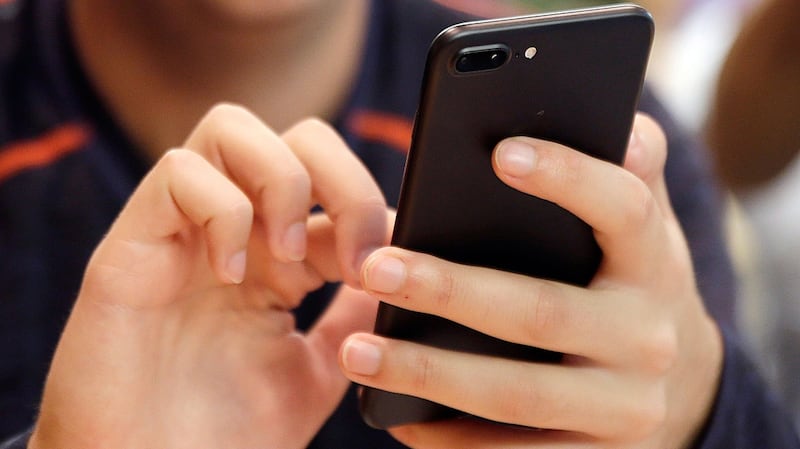
Younger kids with phones may have problems
Spending time on screens and social media is associated with a range of negative outcomes for kids, including depression, lower feelings of self-worth and experimenting with drugs and alcohol. Past research by Nagata’s lab has found correlations between screen time and binge eating.
Most earlier studies have looked at how much time young people spend on their devices, said Nagata, an associate professor of pediatrics at the University of California, San Francisco. For the new paper, he wanted to focus on the age at which children start using them and how doing so might affect the development of disordered eating down the road.
Around 22 per cent of children and adolescents worldwide show signs of disordered eating, according to research estimates. The distinction between disordered eating and an eating disorder essentially comes down to the level of severity and whether or not a person meets the criteria for a diagnosis. Both may include a fixation on food and weight, distorted feelings about body shape and size, restricted eating, or compensating for calorie intake by throwing up or exercising.
Using data collected from the Adolescent Brain Cognitive Development Study, a large, long-term study of brain development and health in American children, Nagata and his team found that 70 per cent of 12-year-olds owned their own phone. Of those, 24 per cent reported at least one eating disorder symptom at age 14. By comparison, less than 16 per cent of teens who did not have a smartphone at age 12 reported disordered eating two years later.
Being 12 is tough — how parents can help
The tween years are a crucial time in development, both physically and emotionally. Puberty comes with major changes in body and body image, and it’s natural, Nagata said, for kids to compare themselves with one another.
Before smartphones and social media, those comparisons happened mainly among peers. “But when you’re comparing yourself to influencers whose images are curated, edited and filtered,” he said, “that can lead to more body dissatisfaction and poor self-esteem, and then that can be a risk factor for eating disorders.”
Kids who had smartphones at 12 were twice as likely to tie their self-worth to their weight and 1-and-a-half times more likely to have tried controlling their weight by, for instance, eating low-calorie foods or exercising a lot, according to the study.
Holding off on smartphones might spare adolescents from body image issues — at least for a while, said Dr. Mitch Prinstein, the John Van Seters Distinguished Professor of Psychology and Neuroscience at the University of North Carolina at Chapel Hill and codirector of the Winston Center on Technology and Brain Development. Prinstein, who was not involved in the current study, said new research is beginning to find that delaying access to phones and other devices by six months or a year seems to benefit kids’ mental health.
When kids do get their own phones, he recommends parents let them “slowly, gradually get more exposure to social media over time. We don’t want to give them a completely unlocked phone with all the opportunities to visit whatever they want for as long as they want.”
Most major social media platforms set 13 as the minimum age to create an account, Nagata said, yet his past research has found that nearly two-thirds of 11- and 12-year-olds have accounts on platforms such as TikTok and Instagram.
This latest study doesn’t provide the “magic answer” as to when the ideal time is to get your kids a smartphone, he said. But if parents do entrust preteens with their own phones, they may want to consider “additional guardrails,” such as limiting the apps kids can download and keeping phones out of the bedroom, so it is easier to monitor their activity.
“It’s so important for parents to stay involved with their children’s digital lives,” Nagata said. He recommends establishing ground rules about phone use, having open conversations about what children are seeing online, and paying attention to any changes in how kids eat or how they talk about their bodies.
You might not allow phones at the dinner table, but that could be a good time and place to discuss them.

By Amanda Schupak, CNN

