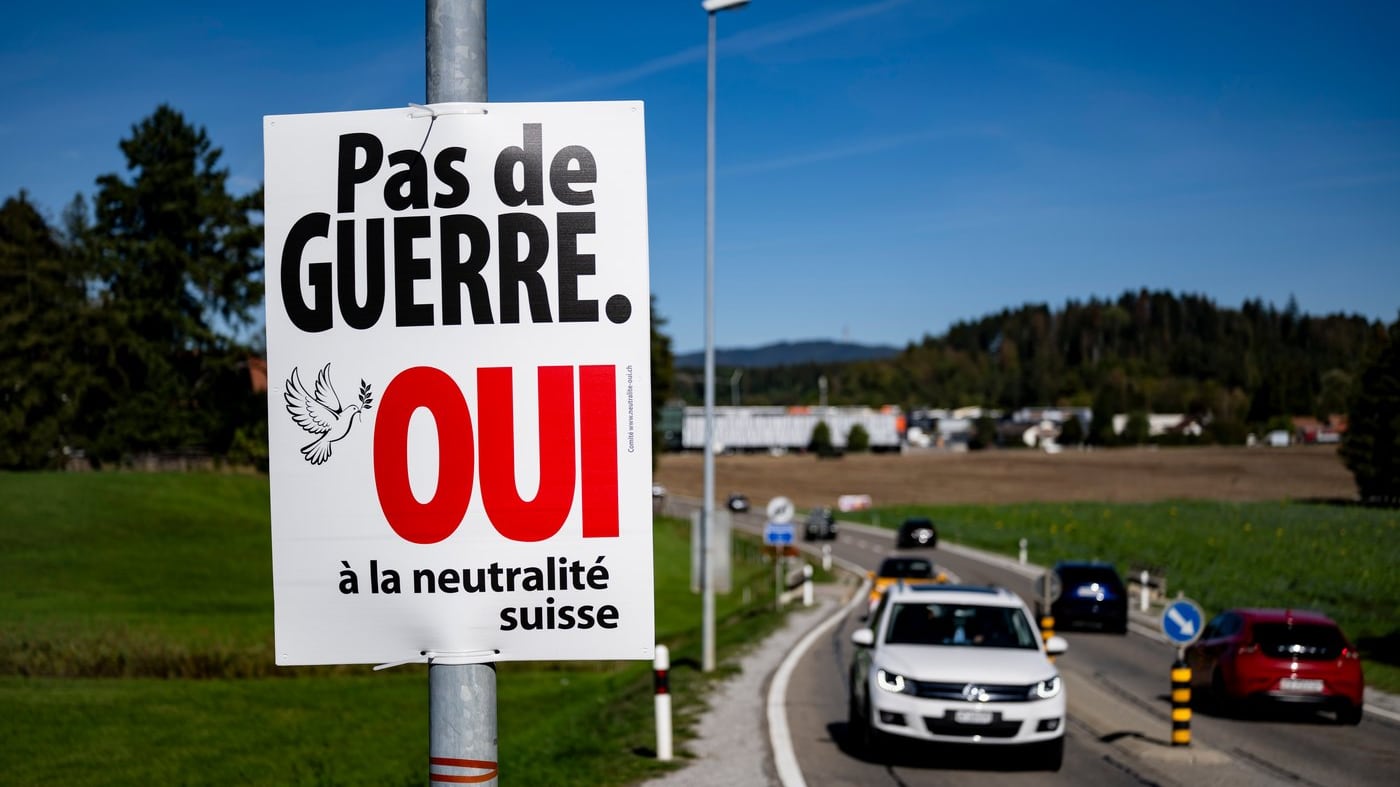
GENEVA — Voters in Switzerland overwhelmingly rejected a proposal championed by a right-wing populist party to strengthen the country’s vaunted neutrality.
Supporters of the plan, led by the Swiss People’s Party, which includes members with pro-Russia leanings, argued that the government had gravitated too close to the European Union and NATO, particularly over Russia’s war in Ukraine.
Final results from the Swiss government showed 70 per cent of voters, and a majority in all 26 of the country’s regions, rejected the plan.
The measure would have barred Switzerland from joining punitive measures against other countries unless they were imposed by the United Nations. Russia, one of the five permanent members of the UN Security Council, holds veto power over such measures.
The vote was part of Sunday’s latest round of Swiss referendums on local and national issues. Under Switzerland’s system of direct democracy, voters typically cast ballots four times a year to help determine government policy.
The proposal emerged following Switzerland’s decision to join EU sanctions against Russia.
Swiss neutrality has been enshrined in the constitution since the mid-19th century, but its meaning has been debated for years.
The country is not a member of any military alliance. The proposal would have prevented the government from co-operating with an alliance — as it has with NATO for three decades — except in cases of threat.
Supporters claim that the government has moved “dangerously close” to the EU and NATO in ways that threaten Switzerland’s security and independence of action. Opponents argued that the federal government already has the leeway it needs to protect national interests.
Security concerns influenced voters on both sides.
Ruth Bolomey, a 65-year-old retiree originally from Hawaii, said she voted for the initiative.
“I believe we need neutrality and should keep neutrality for security reasons — for the people.”
New York native Jihad Azkoul, 78, said he voted “no” and had in mind “the question of what happens if Russia attacks us — would we be, would we get protection from our neighbours?”
“(They) probably would, but just to be sure,” he added.
Jamey Keaten, The Associated Press

