
A colossal sea arch that had long been a major landmark on Hawaii’s rugged coastline has collapsed into the Pacific Ocean more than 500 years after it was naturally formed, the local park service confirmed.
Hōlei Sea Arch stood at a height of roughly 90 feet (27 metres) in Hawaii’s Volcanoes National Park on the southern coast of the Big Island — the largest and youngest island of the Hawaiian chain.
The arch formed around 550 years ago when ancient lava flow from the eruption of one of the island’s six volcanoes hit the cliff edges and carved the vault, creating a natural marvel that drew visitors to the spot for many years, according to the United States National Park Service (NPS).
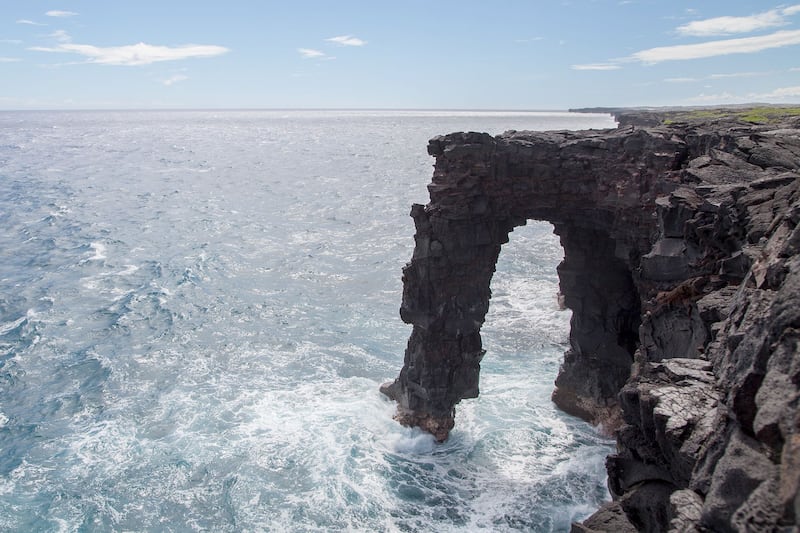
While the exact time of the collapse is unknown, the Volcanoes National Park team said on social media Thursday that the arch was still standing on Wednesday, Sept. 23, when the park was temporarily closed during Tropical Storm Nolo.
When it reopened on Monday, Sept. 28 the arch was gone.
“Yes, it’s true. RIP Hōlei Sea Arch,” Volcanoes National Park said in posts of Facebook and Instagram, alongside before-and-after photographs revealing a stark shift in the scenery.
“Hōlei Sea Arch was a very special place to so many of our visitors,” it added.
But the wild and remote coastline’s dramatic transformation had long been expected, according to NPS.
“This formation is beautiful, but temporary, and has a limited life span,” NPS said in a description of the beauty spot on its website.
“The sea arch will eventually crumble into the sea. However, others will replace it as the cliff slowly migrates inland,” it added.
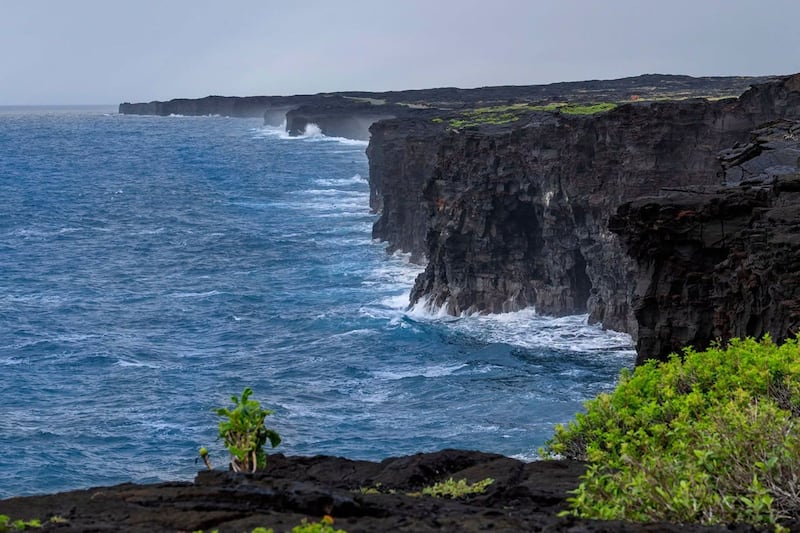
NPS said the cliff’s lifespan was determined by differential erosion — a process whereby softer rock is worn away faster and harder than stronger, more resistant rock.
Landscapes are routinely reshaped through differential erosion, and it is how the arch came to be more than five centuries ago.
Park staff knew the incessant battering of waves against the sea arch would eventually cause it to crumble into the Pacific, although they were not able to predict exactly when this would happen.
Volcanoes National Park urged visitors to keep their distance from the unstable cliff edges to avoid putting themselves, or first responders, in danger.

