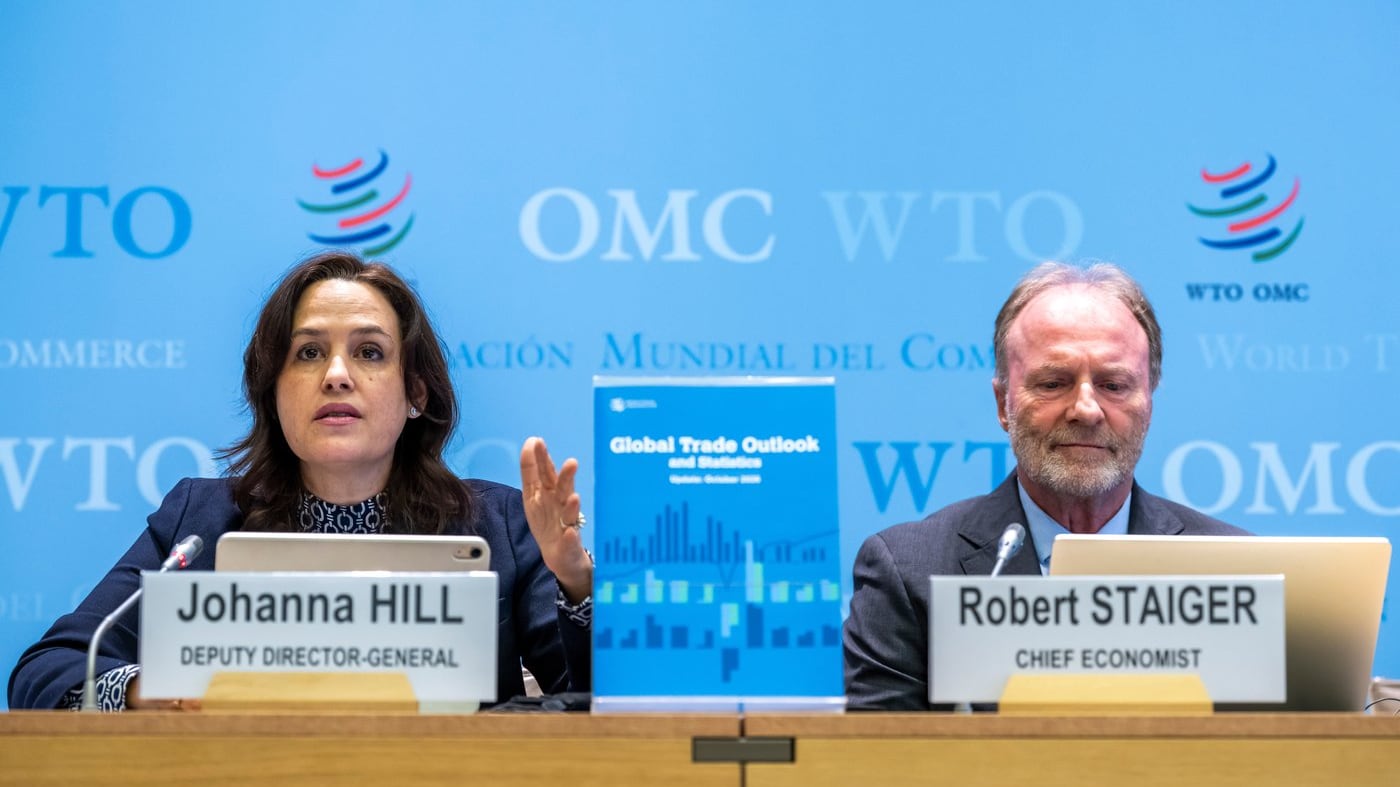
GENEVA — The World Trade Organization is sharply increasing its forecast for merchandise trade growth worldwide this year, more than doubling its earlier prediction to 3.9 per cent as booming AI investments offset a hit from the war in the Middle East.
The Geneva-based trade body says global trade chugged along at a hearty pace, as supply chains adapted and AI-related spending poured in to provide “a powerful boost to goods trade.”
The revised forecast marks a big jump from an initial WTO forecast in this spring for 1.9 per cent growth for merchandise trade. The figure excludes services trade. The trade body forecast growth next year of 4.1 per cent, up from 2.9 per cent predicted in March.
“The revision reflects evidence that global supply chains adapted to disruptions in energy and fertilizer markets, while strong investment in AI-related infrastructure boosted trade in AI-enabling goods,” WTO said. Trade of oil and gas and fertilizer through the Persian Gulf was shaken after the U.S.-Israeli war against Iran began in February.
WTO said merchandise trade grew 3.5 per cent in the first half of the year, powered by the artificial intelligence market.
“Demand for AI-enabling goods such as semiconductors and servers accounted for 47 per cent of global merchandise trade growth in the first half of 2026, and trade in these products rose by 67 per cent year-on-year, accelerating from the already rapid expansion seen in 2024 and 2025,” WTO said.
Robert Steiger, its chief economist, said WTO teams — like most forecasters — have been “surprised” at the strength of the AI investment boom. They anticipated that strong growth in AI-enabling goods like electronics and computers would moderate over time because of already-high growth last year and “market saturation” eventually.
“This actually has not happened. Trade in AI-enabling goods grew 16 per cent in value terms in 2024. It grew 31 per cent in value terms in 2025, and it grew an astonishing 67 per cent in the first half of 2026,” he told reporters at WTO headquarters.
Liquefied natural gas exports from the Middle East fell by 47 per cent in the first half of the year, while crude oil exports dropped by nearly a quarter, WTO said. But shipments from other suppliers helped limit the decline to roughly 1 per cent for LNG and about 6 per cent for crude.
WTO said it expects global GDP to grow 2.6 per cent this year and 2.9 per cent in 2027, even though it predicted that the Middle East conflict will continue to weigh on trade through higher energy prices and transport route disruptions.
---
Jamey Keaten, The Associated Press

