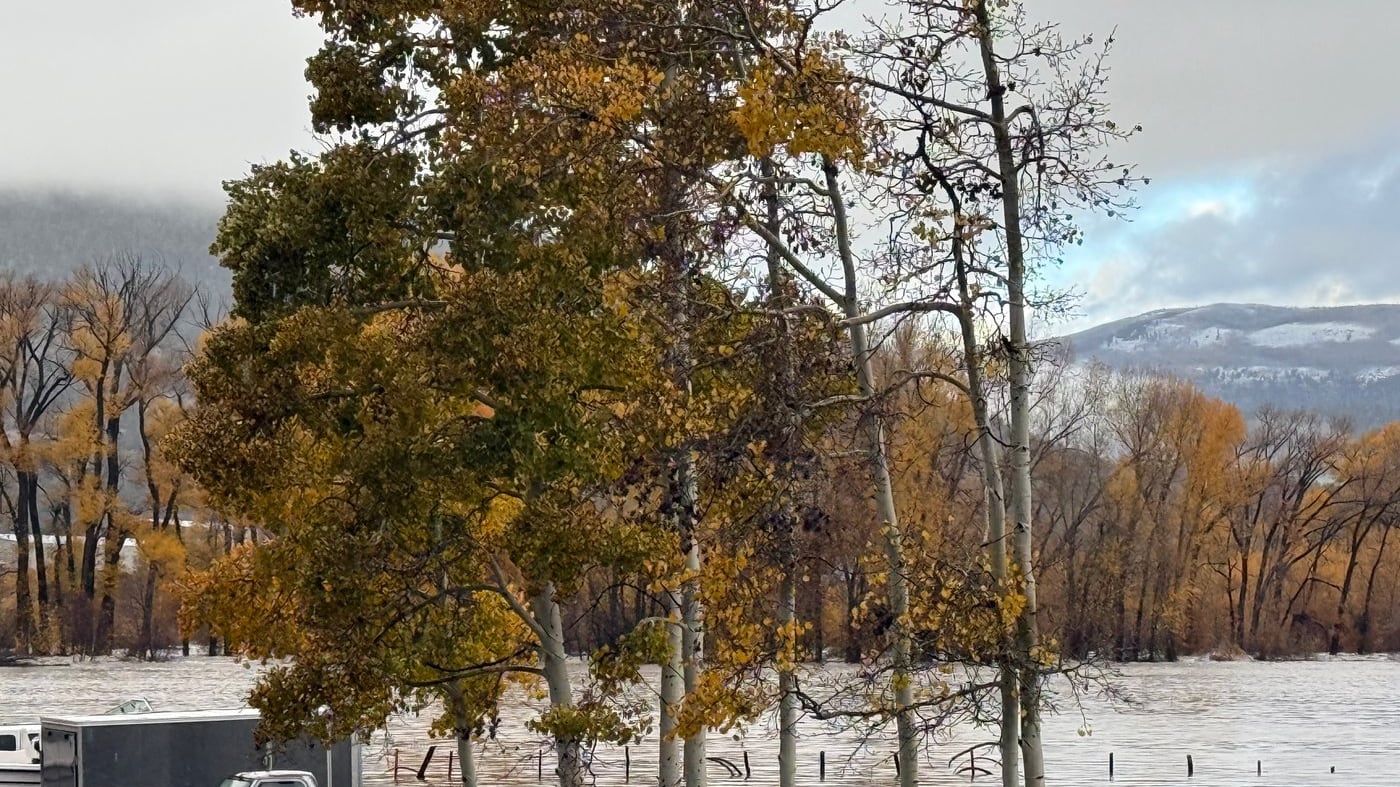
FORT COLLINS, Colo. — Severe flooding in the U.S. Four Corners region Friday led to water rescues — some from rooftops — and impassable roads, with some residents urged to evacuate low-lying areas of Colorado and New Mexico and others to stay where they are until levels go down.
The flooding was caused by heavy rain in the desert where Arizona, Colorado, New Mexico and Utah meet, with more rain in the forecast through at least Saturday. Hundreds of people along the San Juan River in the biggest city in the area, Farmington, N.M., were told to evacuate.
Downstream, residents of the vast Navajo Nation braced for floodwaters not expected to peak until late Friday or early Saturday.
“Do not wait to make your evacuations. Make your preparations for yourselves, your families, as well as your animals,” Navajo Nation Deputy Police Chief Donnie Kee urged during a news conference.
The crisis capped a week of severe weather in which rain swamped dozens of homes in Utah and tornadoes blew off roofs, knocked trees onto houses and downed power lines in Arizona.
In New Mexico, more ‘once in a generation’ flooding ahead
Rescuers used New Mexico National Guard boats, helicopters and amphibious vehicles Thursday night and into Friday to try to reach stranded residents, San Juan County spokesman Devin Neeley said.
“We’re picking people off of roofs and pulling people out of houses that have three or four feet (one to 1.5 metres) of water in them, and there’s more water coming,” Neeley said.
Rains stopped — at least temporarily — but rivers were still rising.
“This is serious. We’re still sending deputies as I speak to get people out of their homes right now. In fact, our sheriff is damn near going to lose his home today,” Neeley said.
Some 600 Farmington households were told to evacuate, city spokesperson Gina Intoppa said.
Still higher water was on the way via the Animas River, a San Juan tributary that also flows south from rain-soaked Colorado, Farmington Police Chief Steve Hebbe said in the news conference.
“People are not believing that it’s going to be as bad as it is. But you can see the water flow coming, you can see the surge coming,” Hebbe said, calling it a “once in a generation” event.
Even worse than historic southern Colorado flooding a year ago
In southern Colorado, flooding was even worse than forecast and a full three feet (one metre) higher than a 100-year flood on the San Juan River only a year ago.
Before midday, rescuers in a state helicopter were trying to reach two people stranded in a motor home after trying to escape floodwaters, Archuleta County Sheriff Mike Le Roux said.
“We have two adult people and we’ve got three dogs that are as well as they can be, being perched in the middle of a river in a vehicle that’s somewhat submerged,” Le Roux said.
Authorities were assessing who else needed help, including many whose homes weren’t flooded but were cut off by floodwaters.
Le Roux was not aware of any deaths or serious injuries.
In nearby Rio Grande County, trailers at a campground were surrounded by water. Trucks were partially submerged in other areas.
Colorado Gov. Jared Polis had declared a disaster emergency in 11 counties.
In Utah, more flooding is possible while other areas dry out
In the city of Hurricane in far southwestern Utah, a shipping container drifting down a street gave way Friday to a mess of mud and debris to be cleaned up as people who had evacuated earlier in the week returned home.
Damaged roads included Utah 24 through Capitol Reef National Park.
The risk shifted to Utah’s southeast, where streams ran fast and high. Flood watches were in effect into the weekend, said Alex DeSmet, a National Weather Service meteorologist in Salt Lake City.
Still, the Four Corners region could get more heavy rain this weekend, with up to half an inch (one centimetre) forecast to fall in northwestern New Mexico.
The flooding was not unexpected after two months of heavy rain that ended a summer of drought. While parts of the Southwest are rocky with little vegetation and are naturally prone to flash flooding, the recent rains made flooding everywhere more likely.
Tropical systems coming ashore from the Pacific were the cause, forecasters said.
___
McCormack reported from Concord, N.H. Associated Press writer Dave Collins in Hartford, Conn., and Wufei Yu in Phoenix contributed to this story.
Mead Gruver and Kathy Mccormack, The Associated Press

