Spain’s Minister of Transport Óscar Puente announced his resignation after two deadly train crashes occurred in a single year, including one last week that killed 69 people and injured more than 200.
“I made the decision about my future in the first few minutes after the tragedy,” Puente told lawmakers in Madrid. “A transport minister in a country like Spain cannot remain in office after two accidents of this severity in less than a year, however different they may be and regardless of whether or not they bear direct responsibility for them.”
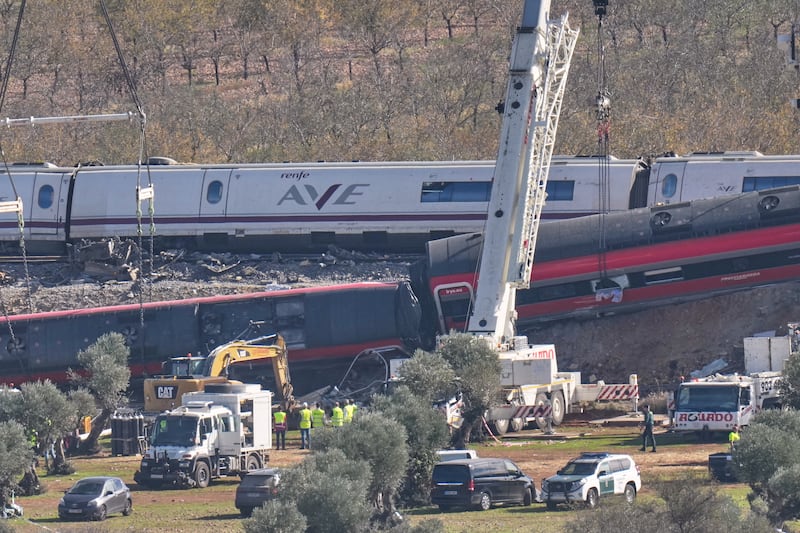
Puente resigned six days after one train plowed into another after what authorities say was a combination of human and computer errors along a high speed railway line connecting Madrid and Andalusia. One train, operated by Spain’s national rail service, crashed into a stationary train at high speed, during a safety system failure that had halted all rail traffic along the line.
“There was a red signal prohibiting movement, yet the train was authorized to proceed,” Puente said last week. “It is a decision made under inexplicable circumstances.”
Last week’s crash was preceded by another serious rail accident in January, where two high-speed trains collided head-on in the town of Adamuz, killing at least 41 people. At the time, it was the deadliest crash Spain had seen in more than a decade.
Numerous politicians and Spain’s transport workers’ union had called on Puente to resign in the aftermath of last week’s collision. The night of the crash, police scuffled with a hundreds of protesters outside the transport ministry headquarters, some of whom carried placards demanding that Spanish Prime Minister Pedro Sánchez resign.
Puente’s announcement arrives just three weeks before the country’s general elections, in which the minister said he would not be standing as a candidate. Sánchez called those elections early in the wake of several corruption scandals, a controversy over housing affordability and numerous setbacks for his socialist PSOE party in municipal elections.
Sánchez praised Puente in a statement on social media, saying that the former transport minister stepped aside “out of respect for the victims and the progressive project.”
“Politicians like him dignify our country and show us that not all of us are the same,” Sánchez wrote. “While some only give lessons, others give everything.”
This is a developing story and will be updated.

