TORONTO - News of Jensen Huang’s return to Nvidia sent the stock market soaring Monday morning, with shares of the technology company up roughly 30 per cent after a volatile 11 days.
“It was quite a turnaround for the stock. And I think it came at a very opportune moment as well,” said Colin Cieszynski, portfolio manager and chief market strategist with SIA Wealth Management.
“To a certain extent, the shares would probably have bounced back a little bit today. But I think this announcement… led to this explosive rebound that we’ve seen.”
Cieszynski says the rebound is good news for Canadian investors as the stock is included in many exchange-traded funds (ETFs) and mutual funds that sit in RRSPs, TFSAs and other investment accounts.
“Anybody who has anything that is invested in the United States likely owns Nvidia. It’s one of the highest weighted stocks in the United States,” he said.
Less than two weeks ago, Huang stepped down from the company he co-founded after reports of at least two extramarital affairs, one with a woman who U.S. intelligence believes is a Chinese spy.
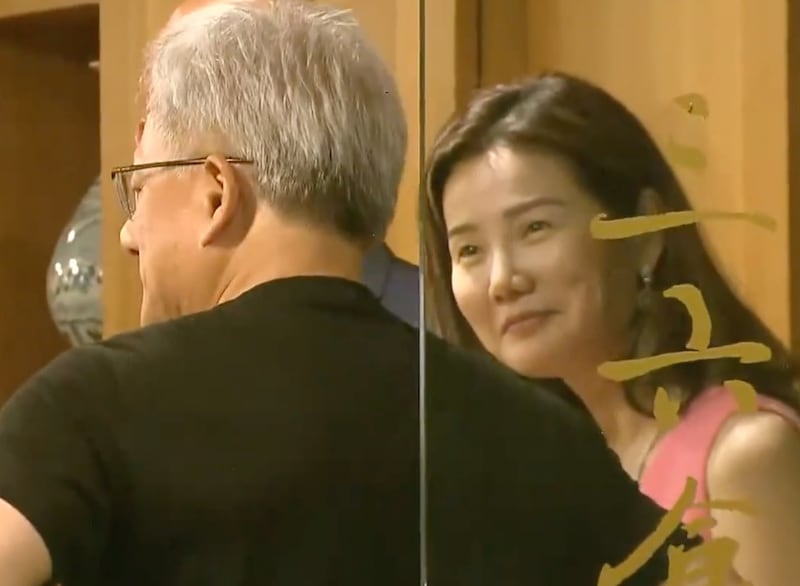
Nvidia makes advanced microchips that are essential for artificial intelligence infrastructure, and Huang’s relationship sparked major national security concerns.
‘Every confidence in Jensen’
On Monday, Nvidia’s board voted unanimously to reinstate Huang as president, CEO and board member.
“The Board believes Jensen is the right person to lead NVIDIA, and that his reinstatement is in the best interests of our stockholders, employees, partners and customers,” said Harvey C. Jones, Chair of the Board. “We have every confidence in Jensen and look forward to working with him as he resumes his leadership of the Company.”
Jones’ statement goes on to address the national security concerns raised by Huang’s affair.
“In the process of reaching its decision, the Board received input from senior levels of the United States government, and based on that input, the Board is confident that Mr. Huang’s reinstatement poses no national security risk.”
Just last week Jones told investors the board did not intend to reinstate him. Huang still faces investigations from both the government and the company itself.
“I see it as a ridiculous decision that the board made,” said Richard Powers, who teaches corporate governance at the University of Toronto.
“I don’t understand it at all. No one is irreplaceable. And the board… did not have a succession plan. There was their first failure.” he said.
U.S. President Donald Trump has been a vocal supporter of Huang, whom he counts as a close friend and has spent the last 10 days pushing Nvidia’s board to reinstate him.
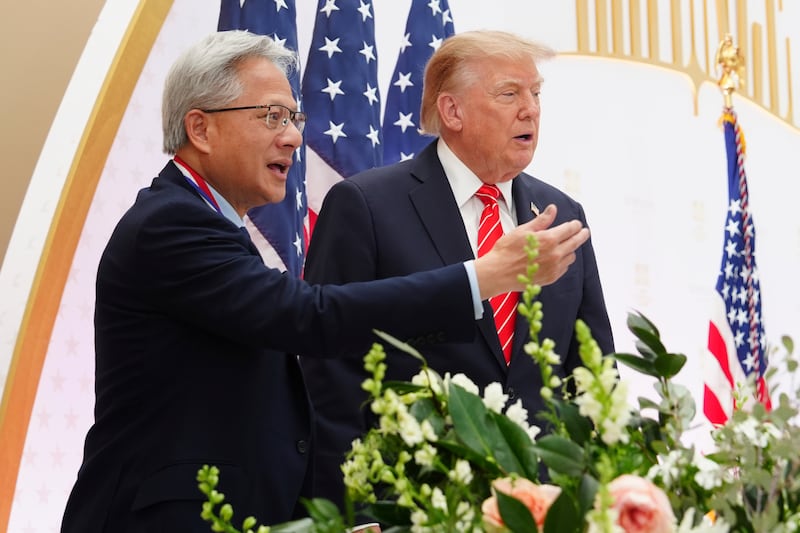
“The investigation showed he had bad judgement, having to do with somewhat unrelated incidents, but he did nothing wrong,” Trump told CNBC on Monday following news of Huang’s reinstatement.
Still, the decision has drawn bipartisan criticism with some U.S. lawmakers accusing Trump of prioritizing the stock market over national security.
“The President is selling out our national security to keep the stock market high,” Democratic Sen. Ruben Gallego wrote on social media.
Republic Sen. John Curtis wrote on social media that he has many questions about the investigation and what was behind the board’s decision. “Who in our government weighed in? What did they tell the board? And on what basis did the board conclude there was no risk?”
Huang is scheduled to appear for closed-door, transcribed interviews on Dec. 1, before three House committees, including the House Foreign Affairs Committee, the House Select Committee on China and the House Intelligence Committee. He is also expected to testify at an open hearing of the Senate Banking Committee on Dec. 3.

