MEXICO CITY — The government in Mexico is railing against the U.S. Drug Enforcement Agency’s anonymous tip line for reports against criminals and corrupt officials in the Latin American nation, slamming it as foreign interference.
Others in Mexico are embracing it.
In the state of Sinaloa, journalist Juan Manuel Partida Valdez was among the first to write to the WhatsApp line on Thursday, just a day after DEA chief Terry Cole called for anonymous reports on his X account.
The announcement opened the latest chapter in an ongoing struggle between the U.S. and Mexican governments over who has the right to take action against cartels in Mexico.
Partida Valdez, president of the Sinaloa Journalists Association, said he sent information about alleged ties between Sinaloa politicians and criminal groups because authorities have failed to put an end to violence and corruption that has bled his northern Mexican region dry in recent years.
He got a quick response, he said.
“I talk to so many people -- in the streets, on social media, on WhatsApp and in chats -- and you realize what people think: We’re all fed up,” the 67-year-old told The Associated Press on Friday. “We’re fed up with narco-governments.”
Mexico files a complaint against the tip line
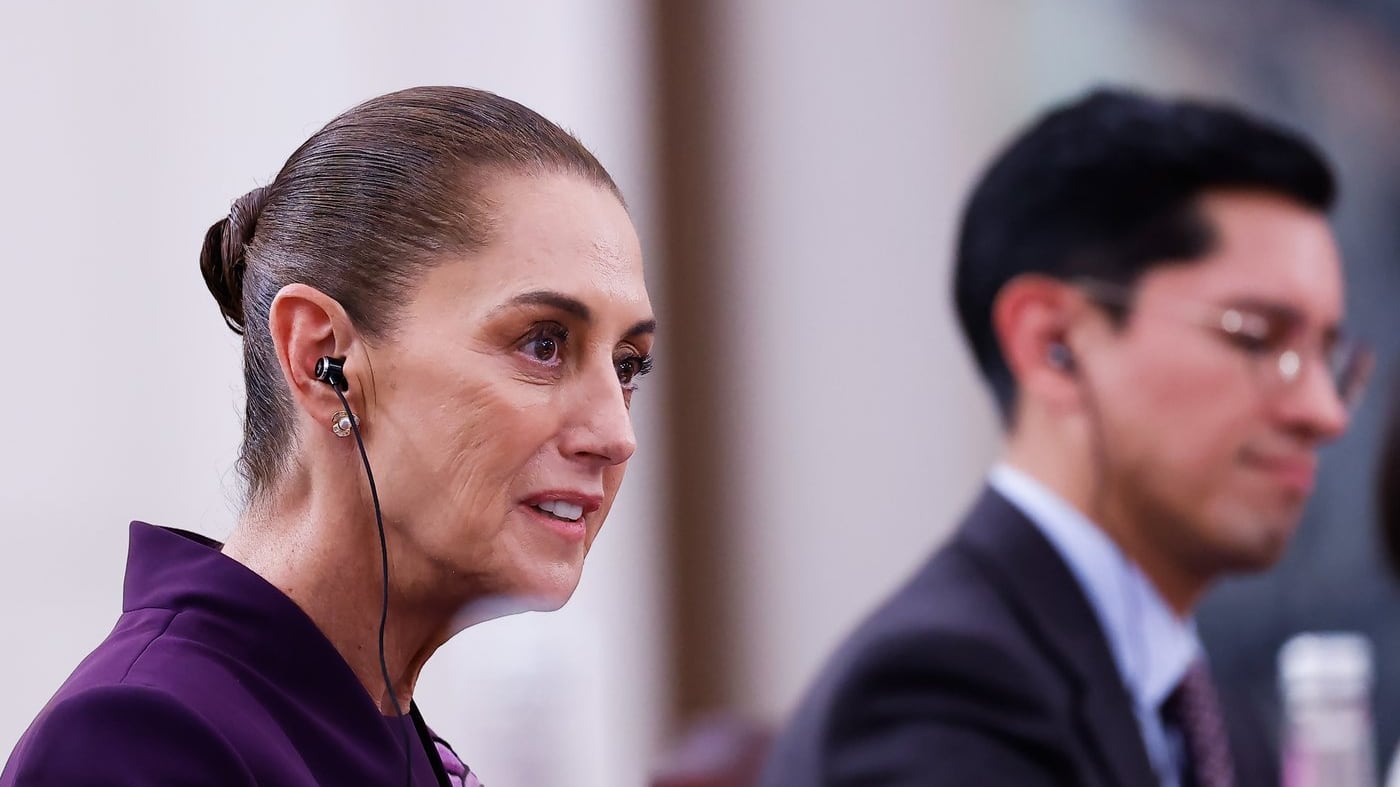
On Friday, Mexican President Claudia Sheinbaum said she escalated her fight with Washington over the tip line, filing a formal complaint with the U.S. Embassy for interfering in Mexico’s internal affairs.
“We have made it very clear in our relationship with the United States that the relationship is one of coordination, not subordination,” Sheinbaum said in her morning press briefing.
Sheinbaum once again urged Washington to address drug use and combat drug traffickers within its own territory while affirming that Mexico would continue working to confront cartels and prevent drugs from reaching the U.S.
As U.S. President Donald Trump has pressured Sheinbaum to crack down on criminal groups, Sheinbaum has underscored Mexican sovereignty at the same time her government has cracked down on cartels more forcefully than her predecessors.
Homicide rates have taken a sharp dip in Mexico and the government has taken out a number of top cartel bosses, often using U.S. intelligence to do so. The latest came over the weekend, when Mexican forces captured an important ally of a faction of the Sinaloa Cartel, and requested that a U.S. surveillance drone fly over Mexican territory to help them pinpoint the location of the capo.
Criminals ‘are being protected in our country’
At the same time, a number of scandals have soured that relationship.
In April, two CIA agents died following a drug lab bust with local authorities in northern Chihuahua.
Sheinbaum said her government was not informed that two U.S. intelligence agents were carrying out an operation in Mexican territory, paving the way for a potential treason trial.
Weeks later, Sinaloa Governor Ruben Rocha Moya -- a powerful figure in Sheinbaum’s party -- was forced to step down after he was indicted by the U.S. on drug-trafficking charges in another political blow.
It was this case that Partida Valdez, the journalist, cited as a key reason for why he decided to reach out to the tip line, saying it was a “very clear example of what we’re suffering because of these governments that do absolutely nothing but protect criminals.”
“This whole song and dance about sovereignty is just collusion with the politicians tied to drug trafficking who are being protected in our country,” he added.
While a number of observers warned of the dangers of the strategy by the DEA, other academics and politicians celebrated the line as a potential tool or said they trusted the intelligence agency more than their own government.
Lilly Tellez, a senator for Mexico’s National Action Party, a weakened opposition party that has also been plagued by a number of corruption scandals, said she welcomed the tip line.
Tellez, a politician from the U.S.-Mexico border state of Sonora, wrote on X on Friday that the tip line is “a good way to co-operate against the common enemy of both countries” and strengthens efforts to combat cartels.
“On behalf of millions of Mexicans oppressed by the cartels, I ask President (Sheinbaum) not to obstruct the opportunity to gather more information to locate criminals and identify their activities,” she wrote.
------
Associated Press journalist Megan Janetsky contributed to this report from Mexico City.
Fabiola Sánchez, The Associated Press

