
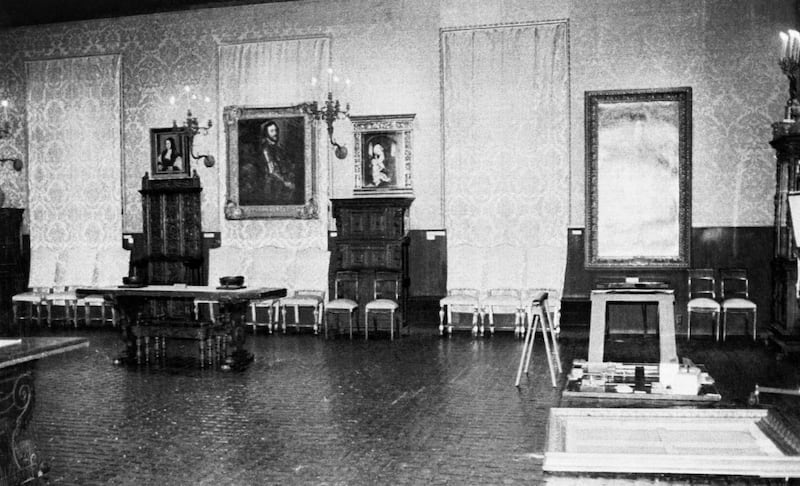
Inside Boston’s storied Isabella Stewart Gardner Museum, masterpieces by Titian, Rembrandt and John Singer Sargent greet hundreds of visitors each day, but some walls among the intimate galleries look hauntingly different. Gilded, ornate frames hang empty as a quiet reminder, the museum says, that the search for 13 stolen priceless works — missing in the world’s largest unsolved art heist — won’t end until every piece is returned.
“This is a sign of hope. We believe that the works will be there again,” said Anthony Amore, art theft expert and, for the last 21 years, director of security and chief investigator at the Isabella Stewart Gardner Museum. “It’s a reminder that this is the only proper home for these stolen works.”
The stolen collection is valued today at nearly US$1 billion, according to retired FBI investigator Geoffrey Kelly, who spent 22 years leading the FBI’s efforts to solve what the agency has called the largest single property crime in U.S. history.
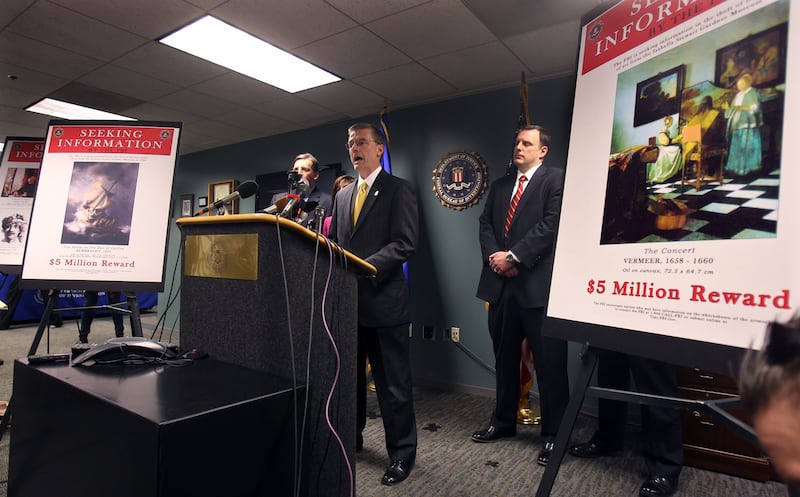
In over 36 years, the works of art have never been recovered and no one was ever charged with the crime, yet the case remains one of the most extraordinary unsolved mysteries, still looms large in public memory and remains a chilling blueprint that continues to inform modern investigations as more violent art crimes have made headlines across Europe.
“The world loves art heists, as you can see with what’s happening in the news lately with the Louvre robbery and all these recent museum thefts that have occurred throughout Europe, people love it,” said Kelly, who wrote a book about the Gardner Museum investigation called “Thirteen Perfect Fugitives.”
A St. Patrick’s Day weekend heist in Boston
On the night of March 17, 1990, Boston was deep in the revelry of St. Patrick’s Day celebrations, and police officers were spread thin across the city, according to Kelly.
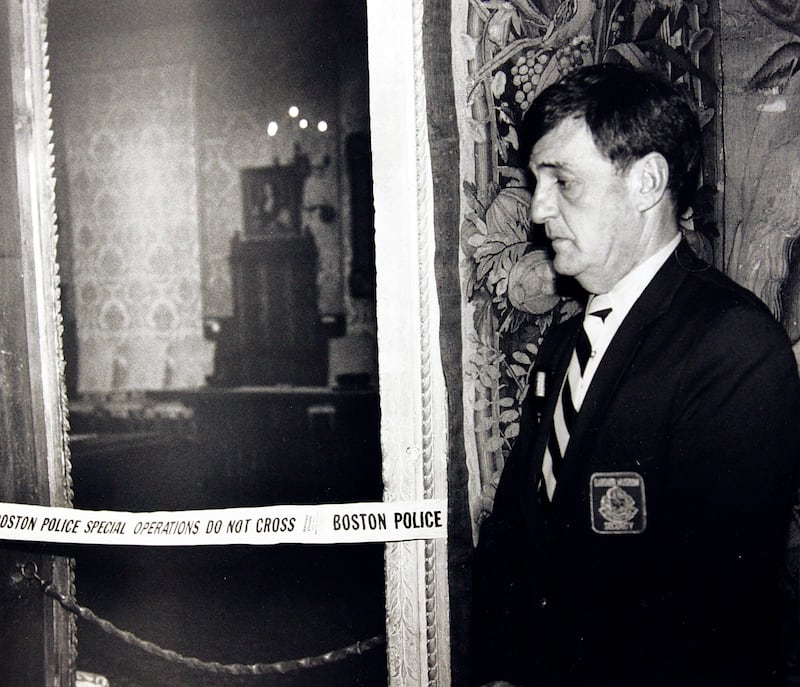
Just before 1:30 a.m. on March 18, two men in Boston Police Department uniforms arrived at the employee entrance of the museum and rang the night bell, Kelly said. The men told the night watchman they were responding to a disturbance call. Inside Richard “Rick” Abath faced a decision that would become one of the most scrutinized moments in the history of the infamous art heist. Against museum policy, Abath unlocked the door and let them in.
“They were standing there in their hats and coats and badges, and they looked like police, and I buzzed them into the museum,” Abath told CNN in an exclusive 2013 interview.
Once inside, the men instructed the guard to call his colleague to join them. When the second guard arrived, the officers told the two guards they were under arrest. They were handcuffed, duct-taped and secured in the museum’s basement.
“He finished cuffing me, and he cuffed my partner and very dramatically said, ‘Gentlemen, this is a robbery,’” Abath recalled.
Far from being police officers, the men were criminals.
They walked down the hallway to the museum’s Dutch Room, where they took six works, including three Rembrandts and a Vermeer.
One thief stayed behind in the Dutch Room and carefully removed some of the paintings from their matting and frames, although two of the Rembrandts were simply cut out.
The other thief headed out of the room back down the hallway to the Early Italian Room and through the Raphael Room. He went back and forth several times, passing by famous works of art, including two Raphaels – “it’s a great mystery to the theft,” Amore said.
He made it to the Short Gallery, where he took five sketches by Degas and a finial from the top of a flag from Napoleon’s 1st Regiment.
An oil painting by Édouard Manet was taken from the Blue Room on the first floor.
Taking their time, the thieves stole 13 irreplaceable works of art in 81 minutes.
In the nearly 34 years following the robbery until his death in 2024, Abath, who was 23 at the time, was never charged with a crime and consistently maintained he was not involved, though he was questioned by authorities many times.
His longtime lawyer said despite the regulations, Abath opened the door because he thought police officers had told him to.
“If on the one hand I have these museum regulations, and on the other hand there is what appears to be a Boston cop staring at me through the glass portal in the door, telling me to open up, the choice to me is very easy,” said George Gormley, who represented Abath at numerous grand jury appearances over the years.
The accusations followed Abath his entire life, according to Gormley.
“You never get your reputation back wholly,” Gormley said. “He was a good guy who was trying to live a lawful law-abiding life that was sort of cabined in by all of this.”
Whoever was behind the theft, they were never jailed for the crime.
Not a Hollywood heist
In cinematic blockbusters, art heists are pulled off by refined criminal syndicates like in the Warner Bros. classic “The Maltese Falcon” or by gentlemen art thieves like Thomas Crown, a billionaire who steals priceless paintings for the sheer thrill instead of money, but according to Kelly, the Gardner perpetrators were simply local criminals, known to authorities.
“They were part of the crew of a guy named Carmello Merlino, who was running a drug operation in the Dorchester section of Boston,” Kelly said. “They were local mobsters.”
In February 1999, the FBI arrested Merlino and three associates in an elaborate undercover sting involving an informant in Merlino’s crew, according to court documents. The sting targeted a planned US$50 million armored car depot robbery in Easton, Massachusetts.
Prominent Massachusetts defence lawyer Martin Leppo represented Merlino and his crew and told filmmakers of the documentary series “This Is a Robbery: The World’s Biggest Art Heist” that federal agents used the sting as leverage to close the Gardner case and recover the stolen artwork.
“They did everything to make an arrest. They set up that sting, and said to them after they were arrested, ‘Give up the paintings, you walk out,’” Leppo said.
Merlino died in 2005, according to Federal Bureau of Prisons records, and Leppo died in 2024.
Whoever stole the paintings may have done so for their own leverage, Kelly said.
While the movies might evoke a wealthy oligarch sitting in a secret gallery, swirling cognac surrounded by priceless stolen art, Kelly says the Gardner Museum investigation, and many others he’s been involved in as a founding member of the FBI’s Art Crime Team, simply don’t bear that out.
There’s no real market for selling famous stolen paintings, Kelly said. But in Boston at the time, they were used as bargaining chips for thieves who wanted a so-called get out of jail free card.
“I think that was the intention here. They were going to hold on to them for a while, and maybe use it as leverage for any crimes that they were arrested for down the road,” Kelly said.
Amore echoed this sentiment, noting stolen masterpieces rarely find legitimate buyers.
“Nobody buys these,” he said. “They end up hidden for some sort of future, undefined use. That could be any number of things, including use as a ‘get out of jail free’ card or as collateral in some illicit trade.”
In 2013, the FBI said it was confident it knew the identities of the thieves, who had local mob ties. The art, it said, was transported to Connecticut and then the thieves tried to sell the works in Philadelphia before the trail went cold.
Why the FBI and local authorities weren’t able to make an arrest or recover the pieces, even though they thought they knew who did it, is due to the case drawing too much attention, Kelly said.
“There were three, probably four people involved in the heist who were murdered within a year and a half of the robbery occurring,” Kelly alleged. “I think that ends up having a chilling effect on anybody who harbors any aspirations to come forward with information as a result.”
In 2015, Peter Kowenhoven, the FBI’s assistant special agent in charge in Boston, told The Associated Press the thieves were dead, but declined to identify them.
The coldest case
Kelly was assigned to the Gardner Museum case 12 years after the crime occurred, and seven years after the statute of limitations expired, which is the period in which someone could be charged with a crime for the robbery.
“You don’t have anything to hang over somebody’s head, and it becomes very difficult,” he said, adding the case had gone cold.
Kelly’s mission was the recovery of the priceless works of art.
In most art thefts, stolen artwork is typically recovered soon after the crime, according to Kelly. On the other hand, he said, sometimes the pieces come to light many years later.
“If you don’t get a recovery during that finite period of time, immediately after a robbery occurs, then it becomes generational,” he said. “It’s going to be because somebody passes away, somebody gets locked up, families going through grandpa’s belongings after he passes on and they find something up in the attic, or they open up a safe deposit box.”
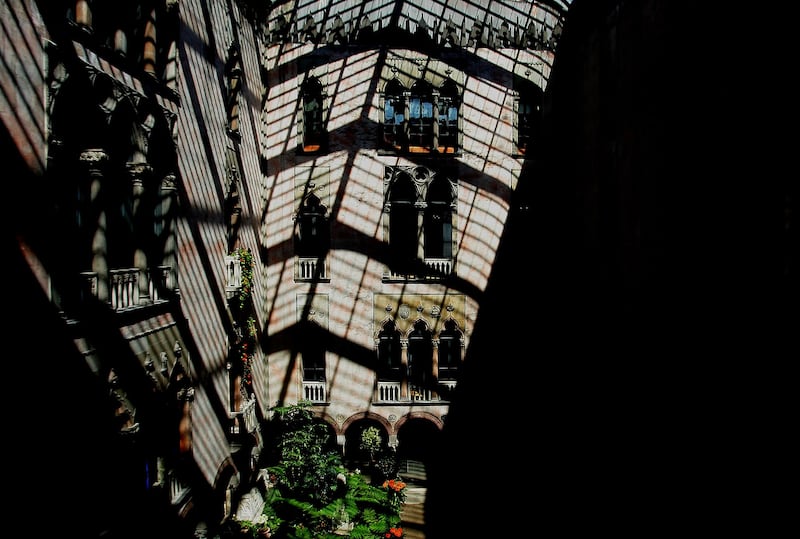
Kelly believes the 13 works are still out in the world, and that one day, they will be recovered.
“There’s so many examples of artwork that’s recovered decades, even centuries after it was stolen,” he said.
For example, Kelly pointed to an original Leonardo da Vinci painting called “Salvator Mundi,” which went missing after an auction in 1763, but was recovered by American art dealers Robert Simon and Alexander Parish after 242 years.
Stories like that one give Kelly hope the Gardner Museum pieces will be found.
“It’s 13 pieces that were stolen, and I’m the first one to admit that there are some of the pieces from the Gardner heist that I’ve never heard of anybody saying that they’ve seen …” Kelly said. “Although we have had very credible sightings of the (Christ in) the Storm on the Sea of Galilee, which is Rembrandt’s seascape.”
The Gardner Museum’s security and investigations chief shares Kelly’s position.
“Often the public and the media assume that because they haven’t heard anything that nothing is happening. Reality is quite different,” Amore said. “I do not believe it is ‘unsolvable.’ At this point, it is a search for the location of the art.”
A change in tactic and target could thwart stolen art recovery
As high-profile masterpieces are generally unsellable on the open market, according to experts, thieves of the Gardner Museum heist era were likely forced to hide the canvases away intact, treating them as shadow currency or future legal leverage. Amore says the most recent high-profile art thefts are even more concerning, as they break this mold.
“The Gardner theft involved a ruse and the thieves took their time. The others were brutish and quick,” Amore said.
In Europe, “the vast majority have been quick smash-and-grab sorts of crimes,” he said.
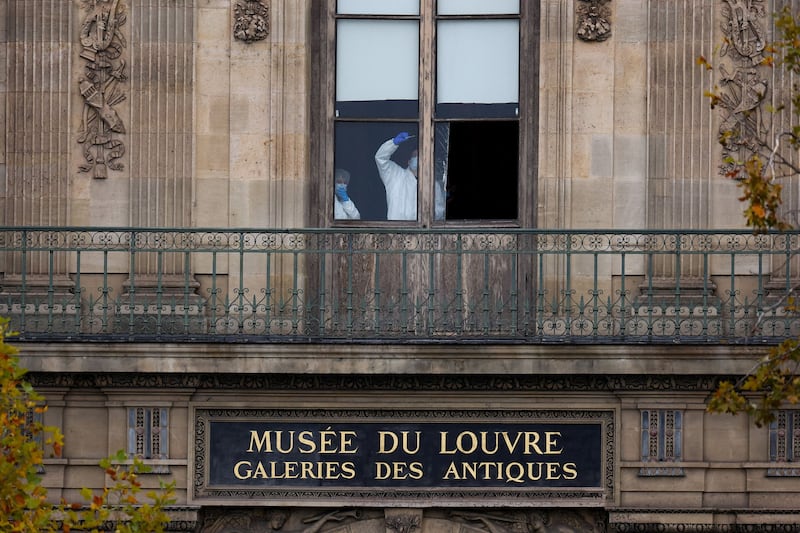
There has been a “disturbing” rise in the theft of culturally significant jewelry, Kelly said, including the 2025 robbery of the world famous Louvre in Paris. Men used an angle grinder and a handheld cutting and grinding power tool to break the window, clambered into one of the most ornate rooms in the museum and smashed two display cases, grabbing nine pieces of Napoleonic-era jewelry, including tiaras, necklaces and earrings adorned with sapphires, emeralds and diamonds worn by the 19th century queens of France. It took robbers four minutes to get in and leave with the loot, prosecutors said.

“Of course the Louvre, they went to steal jewelry because while you can’t take a Rembrandt and cut it up into 100 pieces and sell the pieces off, you can take a million dollar piece of jewelry, break it down, recut the gems and melt down the settings … of course more than the monetary value is the cultural significance and importance of these pieces,” Kelly said.
This, according to Kelly, is the way criminals can monetize stolen jewelry in a way they can’t with well-known paintings or sculptures.
Adding to the temptation for a quick jewelry bust over stolen paintings is, at least in the US, a glaring disadvantage to thieves.
“Our stolen property laws dictate that you never have clear title to stolen property,” Kelly said. “The victim is always going to have greater rights to that object than even an innocent third party purchaser, and so that’s the reason why the FBI still works this case.”
With few exceptions, there is no time limit on the true owner’s right to reclaim stolen art. The FBI’s ongoing investigation isn’t about criminal prosecution — it’s about bringing those artworks home to the Gardner Museum, Kelly said.
Hope remains for the return of the Gardner Museum works
As for the priceless works of art lost in the Gardner Museum heist, both experts CNN talked to agreed the masterpieces will someday be recovered.
“High-value, highly recognizable works of art have a higher incidence of recovery than lesser-known works. There is reason to believe all of the above will eventually return to their rightful homes. But it can be a long game,” Amore said.
“Investigators and museums must never give up on their masterworks,” he added.
As for the European heists, Amore said the French and Italian police are “excellent at investigating art theft” and he believes they will eventually recover much of the stolen pieces.
After marvelling at how other works of art have been returned hundreds of years later, like da Vinci’s “Salvator Mundi,” Kelly put it another way.
“They’re out there somewhere. I’m confident they weren’t destroyed,” he said.
The worth of some of the world’s most culturally significant pieces isn’t always reflected in their market value, said Kelly, who spent over two decades searching for the Gardner masterpieces, yet they remain vital to humanity.
“It’s part of our shared history … It’s who we are. It defines us, and it’s very important.”
The-CNN-Wire™ & © 2026 Cable News Network, Inc., a Warner Bros. Discovery Company. All rights reserved.

