These are some of Toronto's most notable cold cases
The Toronto Police Service's cold case unit is tasked with investigating about 800 murders that have gone unsolved over the years. Here is a look at a few of the puzzling, unsolved homicide cases detectives are still trying to crack decades later.
Updated:
Published:
Image 0 of 26
800 unsolved cases The Toronto Police Service’s cold case unit has to be “very organized” to keep track of the team’s more than 800 unsolved murders, the head of the unit, Acting Det.-Sgt. Steve Smith says.
“It's a lot of cases for the amount of people we have, but our investigators are phenomenal,” he told CP24.com last month.
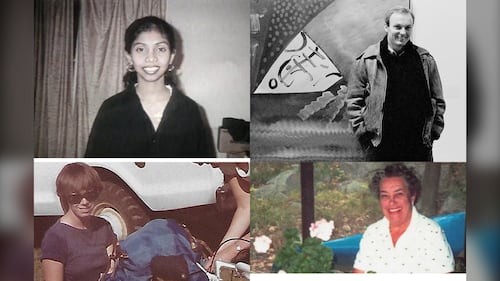
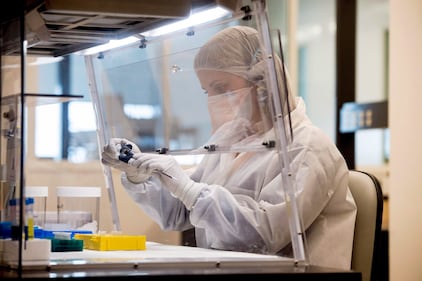
Through the use of Investigative Genetic Genealogy, 60 cases, including cold case homicides and unidentified human remains, have been solved by the police service. Here is a look at just a few of the older cold cases investigators are still hoping to crack. (Toronto Police Service/ Youtube)
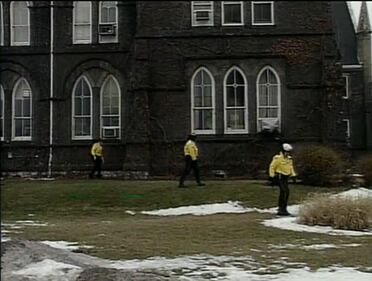
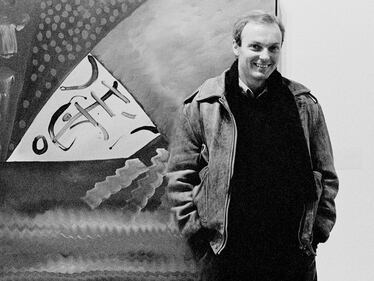
David Buller Beloved University of Toronto professor David Buller was found stabbed to death in his office shortly before 7 a.m. on Friday, Jan. 19, 2001. (Submitted)
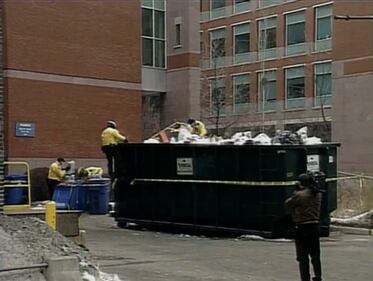
David Buller Despite the university being filled with students and staff on the day of his murder, no one noticed that a university professor had been attacked in his office in the middle of the day. Many students were interviewed by investigators in the months following the murder, but no suspects were ever publicly identified. (CTV News Toronto archives)
David Buller Police believe he was attacked the day before. He was last seen that Thursday afternoon on an elevator inside a building at the university’s downtown campus and some students became concerned when he didn’t show up for an evening class that he was supposed to teach. (CTV News Toronto archives)
David Buller His niece, Karyn Sandlos, told CP24 last month that police provided multiple theories about a possible motive.
“I’m fairly certain it was someone that he knew and trusted,” Sandlos said.
Theories were floated about the possibility of a disgruntled student that was unhappy with how they were evaluated. Investigators had also considered the possibility that there had been a dispute amongst colleagues, Sandlos said.
“Another theory was that maybe this was someone David was dating,” she said, adding that she was also “skeptical” about this explanation. (CTV News Toronto archives)
David Buller Decades later, with limited physical evidence, suspects, or surveillance video, the investigation into Buller’s murder has fallen to the Toronto Police Service’s cold case unit.
Smith said often when investigators are tipped off to the name of a possible suspect, evidence starts to line up in a way that never made sense before.
“It’s all these unknowns that you have when you don’t know who that offender is, and as soon as you name that offender, 15 different things fall into place,” he said.
“This all makes sense now, whereas the day before, nothing made sense.” (Submitted)
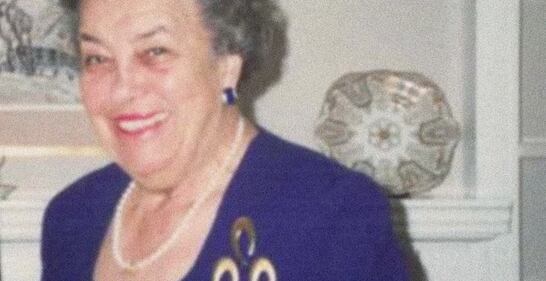
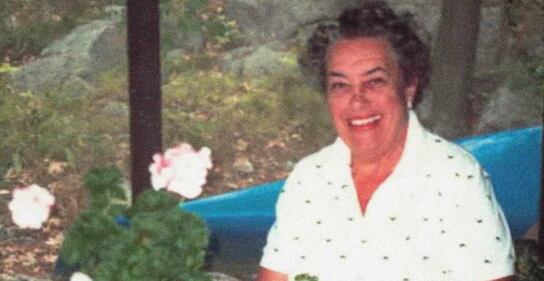
Margaret McDonald The lifeless body of 80-year-old Margaret McDonald was found shortly before 6 p.m. on June 24, 1994 at her home on Lascelles Boulevard. (Toronto Police Service/ Youtube)
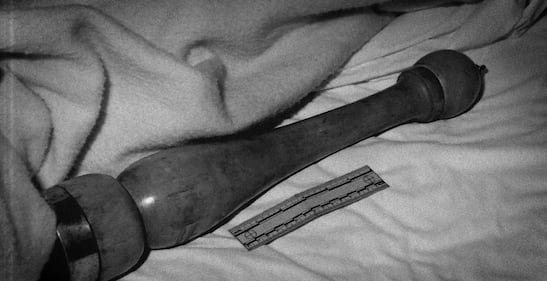
Margaret McDonald McDonald was napping in her bed that afternoon when an intruder broke in and ransacked her home before sexually assaulting, stabbing, and bludgeoning the elderly woman to death.
“This is the one of the most horrific homicides that we have,” Smith said when commenting on the case in 2022. “This homicide struck a chord with our investigators.” (Toronto Police Service/ Youtube)
Margaret McDonald The exact timeline for the murder is not known but Smith said McDonald had made plans earlier in the day to go out for dinner with a friend. When the friend arrived at McDonald’s home at around 5:30 p.m., there was no answer at the door. The concerned friend notified a neighbour and ultimately it was McDonald’s granddaughter who discovered the gruesome scene, Smith said. (Toronto Police Service/ Youtube)
Margaret McDonald According to neighbours, two people walking up to homes earlier in the day, knocking on doors. When people answered the door, the two would move on to the next house, Smith said. (Toronto Police Service/ Youtube)
Margaret McDonald “It looks like this person knocked on the front door, didn’t get an answer because Margaret was sleeping in her bed upstairs, went around, broke in through the back door, proceeding to ransack her home,” he said during an episode of Toronto Police Service podcast 24 Shades of Blue. (Toronto Police Service/ Youtube)
Margaret McDonald Police have an DNA profile of a male suspect but no hit was found in the National DNA databank. Smith said the suspect is likely a white male with dark hair, a lighter eye colour, and is in his mid-to-late 40s.
“I mean to be attacked in your own home, where you're supposed to be safe… is just absolutely egregious to our team,” Smith told CP24.com. “When we look at these cases, we really, really want to bring these offenders to justice.” (Toronto Police Service/ Youtube)
Sharmini Anandavel Sharmini Anandavel, a Grade 9 Woodbine High School student, went missing on Saturday, June 12, 1999. (CTV News Toronto archives)
Sharmini Anandavel She was last seen at Fairview Mall and reportedly told people she was on her way to start a new job.
Four months later, her body was found in a deeply wooded area near Finch Avenue and Leslie Street, not far from where she had last been seen. (CTV News Toronto archives)
Sharmini Anandavel Police later released details of a fake job application that was found in the teen’s bedroom after her disappearance.
The job application was for a non-existent organization known at the “Metro Search Unit.”
At the time, police said she had been looking for a job so she could help out her parents and buy a new prom dress.
“I think a real possibility is that the person that’s responsible for this at one point approached Sharmini with an offer of a job,” Det.-Sgt. Matt Crone told reporters at a news conference in the early stages of the homicide investigation.
“At some time during the day, he maneuvered her down into the park and once down in the park, I believe she was killed.” (CTV News Toronto archives)
Sharmini Anandavel Police said they believe Anandavel went to the park willingly and the killer is likely someone she knew and trusted.
The phony job application, police said, was created by someone who was not well educated.
A man who lived in her building had been the police service’s main suspect at the time but no charges were ever laid in the case. (CTV News Toronto archives)
Sharmini Anandavel Smith said this particular investigation is one that has really affected his team over the years.
“In that case, we’re really trying to retest property to see if there's any evidence that we can create as science gets better. Every six months science gets much better. So we try to send our property back in for more testing to see what we can do,” Smith said.
“We've got a few leads in that hopefully, but I mean, I think we know who committed that. It's just how do you prove it… the difference between knowing who it is and being able to prove it in court are two different things.” (CTV News Toronto archives)
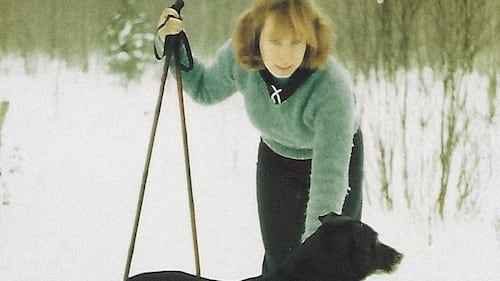
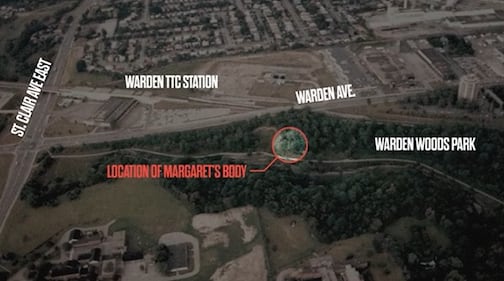
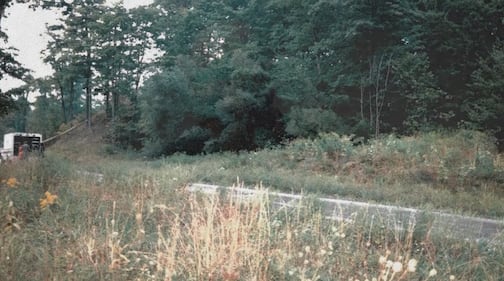
Margaret McWilliam On Aug. 27, 1987, 21-year-old Margaret McWilliam went out for a jog in Scarborough’s Warden Woods Park and never returned home. (Toronto Police Service/ Youtube)
Margaret McWilliam When she failed to show up for work the next door, coworkers and family became concerned and contacted police.
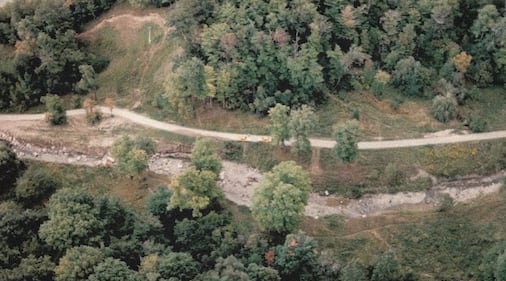
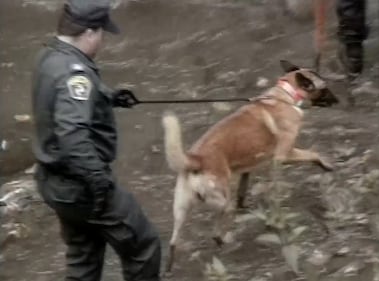
After an extensive search of the park where she was last known to be, her body was discovered the following day in a heavily wooded area just off the path where she would have been running. Police said the young woman had been sexually assaulted before she was murdered. (Toronto Police Service/ Youtube)
Margaret McWilliam “It appears that someone was lying in wait for her in the park,” Smith said while outlining the case for the Toronto Police Service podcast 24 Shades of Blue back in 2022.
“(It is unclear) whether it was a crime of opportunity or whether this person had maybe been living or spending time in the park and had seen her run through at a certain time every evening… but it appears, unfortunately, someone grabbed Margaret, dragged her into the bushes, sexually assaulted her, and murdered her.” (Toronto Police Service/ Youtube)
Margaret McWilliam Smith said police believe the suspect stole the Walkman she had in her possession.
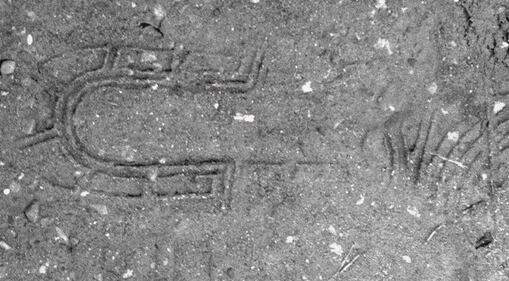
“There was a number of things recovered from in and around the area where her body was found so it appears if someone wasn’t living there, they were at least spending a lot of time up in that park,” he said, adding that it is more likely that the perpetrator sold the Walkmen rather than kept it as a trophy. “I would tend to believe that this person may have needed a few bucks.”
Smith said they never came up with a detailed suspect description bit witnesses in the area described seeing a large male loitering in the area at the time.
“He was nowhere to be found when we came back,” Smith said. (Toronto Police Service/ Youtube)
Margaret McWilliam He noted that despite receiving a number of tips over the years, there has been no break in the case.
DNA samples were collected from the scene but so far, there have been no matches on the National DNA Data Bank.
“As with every cold case, we run the DNA through our data banks and we have no scene to scene matches so there are no other occurrences,” Smith said.
“We plan on catching Margaret’s murderer… This was a 21-year-old vulnerable young lady who was just starting out in her life or career. She deserves so much better.” (Toronto Police Service/ Youtube)
Smith said while every case is touched by his team at regular intervals, some cases will see more attention based on the amount of evidence that is available.
“Cases, such as a drive-by shooting in the late 80s, where there's no video, no forensics, no nothing, they're a lot harder to try to figure out,” he said. “But we still look at these cases, we still investigate them, but we're going to work on the ones that where we have some evidence, we have a trail to follow.”
“We have created all kinds of mechanisms to keep everything organized… we can see what was done on the case when it was last looked at, who looked at it, what was submitted, what we did, what investigative leads we followed up on," Smith said.
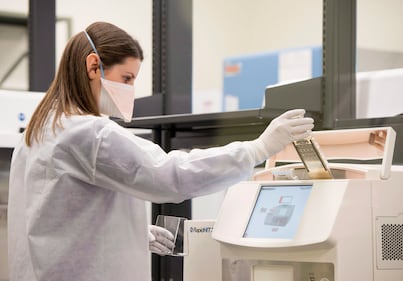
Of the cases that have DNA profiles, Smith said investigators regularly resubmit samples to the Centre of Forensic Sciences as the technology to assess DNA constantly improves.