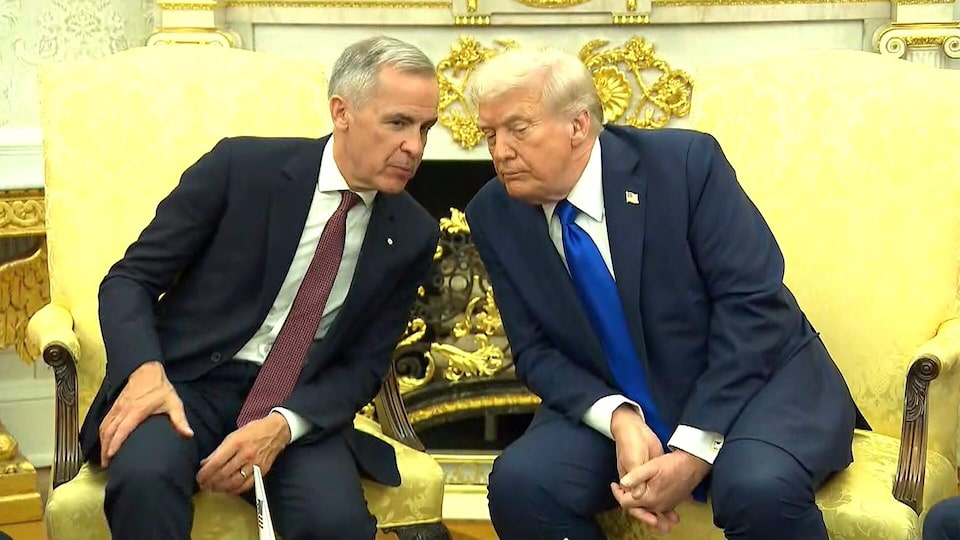


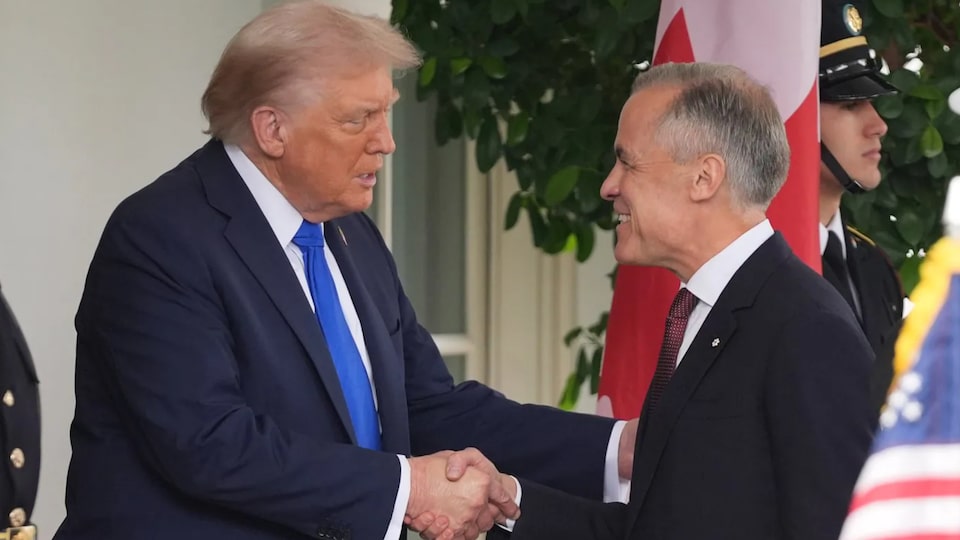
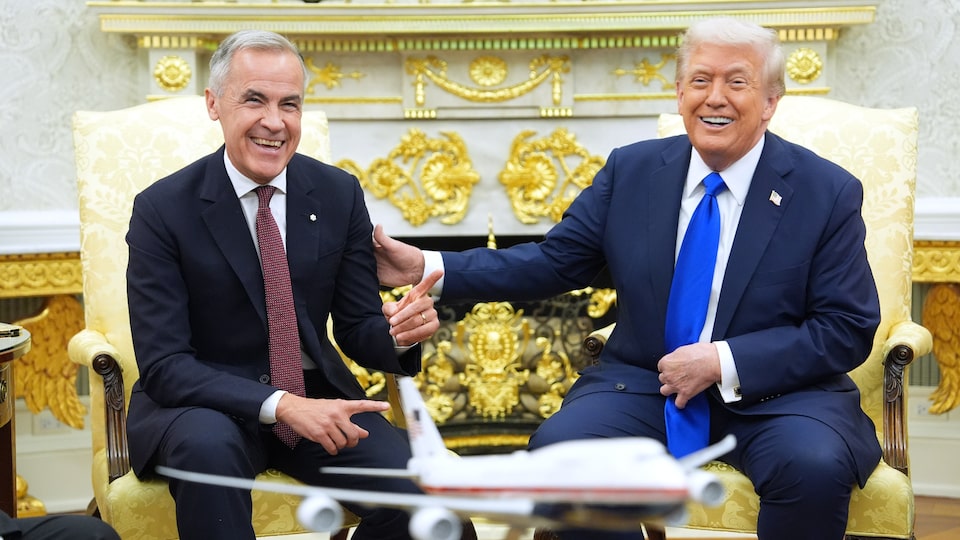

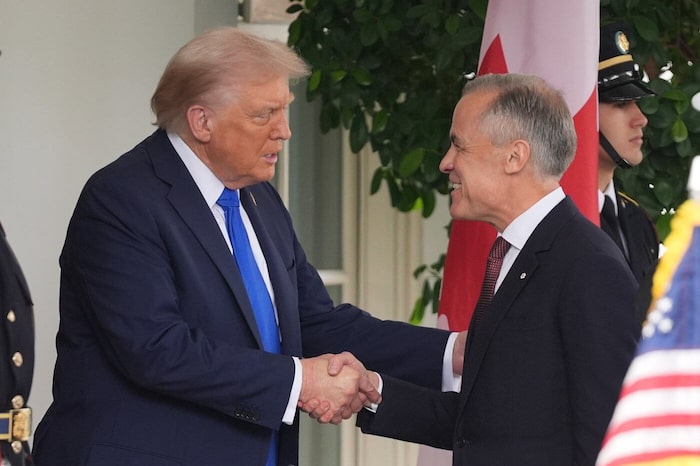
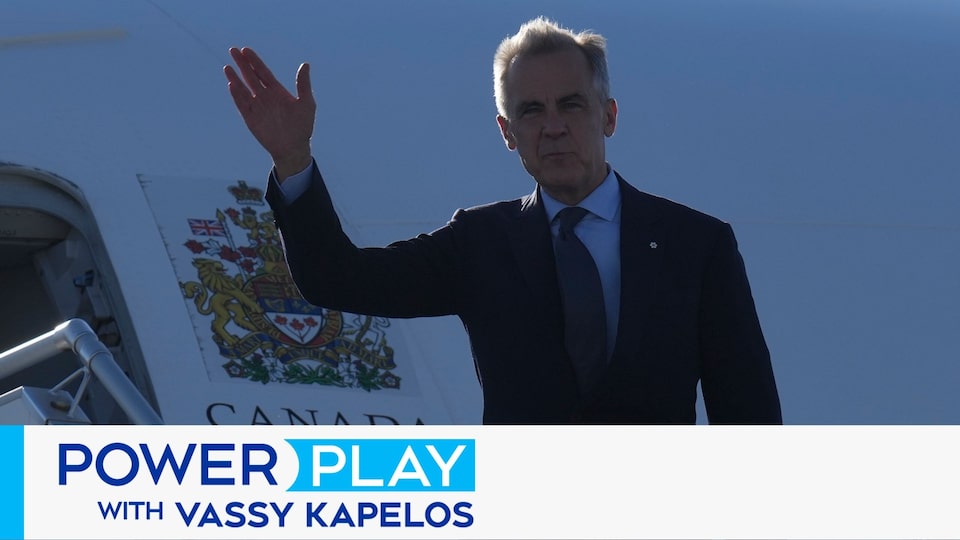
Prime Minister Mark Carney and U.S. President Donald Trump have wrapped up a two-and-a-half-hour meeting at the White House, with the latter once again hinting at his threats to annex Canada.
It was the second high-stakes, in-person meeting at the Oval Office between Carney and Trump since May, though the two have been in frequent contact as they work to hash out a new economic and security deal.
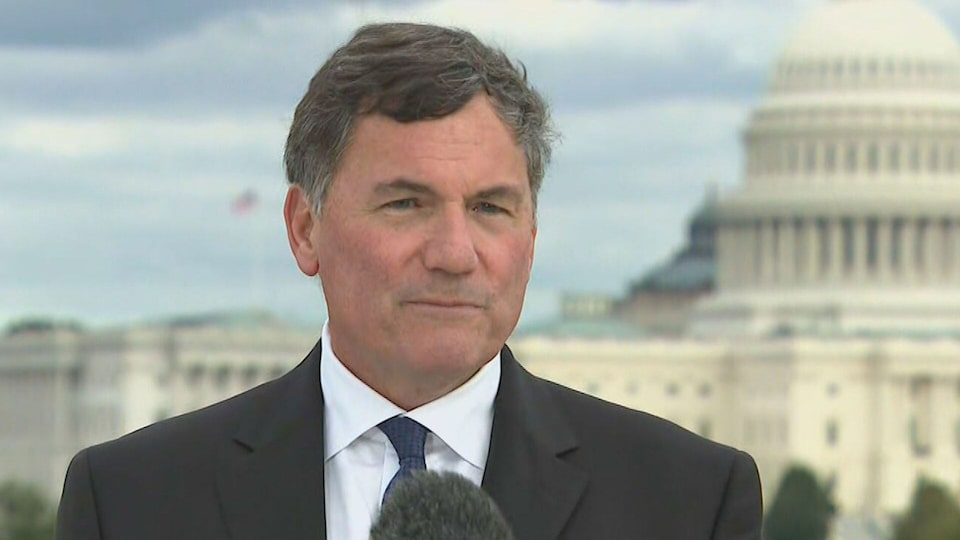
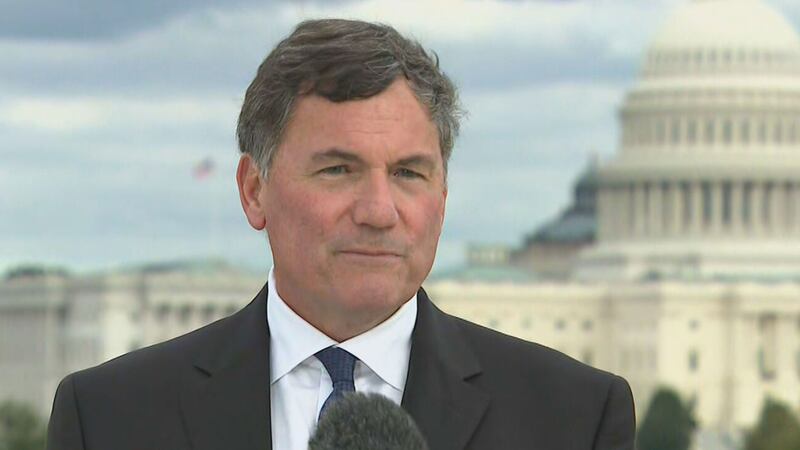
Speaking to reporters following the meeting, Canada-U.S. Trade Minister Dominic LeBlanc did not offer up any tangible outcomes from the meeting, but categorized it as “successful,” “positive,” and “effective.”
Ahead of the meeting, however, Trump signalled he was optimistic there would be progress.
“I think they’re going to be very happy,” Trump told reporters ahead of the meeting, when asked whether Carney will be leaving Washington with a deal.
“They talk about competitiveness, he’s a very competitive person,” he added, referring to Carney. “And they talk about things that we don’t necessarily agree on, but I think they’re going to walk away very happy.”

Asked about the president’s comments, LeBlanc said the Canadian delegation is leaving Washington “very much with the sense” that the Trump administration is ready to “structure something” on steel and aluminum that “would be in the economic and security interests of both countries.”
“I’m sort of an optimistic guy,” LeBlanc said, when asked specifically about the timing of a deal. “I said at parliamentary committees last week that I remain optimistic, and I’m more optimistic today after those discussions at the White House than I was when we arrived in Washington yesterday.”
Joining Carney is a handful of cabinet ministers, including LeBlanc, Foreign Affairs Minister Anita Anand, Industry Minister Melanie Joly, and Natural Resources Minister Tim Hodgson.
Canada’s Ambassador to the U.S. Kirsten Hillman is also in the meeting.
Trump touts Canada-U.S. ‘merger’
“From the beginning, I’ve liked him, and we’ve had a good relationship,” Trump also said of Carney. “We have some natural conflict, but we will probably work that out. But we’ve had a very strong relationship.”
“We’re going to be talking about trade. We’re going to be talking about a lot of different things. We’ll certainly be talking about Gaza,” he also said.
Speaking to reporters in the Oval Office, Carney once again called Trump a “transformative president,” listing his accomplishments during his second term, during which Trump added: “and the merger of Canada and the United States.”
Trump’s comments about Canada becoming the 51st state have dominated the headlines for months, with the president often threatening to use “economic force” to accomplish the annexation.
Meeting comes amid protracted trade war
A source speaking on background told CTV News late last week that Canadian officials were “cautiously optimistic” there could be potential movement on steel or aluminum tariffs following Tuesday’s meeting.
When asked by reporters in the Oval Office on Tuesday on what it would take for the U.S. to reduce or withdraw tariffs on steel and aluminum, Trump said “We’re going to be talking about that with the prime minister.”
LeBlanc, however, when pressed by reporters about the absence of any relief on steel and aluminum tariffs, said he didn’t “have an expectation of a detailed deal today.”
“So, because some unnamed sources speculated, doesn’t change our state of mind when we got here,” he said. “We hope to make progress.”
“People understandably want to see the results, and believe me, so do we,” he also said. “And we’re going to continue that work, and we hope to have meetings, perhaps as soon as later this evening and tomorrow in that regard.”
Canada and the U.S. have been in an ongoing trade war since February, when Trump imposed sweeping tariffs on Canadian goods, claiming they were related to border security. Those were later scaled back to apply only to goods not covered by the Canada-U.S.-Mexico Agreement (CUSMA).
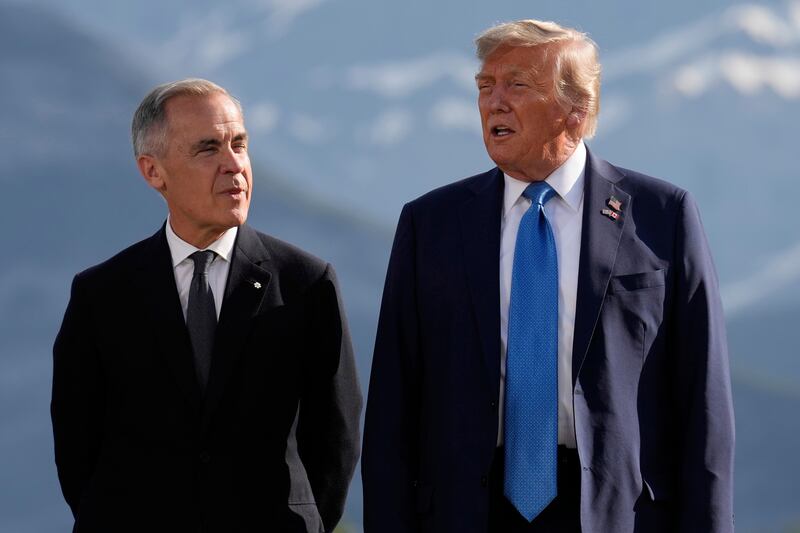
But, in the months since, the U.S. president has stacked additional sectoral tariffs on steel and aluminum, copper and autos.
Trump has also announced tariffs on lumber and medium- and heavy-duty trucks are on the way.
In late August, Carney announced Canada would be dropping many of its counter-tariffs by exempting goods covered by CUSMA.
In addition to the counter-tariff carveout, Canada has made other concessions, for example scrapping the controversial digital services tax to which Trump was vehemently opposed.
Canada has also made policy decisions in response to Trump’s concerns, namely by introducing a $1.3-billion border plan and naming a “fentanyl czar,” and by speeding up the date by which it’ll meet its defence-spending commitments to NATO.
“It’s a complicated agreement,” Trump told reporters alongside Carney, when asked why the two countries have failed to reach a new deal. “More complicated maybe than any other agreement we have on trade, because, you know, we have natural conflict. We also have mutual love.”
‘A nice man but he can be nasty’: Trump on Carney
Asked on Tuesday if Carney has done anything to make it easier or more difficult to reach a deal, Trump said “no.”
“I think he’s a great prime minister,” Trump said. “I mean, he could represent me.”
“He’s a nice man, but he can be nasty,” he added. “I think I can tell you this because I deal with lots of leaders all over the world: He is a world-class leader.”
When asked why he hasn’t yet made a deal with Canada if he believes Carney to be a “great man,” Trump said: “Because I want to be a great man, too.”
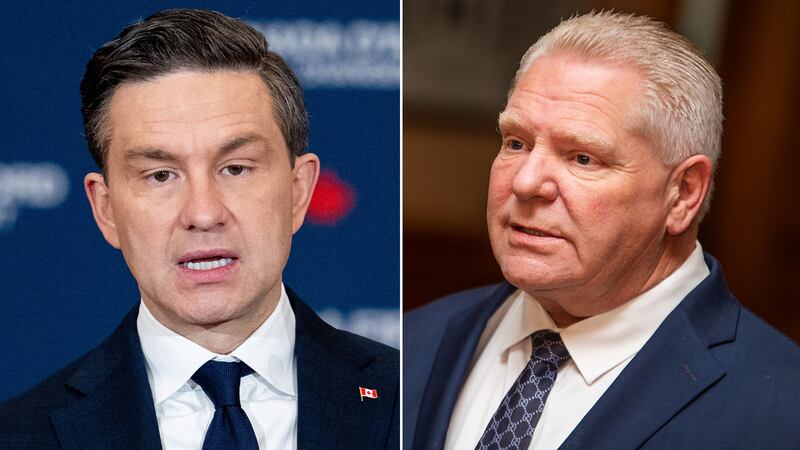
Poilievre, Ford call on Carney to come away with a deal
In a public letter addressed to Carney on Monday, Conservative Leader Pierre Poilievre called on the prime minister to “negotiate a win” in Washington.
He pointed to the missed mid-summer deadline to reach a new deal, and to the tariffs that are still in place as examples of Carney’s unmet promises.
“We only expect you to keep your promises,” Poilievre wrote. “If you only return with excuses, broken promises and photo ops, you will have failed our workers, our businesses and our country.”
In an interview with CNN on Tuesday, Ontario Premier Doug Ford said it’s a “shame” Trump has implemented such sweeping tariffs.
“What are the American population going to do? You rely on the aluminum coming from Canada to build military and aerospace and manufacturing,” he said. “You rely on steel as well coming from Canada. And 30 per cent of the lumber to build homes is coming from Canada.”
“The way to create more jobs is make a deal with Canada,” he added. “The way to reduce inflation is make a deal with Canada, and increase the economy is make a deal with Canada, your number one export country in the entire world.”
Speaking to reporters at Queen’s Park on Tuesday, Ford compared the protracted trade dispute and absence of a deal to “a kid going in the school yard and getting punched in the face every day.”
“It’s time to hit back if he can’t get a deal,” Ford said. “Maybe, maybe Prime Minister Carney knows something I don’t know. And if that’s the case, he should sit down with the premiers and explain that.”
Both countries have launched CUSMA consultations. The trade agreement was already set for review next year.

